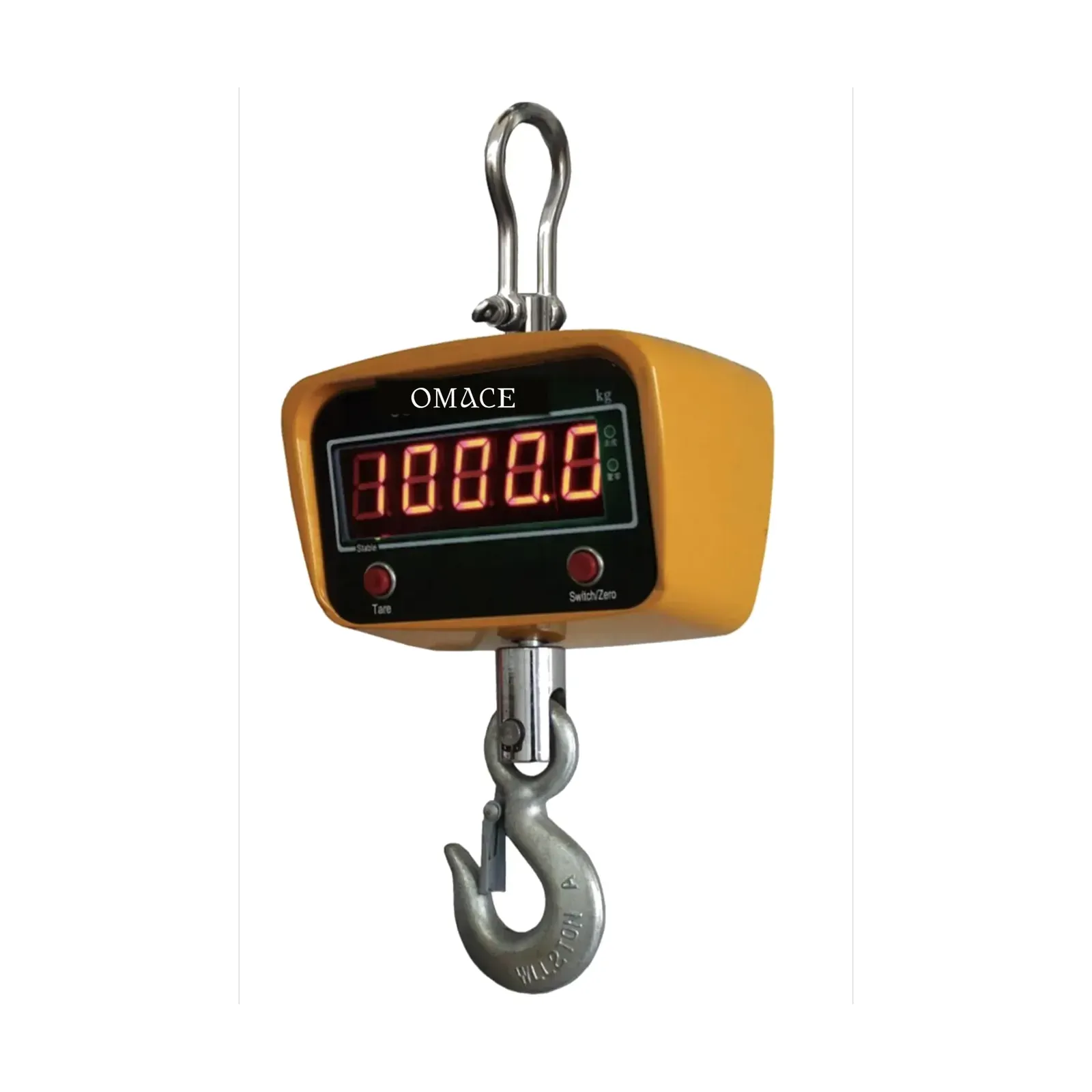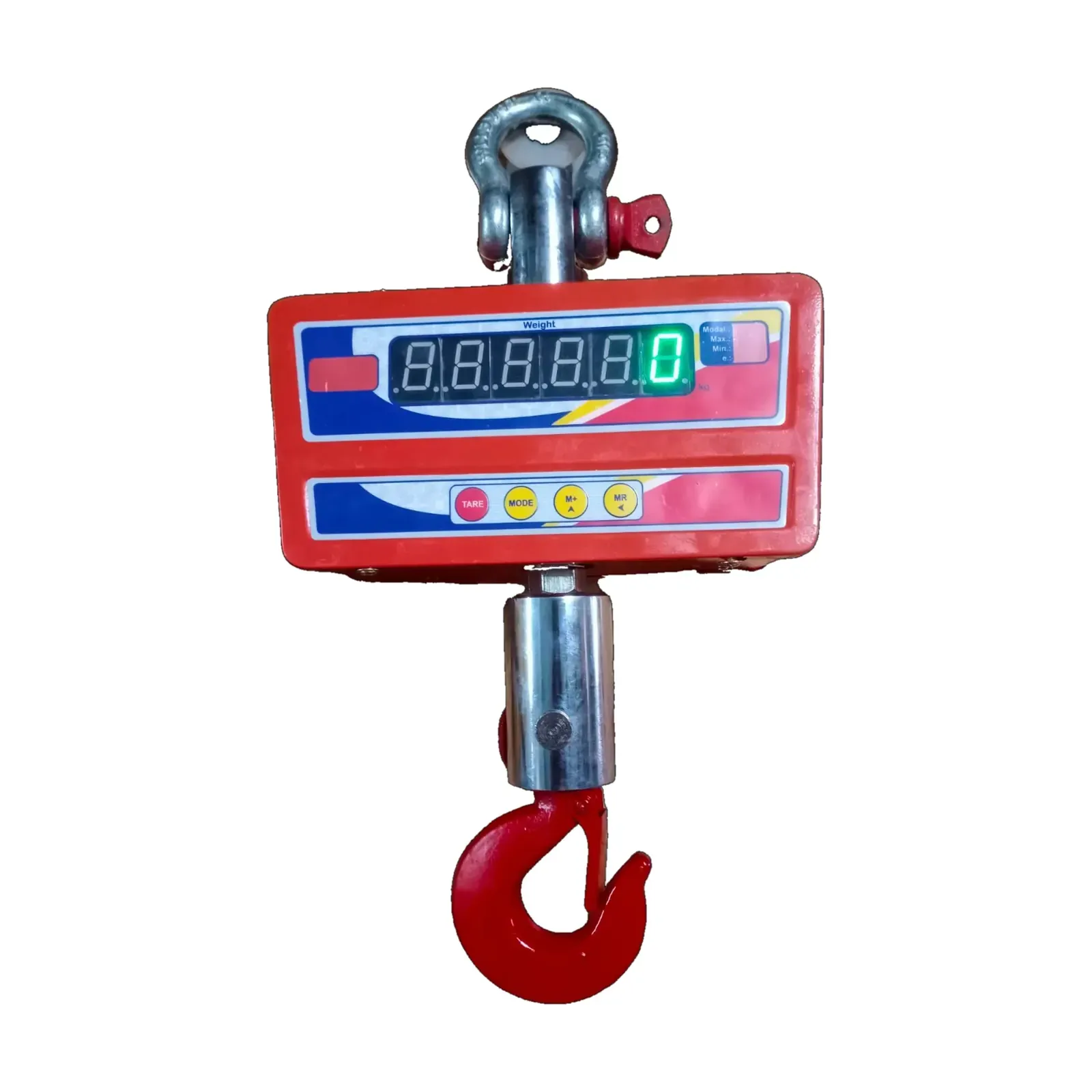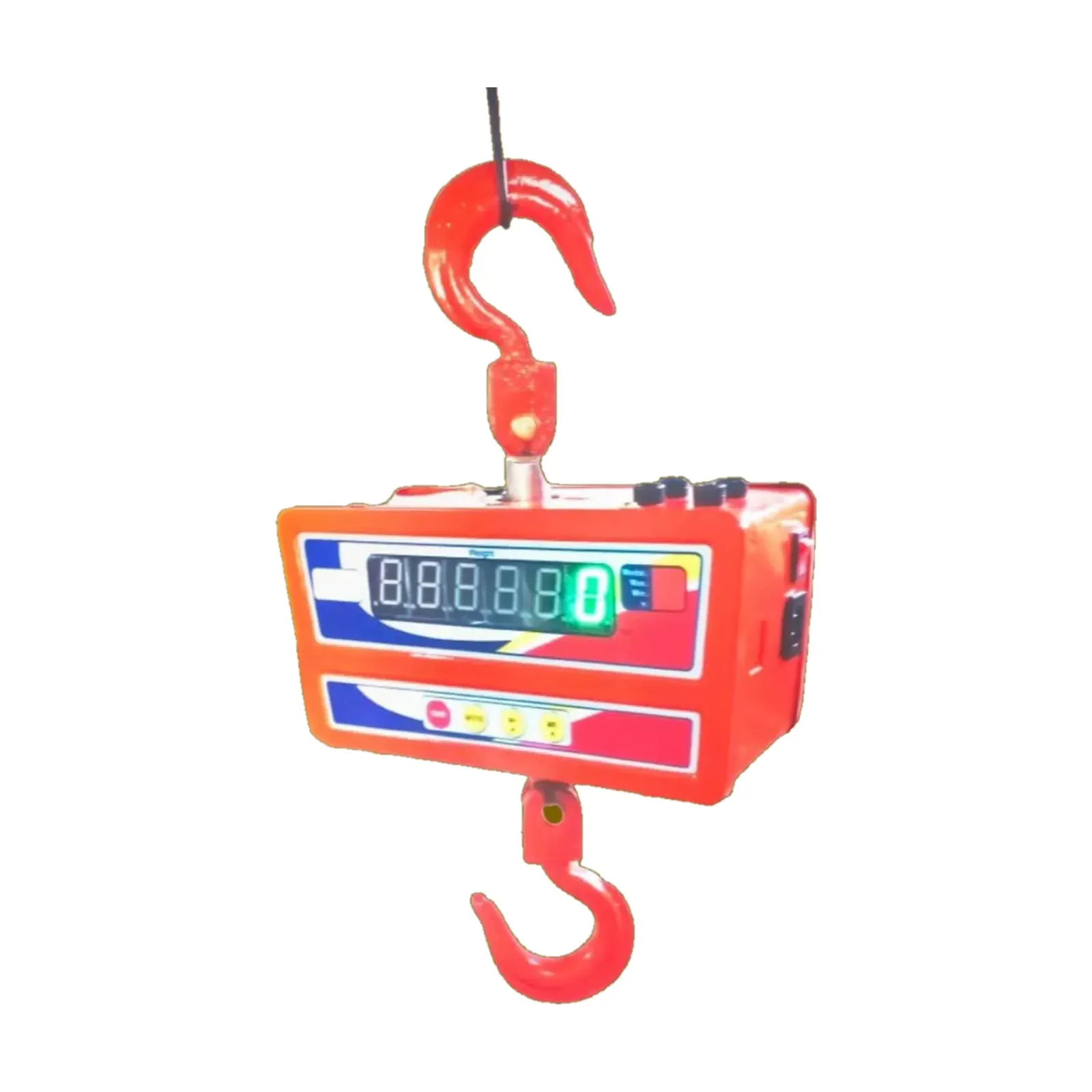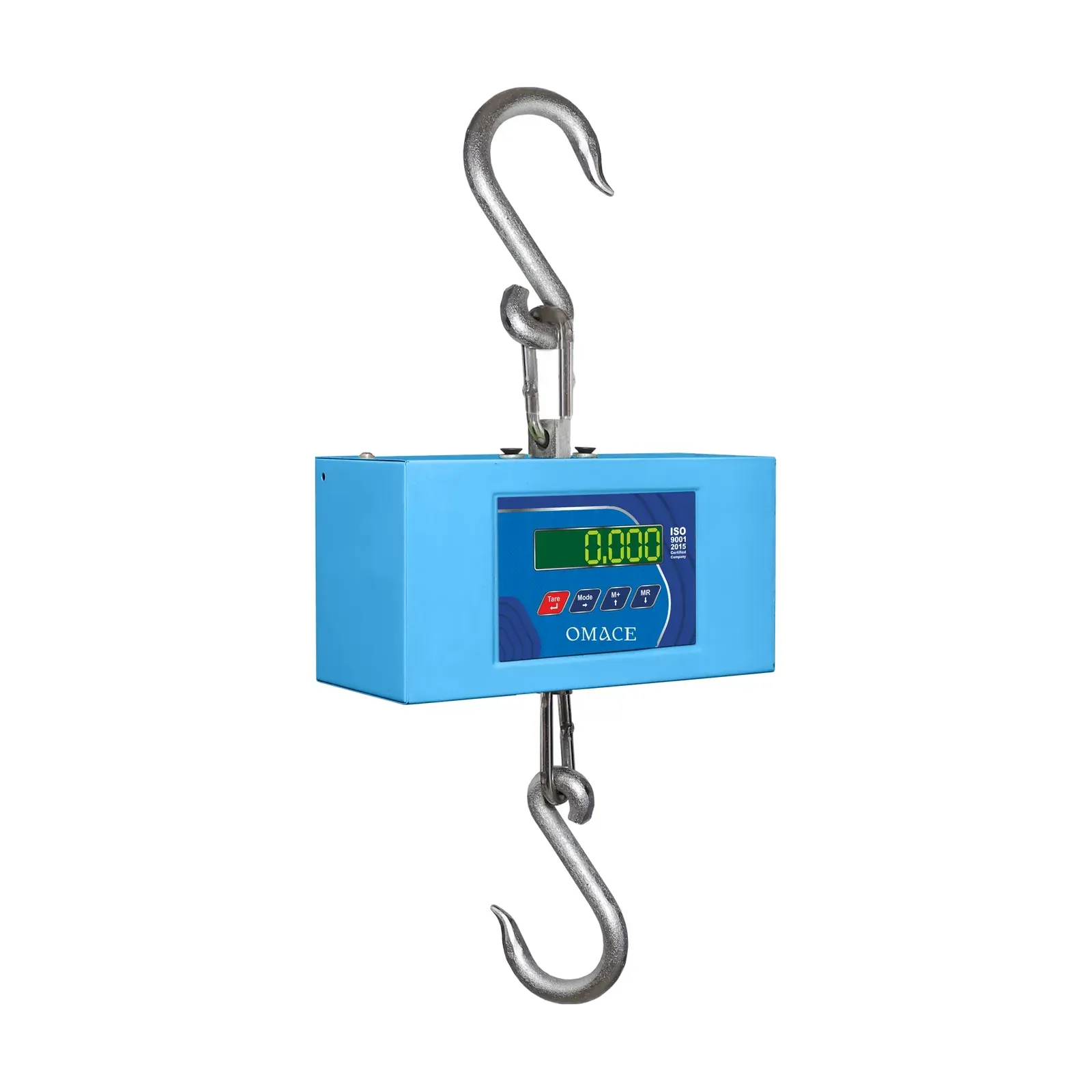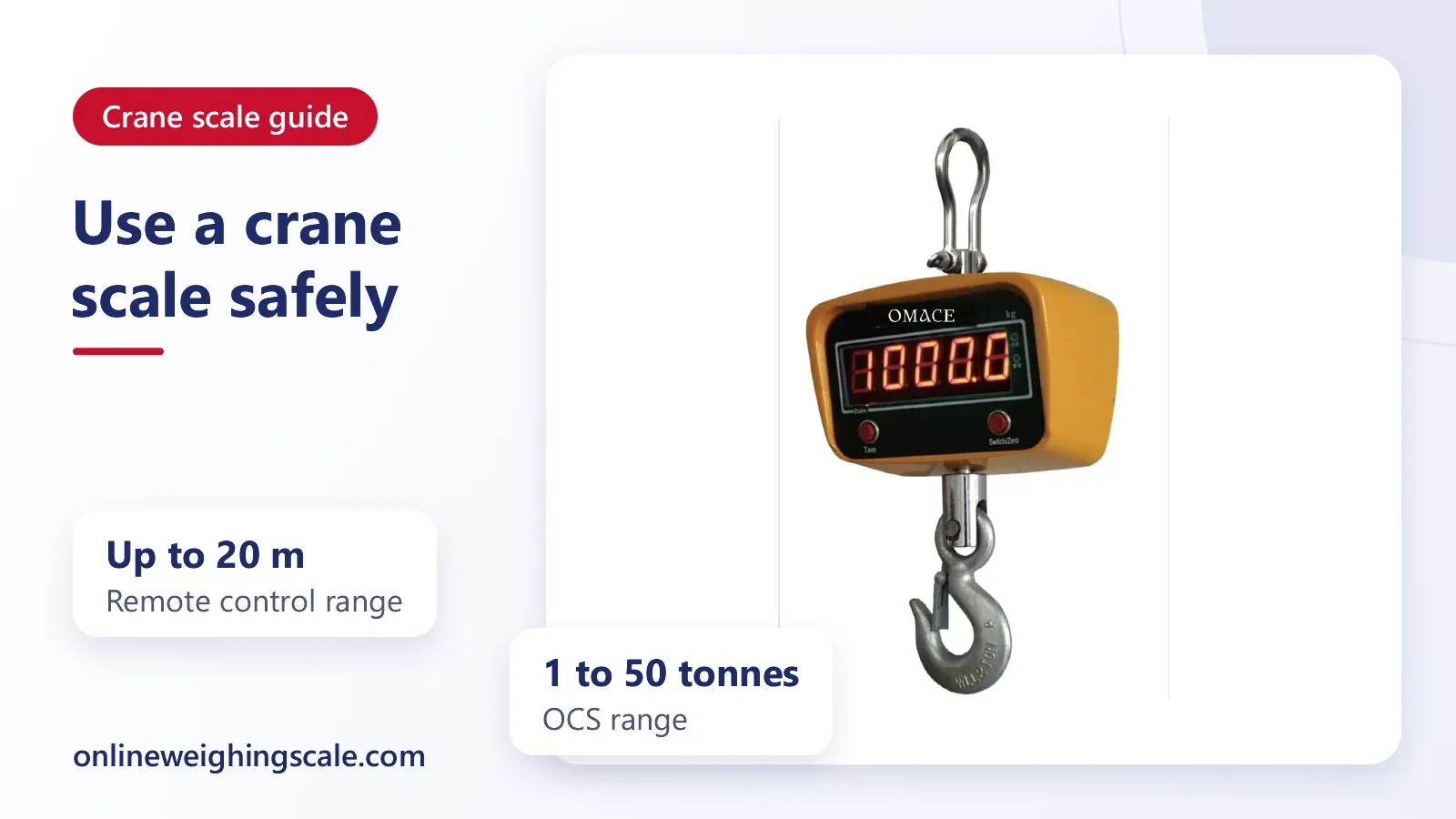
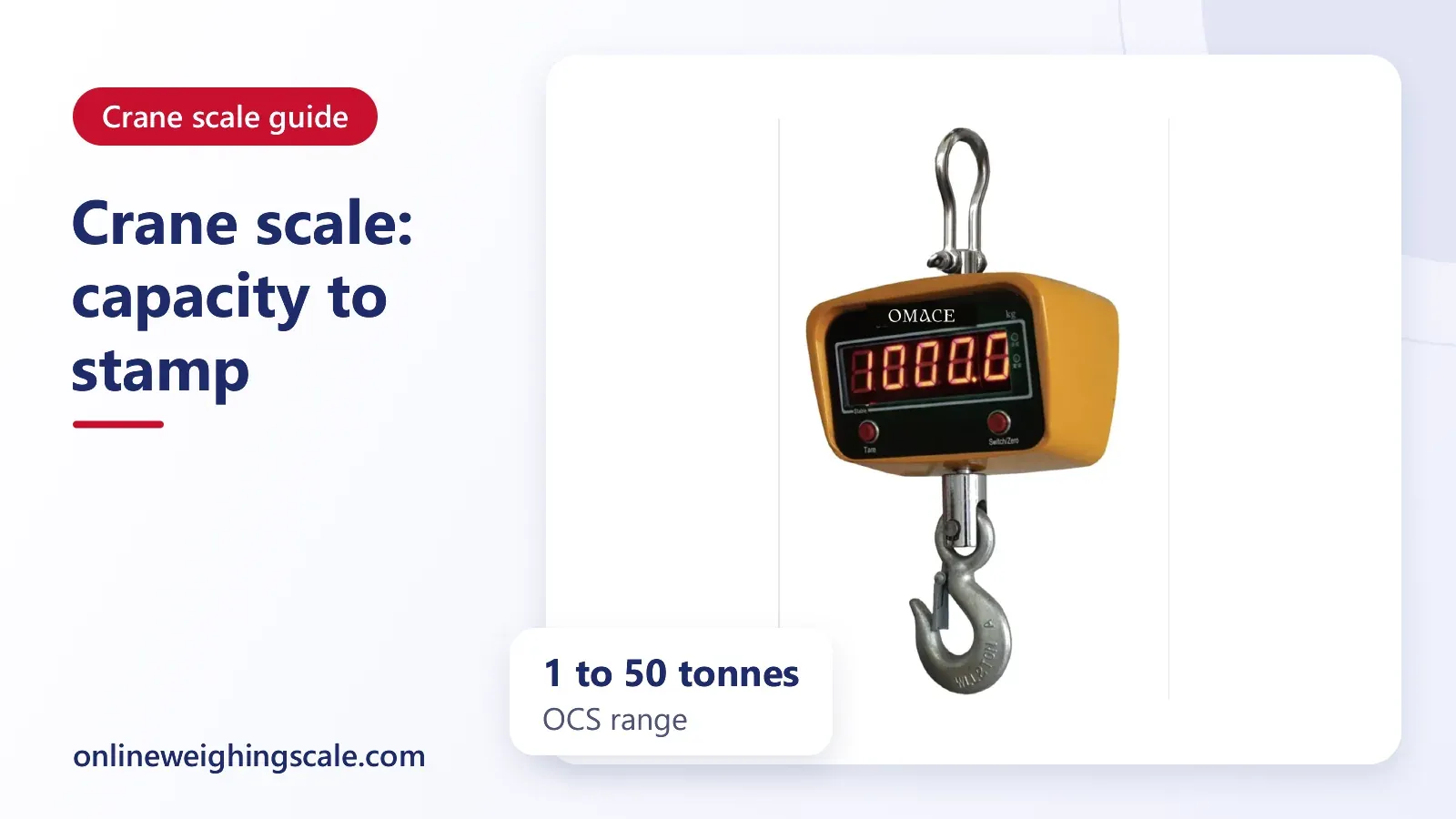
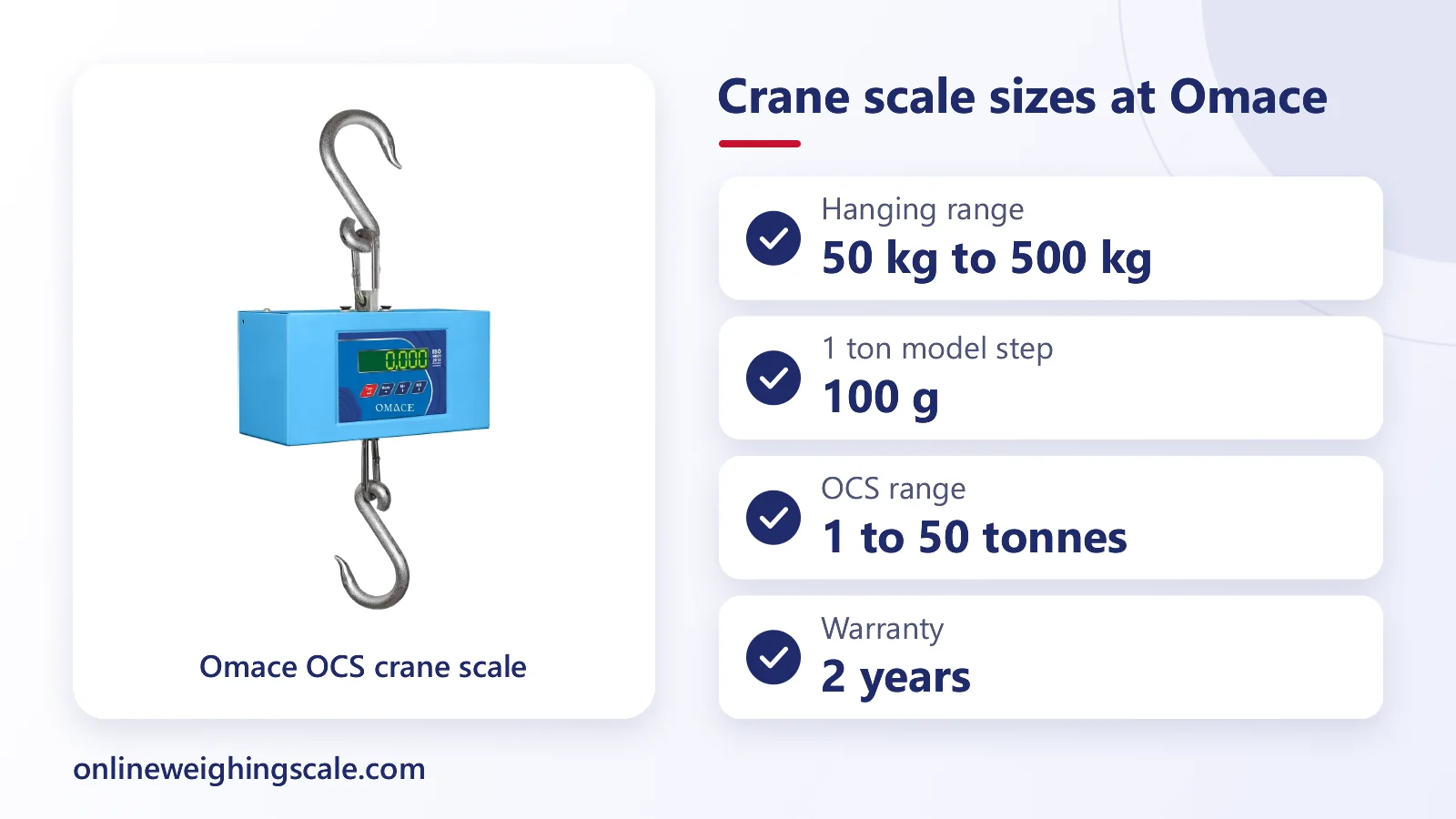
To choose a crane scale, take the heaviest lift you will hang on it, add the weight of the sling and hook, and pick a capacity clearly above that total. Omace Brands Private Limited makes hanging scales from 50 kg and OCS crane scales from 1 to 50 tonnes, with 40 and 50 tonne units made on buyer request.
Start with the heaviest lift, not the average one
A crane scale is rated for a maximum load, and the safest habit is to size it for the worst day rather than the usual day. Write down the heaviest object you have ever lifted: a full coil, a loaded pallet, a bundle of scrap, a machine part. Add the sling, chain and hook that hang below the scale. That total is the load the scale must carry.
Then choose the next capacity above it, so the scale never works at its limit. A scale that lives at its full rating wears faster, and one careless swing can push it past the rating. The how to use a crane scale guide explains the lowest-limit rule: the scale, the crane and the sling each have a limit, and the lowest of the three is yours.
Safe working load belongs to the lifting equipment, not to the scale. The UK Health and Safety Executive tells workers to use lifting equipment marked with its safe working load and never to exceed it. In India, section 29 of the Factories Act, 1948 required every lifting machine, chain, rope and item of tackle to be examined by a competent person at least once in twelve months. The Press Information Bureau states that the Occupational Safety, Health and Working Conditions Code, 2020 became effective on 21 November 2025, so check the current Code and your state rules for the examination interval that applies to you (checked November 2026). Whichever rule applies, a crane scale hangs in the same chain and deserves the same care. A crane load chart shows how the crane's own rating falls as the radius grows, and the EOT crane post explains the duty classes of overhead cranes.
Match the smallest step to what the load is worth
The smallest step a scale shows is called its division. A 1 tonne scale that reads in 100 g steps shows 10,000 steps across its range. A 500 kg scale in 50 g steps also gives 10,000 steps. Smaller steps matter when the goods are valuable, such as copper, brass or aluminium, and hardly matter for bulk sand or coal.
Do not chase the smallest step blindly. A crane scale swings and settles for a few seconds, so a very fine step flickers while the load moves. A step that is stable at your usual load is more useful than a fine one that never holds still. The Omace OCS product page lists a settling time of 5 to 8 seconds, which is a fair guide to how long to wait before reading any crane scale.
Features that earn their place on a crane scale
Tare lets you hang an empty sling, bin or chain and press one key so the display shows only the goods. Hold freezes the reading so you can lower the load and write the weight down. Auto zero and standby save effort and battery. An overload and low-battery warning is worth having on every scale, since a flat battery halfway through a shift is a common reason for wrong entries.
Remote control matters when you cannot stand beside the load. The Omace OCS crane scale reads on 30 mm LED digits and has a handheld remote that sets tare, zero and hold from up to 20 m away. Some makers sell a separate handheld display that receives the reading wirelessly. That helps where the scale hangs high and cannot be seen from the floor, but a wireless link needs its own batteries at both ends, so ask how long each runs before you pay extra for it. A cabled display never loses its link, but the cable can snag on a moving load.
Power: rechargeable battery and how long it lasts
Most Indian users prefer a rechargeable battery over dry cells, since a crane scale is used daily. The Omace 500 kg, 1 tonne, 200 kg and 120 kg models carry a built-in 6 V rechargeable battery. About 6 hours of charging gives about 24 hours of weighing, and the scale keeps working on its AC cable while it charges. The OCS range uses a rechargeable 6 V 4 Ah battery with a charger included, and takes about 6 to 8 hours to charge. Charge a new scale fully before first use, and put it on charge when the low-battery warning appears. Batteries and physical damage are not covered by warranty, while manufacturing defects are covered for 2 years.
Wireless or cabled, and what one scale cannot do
A crane scale reads the weight of whatever hangs from it and nothing else. It does not tell you whether the crane, the beam or the sling can carry that weight. It does not replace a weighbridge for loaded trucks either. Treat the reading as one fact in the lift plan, and keep the crane operator and the person reading the display in clear sight or in clear contact of each other.
Build, hook and shackle
A scale hangs from a hook or shackle above and carries a hook below, so those parts take the full load every time. Look for a steel shackle with a screw pin at the top and a safety hook at the bottom, so the sling cannot slip out. The Omace 1 tonne scale comes with a shackle and safety hook, while the OCS range ships with the shackle and hook fitted and a die-cast aluminium alloy body. Lighter models use mild steel bodies and steel hooks, which suit sacks, crates and drums.
Inside the body sits the sensor, a load cell that bends very slightly under load and turns that bend into an electrical signal. Dropping the scale, shock loading it, or letting it hang loaded for hours can damage that cell without any visible mark. Never lift with a jerk, and never leave a load hanging on the scale when you walk away.
Kinds of crane scale at a glance
| Kind | Capacity | Smallest step | Suits |
|---|---|---|---|
| Hanging scale with handle or S hook (OM-CS-M-50, OM-CS-M-120) | 50 kg and 120 kg | 10 g | Bags, baskets and crates lifted by hand |
| Hanging scale with two displays (OM-CS-M-200, OM-CS-C-200) | 200 kg and 300 kg | 50 g | Drums, sacks and sling loads read from both sides |
| Crane scale with heavy hooks (OM-CS-M-500) | 500 kg | 50 g | Several sacks in one sling, chain hoist work |
| Crane scale with shackle and safety hook (OM-CS-M-1000) | 1 tonne | 100 g | Jumbo bags, steel stock, workshop lifts |
| OCS crane scale with remote (OM-CS-C-1000 range) | 1 to 50 tonnes | See product page | Overhead cranes, yards, logistics and heavy industry |
Who needs which scale
A small scrap yard that handles bundles of 100 to 400 kg usually does well with a 500 kg scale on a chain hoist, and the scrap dealer scale guide walks through the loads, the smallest step and the rough handling a yard puts a scale through. A godown that moves 50 kg sacks by hand needs only the Omace digital hanging scale 50 kg, which costs ₹3,459 today. If you are unsure whether you need a crane scale at all, the hanging scale guide compares mechanical and digital hanging scales for lighter jobs.
A workshop lifting dies, engine blocks or castings up to a tonne will find the Omace 1 ton crane scale at ₹12,999 a good fit. It has a steel shackle and safety hook, reads in 100 g steps and shows its weight on a 6-digit green LED. For a mid-size lift, the Omace 500 kg crane scale costs ₹9,999 and reads in 50 g steps.
For several tonnes under an overhead crane, with the scale out of arm's reach, the Omace OCS crane scale starts at ₹11,549. Capacities run from 1 to 50 tonnes, and 40 and 50 tonnes are made on buyer request. A buyer who needs a broader view of plant weighing, including platform scales and weighbridges, can read the industrial weighing scale guide. The full range sits on the crane scale page.
When the scale is used for trade, it needs a stamp
If you sell by the weight your crane scale shows, such as scrap, steel, bags or freight, the scale must be verified and stamped under Legal Metrology. Omace shop, platform, chicken and crane scales leave Bagru verified and stamped by Legal Metrology, and the stamp is valid across India. Stamping is compulsory on crane scales. The weighing scale stamping charges post explains the fees and who does the work. A scale used only to check a load against a crane's limit, with no sale at stake, is a safety tool rather than a trade scale.
Care and checks that keep a crane scale honest
Before each shift, look at the hook, shackle pin and latch for bends or wear. Switch the scale on with nothing hanging and confirm that it reads zero. Hang a known weight, such as a certified test weight or a sealed bag you have weighed before, and confirm the reading. Do this every week, and every time the scale has taken a knock. If the reading has drifted, the crane scale calibration post describes the steps, the test weights and the rules. Every Omace digital scale opens calibration mode when TARE is held for about 5 seconds, though stamped trade scales are sealed and a registered repairer recalibrates them.
Store the scale in a dry place, charge it before long breaks, and keep the remote in a pocket rather than loose on a workbench. Omace Brands Private Limited repairs its commercial scales when the buyer asks. The buyer pays the shipping both ways and the repair cost, and spare parts depend on availability, so ask first through the contact page.
A short checklist before you order
- Heaviest lift plus sling weight, then the next capacity up.
- A smallest step that stays steady at your usual load.
- Tare, hold, overload and low-battery warning on the display.
- Rechargeable battery, with charger included.
- Shackle or hook that suits your crane and sling.
- Remote control if the scale hangs out of reach.
- A Legal Metrology stamp if you sell by its reading.
Omace Brands Private Limited has made weighing scales in Bagru, Jaipur since 1994, and every Omace scale carries a 2-year warranty on manufacturing defects. Each scale is checked with certified test weights before dispatch. Read more on the about page.