A weighing scale for a bakery does two separate jobs: it measures ingredients inside the kitchen, and it sells or portions goods at the counter. A bakery or cloud kitchen therefore needs two kinds of scale, and the sensible way to buy is to decide which job each one will do.
Most owners start with one scale and ask it to do both. A shop kanta that moves in steps of 5 g or more cannot weigh a pinch of yeast, and a fine kitchen scale with a 1 g step is the wrong tool for a counter that sells by the kilo. This post explains how to split the work, what to look for on each scale, and what the label law says about packed items.
Two jobs, two scales
The back-of-house scale is for recipes. It needs a small division, a tare key and a pan or bowl that suits a mixing bowl. The counter scale is for customers. It needs a bigger capacity, a display the buyer can read and a legal stamp. Keeping them apart also saves the fine scale from the hard knocks of a busy counter.
| Job | Typical capacity | Division to look for | Where it sits |
|---|---|---|---|
| Small additions (yeast, salt, improver, spices) | 500 g or less | 0.1 g | Prep table |
| Flour, sugar, butter, dough portions | 5 to 10 kg | 1 g | Prep table |
| Selling loose items by weight | 10 to 30 kg | 5 g or finer, stamped | Counter |
| Receiving goods (flour bags, sugar, butter slabs) | 100 kg and above | Platform scale | Store room |
Weighing ingredients: why grams beat cups
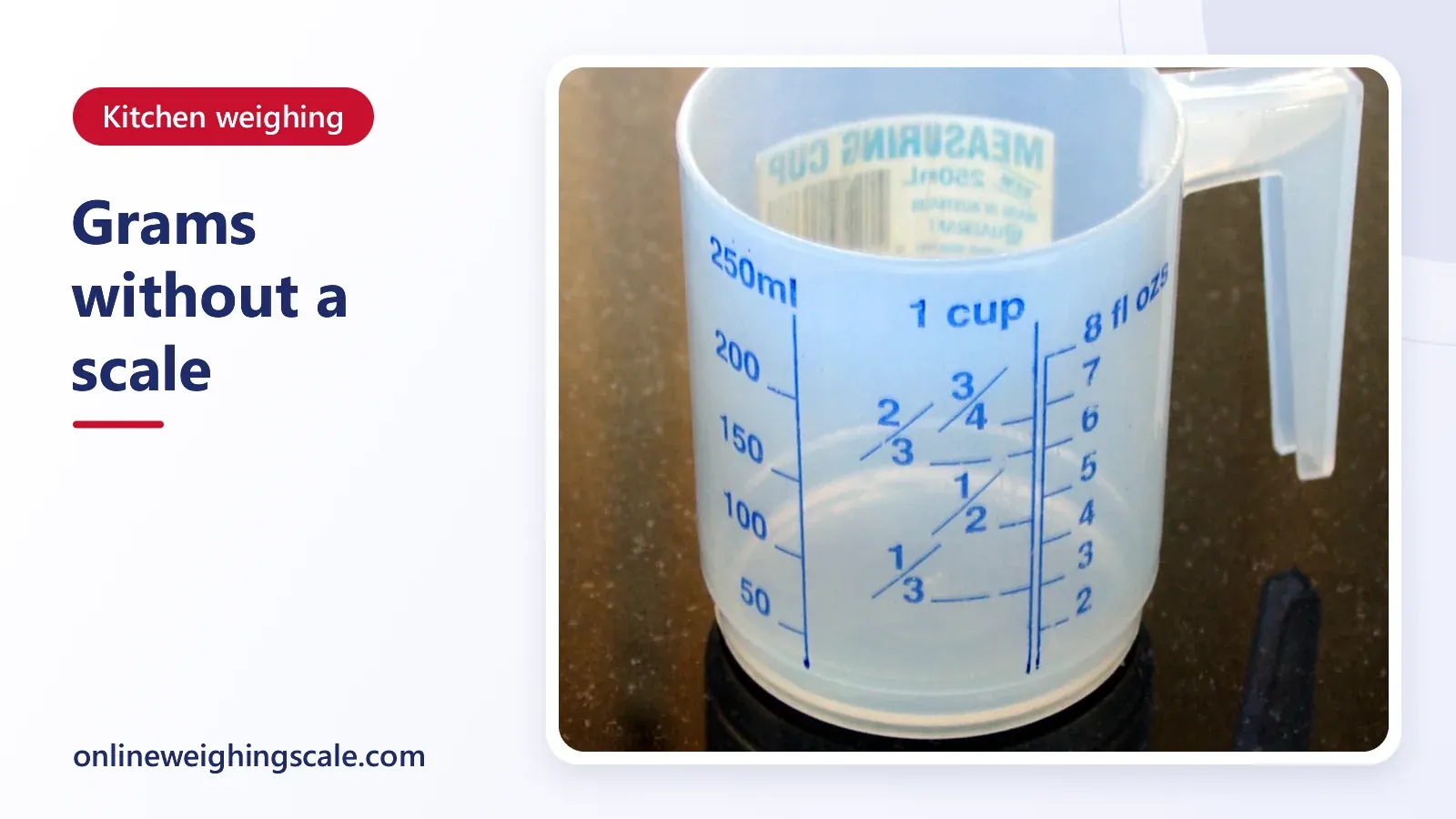
A cup of flour changes with how it is scooped and how fine the flour is, while 500 g stays 500 g. That is why professional recipes list grams. The post on baking by weight explains the method for a home kitchen, and the grams to cups chart helps when an older recipe still uses cups.
For a bakery the practical point is repeatability. When every batch of dough uses the same flour weight, the crumb, the colour and the rise stay closer from the morning shift to the evening shift. A tare key helps here: place the mixing bowl, press tare, add flour, press tare again and add the next ingredient without a calculator.
Which division do you need?
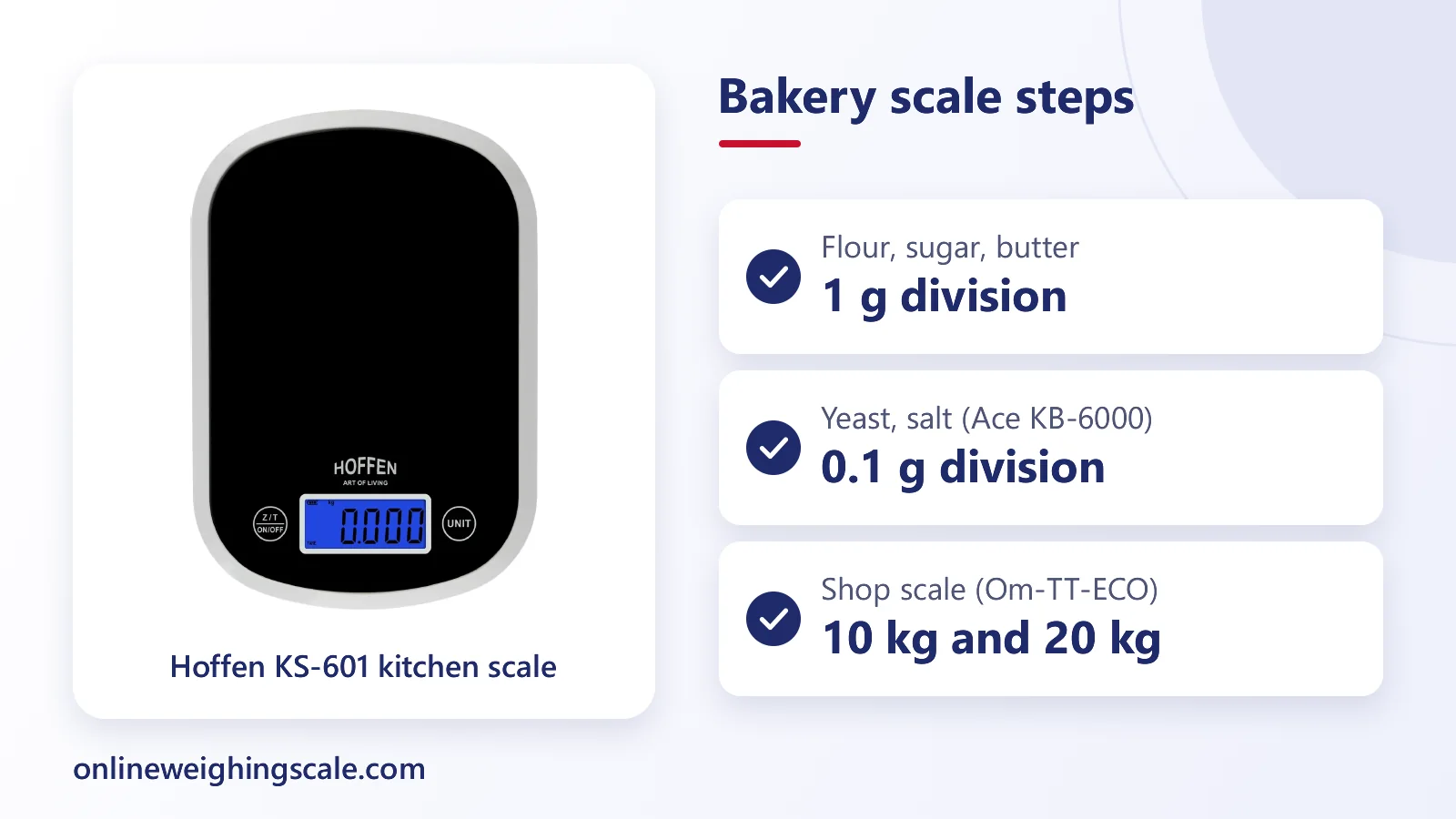
The division, also called readability, is the smallest step the display shows. A 1 g step is fine for flour, sugar, butter and milk. Small additions are a different matter. Yeast, salt, baking powder and improver are used in small amounts, and one gram of error on a 5 g addition is a big share of it. For those, a scale reading 0.1 g saves batches.
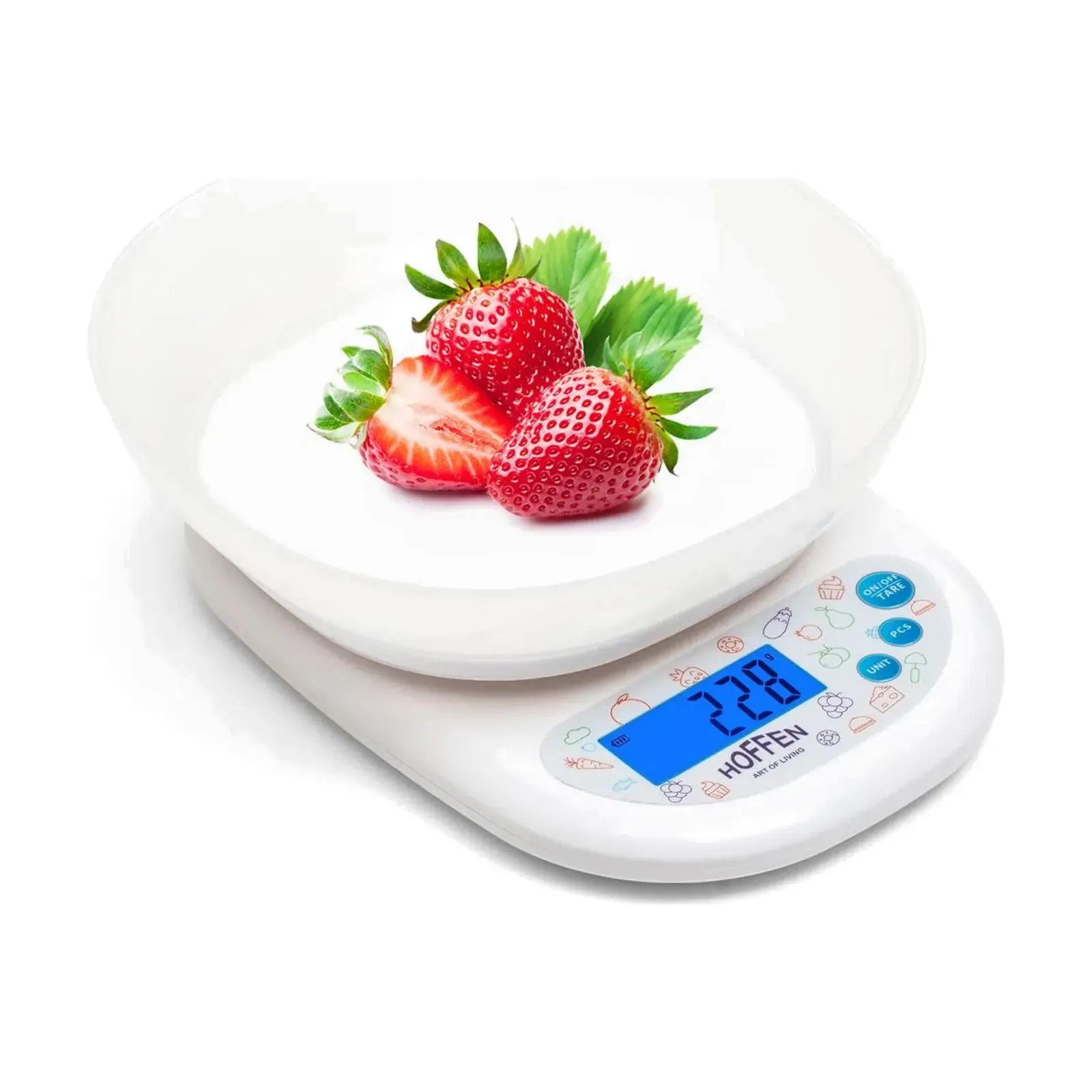
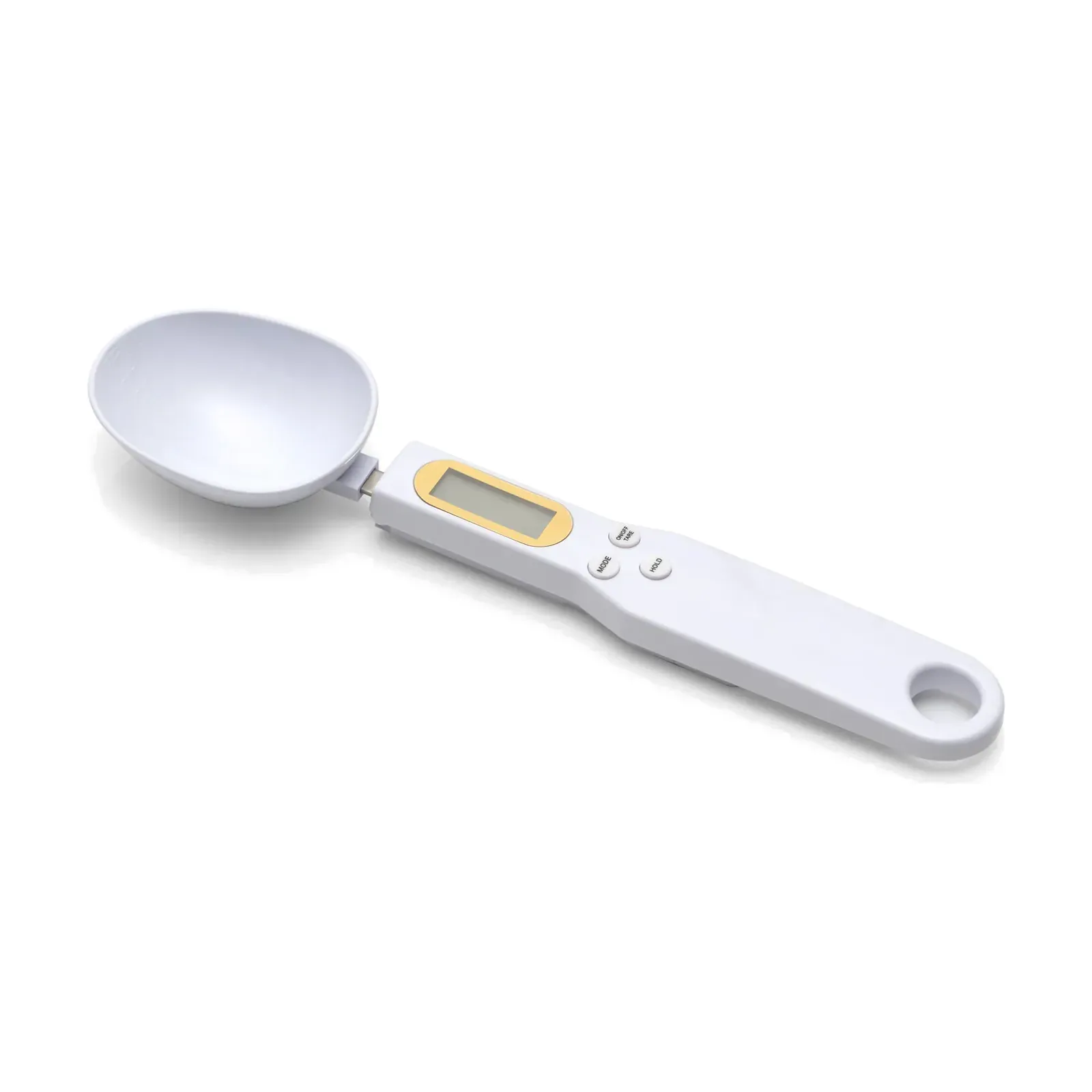
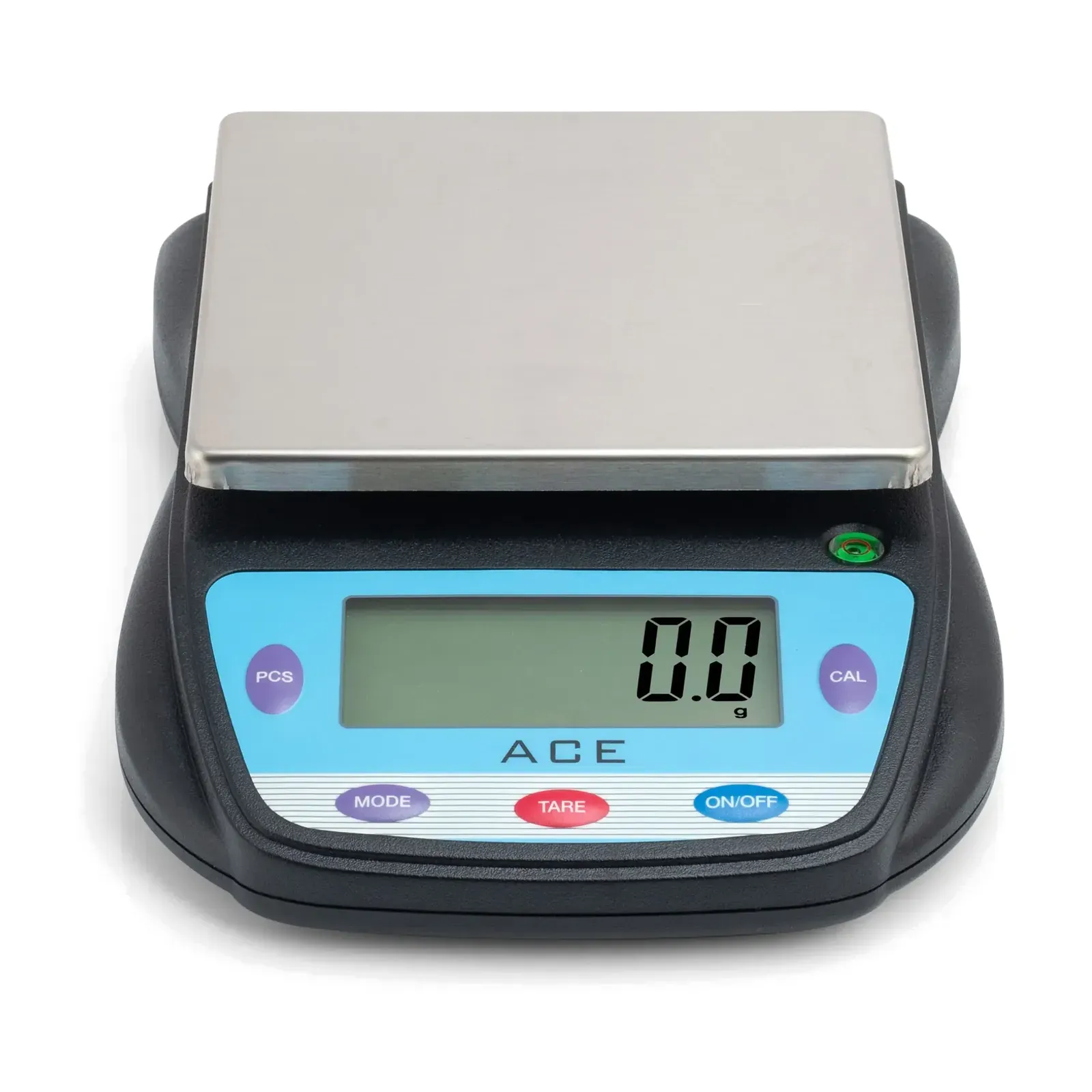
Omace Brands Private Limited sells several kitchen models for this work. The Hoffen KD-819 Kitchen Weighing Scale with Bowl reads 10 kg in steps of 1 g, has a piece-counting mode and costs ₹519. The Venus KS-310 Kitchen Scale also reads 10 kg x 1 g and costs ₹629. For small additions, the Hoffen Digital Spoon Scale reads 500 g x 0.1 g with tare and hold, at ₹939. The Ace KB-6000 Weighing Scale reads 6 kg x 0.1 g or 600 g x 0.01 g, with a backlit LCD, at ₹2729. Prices are the store prices today and include GST.
Weighing dough portions
Dough weighing is where a bakery earns or loses money. If a bun dough ball is meant to be 60 g and the cutter drifts to 68 g, each tray carries extra flour and extra baking time, and a few trays later the stock register is out. Weighing every portion is slow, so many bakers weigh the first ball of each batch, then one in every ten.
A scale for portioning should have three features. The pan should be large enough to hold a ball or a loaf tin without the dough hanging over the edge. The display should settle quickly, since a scale that keeps drifting slows the line. The capacity should cover the heaviest item with a margin: a 1 kg loaf dough on a 5 kg scale is comfortable, while the same dough on a 1 kg scale is not.
Piece counting is useful for small items such as cookies, rusks or packed buns. Weigh a sample of ten, enter the count, and the scale works out the number from the total weight. The price computing and counting checks guide explains how to confirm this mode stays correct.
Selling by weight at the counter
Items sold loose by weight, such as cookies, rusks, namkeen, dry cake or mithai, need a scale a customer can trust and an inspector can pass. Under the Legal Metrology Act, 2009, a weighing instrument used for trade has to be verified and stamped. The General Rules amendment of 18 December 2025 sets a verification period of twenty-four months for weights, beam scales and counter machines, and the Jan Vishwas (Amendment of Provisions) Act, 2026 revised the penalty amounts and added improvement notices from 1 May 2026, so ask the state office for the current penalty. The post on Legal Metrology in India explains the Act and the department, and the stamping charges guide covers the fees.
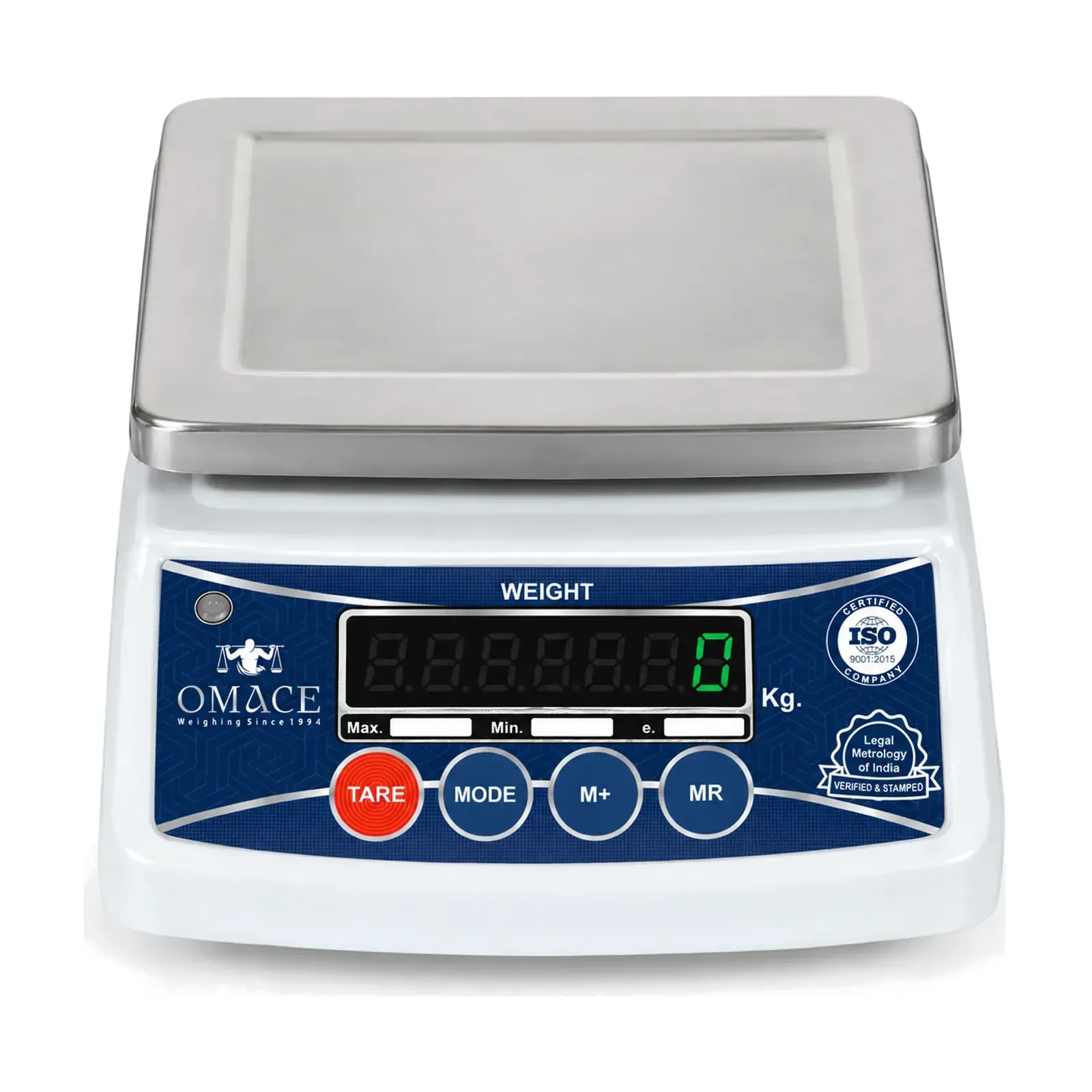
Omace Brands Private Limited ships its shop scales from Bagru, Jaipur, verified and stamped by Legal Metrology, and the stamp is valid across India. The Omace Om-TT-ECO Kirana Weighing Machine reads 10 kg x 1 g or 20 kg x 2 g on a 160 x 190 mm stainless steel pan, with green LEDs on both sides and a built-in battery backup of about 2 days, at ₹2310. Om-TT scales are accuracy class III and weigh only. They do not compute price, so the baker multiplies the weight by the rate. Customers on both sides of the counter can read the weight. The wider shop scale range includes pole-display and 30 kg models. A kitchen scale with no stamp is fine for recipes but should not be the one a customer sees when you sell by weight.
Fine kitchen scales are not built for the counter. The pan is small, the glass or plastic body is not made for constant knocks, and there is no stamp. Keep them behind the counter.
Flour dust, sugar and cleaning
A bakery is a hard place for an electronic scale. Fine flour floats in the air and settles on the pan and in the gap between the pan and the body. Sugar, butter and sticky batter do the same. A scale that sticks on one side gives a different reading from one that sits free.
- Wipe the pan at the end of each shift with a slightly damp cloth, and dry it. Never pour water over the scale or hold it under a tap.
- Keep the gap around the pan clear. A soft brush works better than a wet cloth for flour in the corners.
- Use a tray, a bowl or a sheet of paper on the pan for sticky ingredients, and tare it away.
- Keep the scale on a flat, firm table away from the oven door and from the mixer, whose vibration can disturb the reading.
- Do not stack heavy trays on a scale or park a hot tin on the pan.
If a scale starts to drift or shows an error, the guide on a weighing scale not working lists causes and fixes. On Omace digital scales a long press of TARE opens calibration mode on some models and a long press of the M key on others, and the manual for each model shows which. A routine check with a known weight, done weekly, catches slow errors. Stamped trade scales are sealed, and a registered repairer recalibrates them.
Packed items: net quantity on the label
Many bakeries and cloud kitchens pack cookies, cakes or ready mixes before sale. A packed food needs a label, and net quantity is one of the items. The Food Safety and Standards (Labelling and Display) Regulations, 2020 in the FSSAI compendium say that the declaration and manner of declaration of net quantity must follow the Legal Metrology Act, 2009 and its rules. The same compendium lists net quantity among the particulars that packaged food meant for non-retail sale must carry on the container or on a label pasted on it.
In practice this means the weight you print on the pack has to be right, so the scale used to fill packs needs to be in good order. The exact wording, units and print size are set by the Legal Metrology rules, and they change from time to time. Check the current text with the Legal Metrology department of your state or with FSSAI before printing labels. A food licence and registration question is separate and belongs with FSSAI.
Cloud kitchens: space and speed
A cloud kitchen works in a small space, often with several brands cooking from one kitchen. That changes the buying list. Table space is short, so a slim scale with a steel plate or glass top is easier to wipe and store. Output is high, so a scale with a fast display and a bright backlit screen helps in a hot kitchen. Portion control matters more than anywhere, because the menu price is fixed and the margin sits in the grams.
- One 5 kg to 10 kg kitchen scale at each station for sauces, toppings, rice and flour.
- One 0.1 g scale for spices and small additions, shared between stations.
- One larger scale at the receiving door, for checking bags and cartons against the invoice.
The Venus KS-305 Stainless Steel Kitchen Scale is 1.3 cm slim with touch keys and reads 5 kg x 1 g, at ₹1149. The Ace KS-RE Rechargeable Weighing Scale charges by USB and comes in 3, 6 or 10 kg, at ₹1359, which suits a kitchen with few power points. For heavier goods, the platform weighing scale range covers sacks and cartons, and the guide to the best weighing scale for small business helps with the wider counter choice.
Checklist before you buy
- Write down the smallest and the largest weight you weigh. Pick a capacity above the largest, and a division well below the smallest.
- Decide whether any scale will face customers. If yes, buy a stamped trade scale for that job.
- Check the pan size against your bowls and trays.
- Look for a tare key, a backlight and a rechargeable battery or a long battery life.
- Ask about service. Omace Brands Private Limited repairs its commercial scales when the buyer asks; the buyer pays shipping both ways and the repair cost, and spare parts depend on availability, so ask first through the contact page.
Every Omace scale carries a warranty on manufacturing defects for 2 years, and each is checked with certified test weights before dispatch. The company has been in the weighing trade since 1994, as the about page explains.
Start with the weighing job, then pick the scale
List the weights your kitchen handles in a day, from a gram of yeast to a sack of flour, and match each to a scale with a suitable division and capacity. Add one stamped scale for the counter if you sell loose goods. A bakery with those three or four scales has most of the weighing covered.