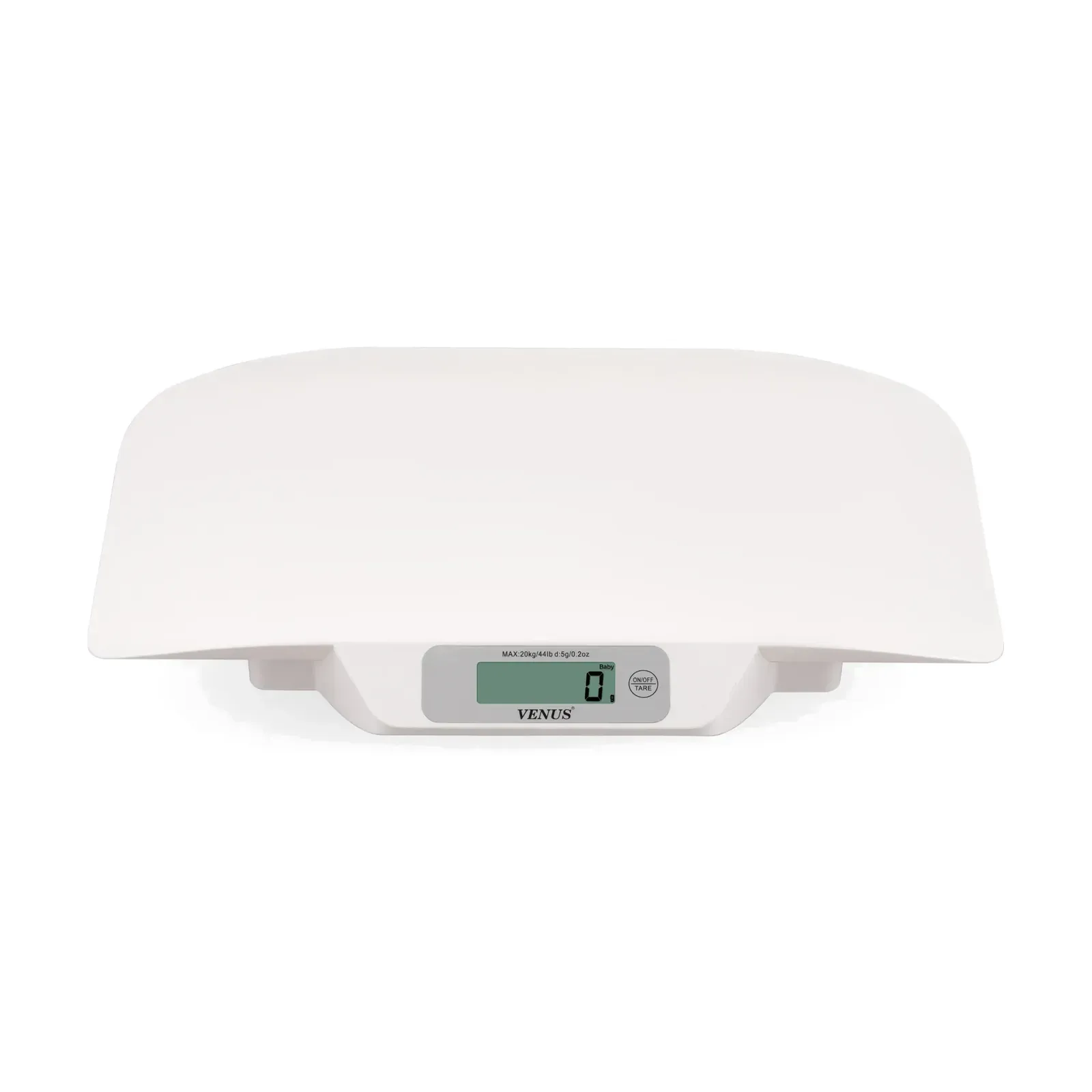
A baby is weighed at home by placing the baby on a baby scale that has been set to zero first, on its back in the middle of the tray, and reading the display once the baby is settled. The American Academy of Pediatrics describes the same order: undress the infant, zero the scale, lay the baby in the middle, then read the result.
This guide covers the steps, the nappy and blanket question, the hold-and-subtract method with an adult scale, and how often weighing makes sense.
What you need to weigh a baby at home
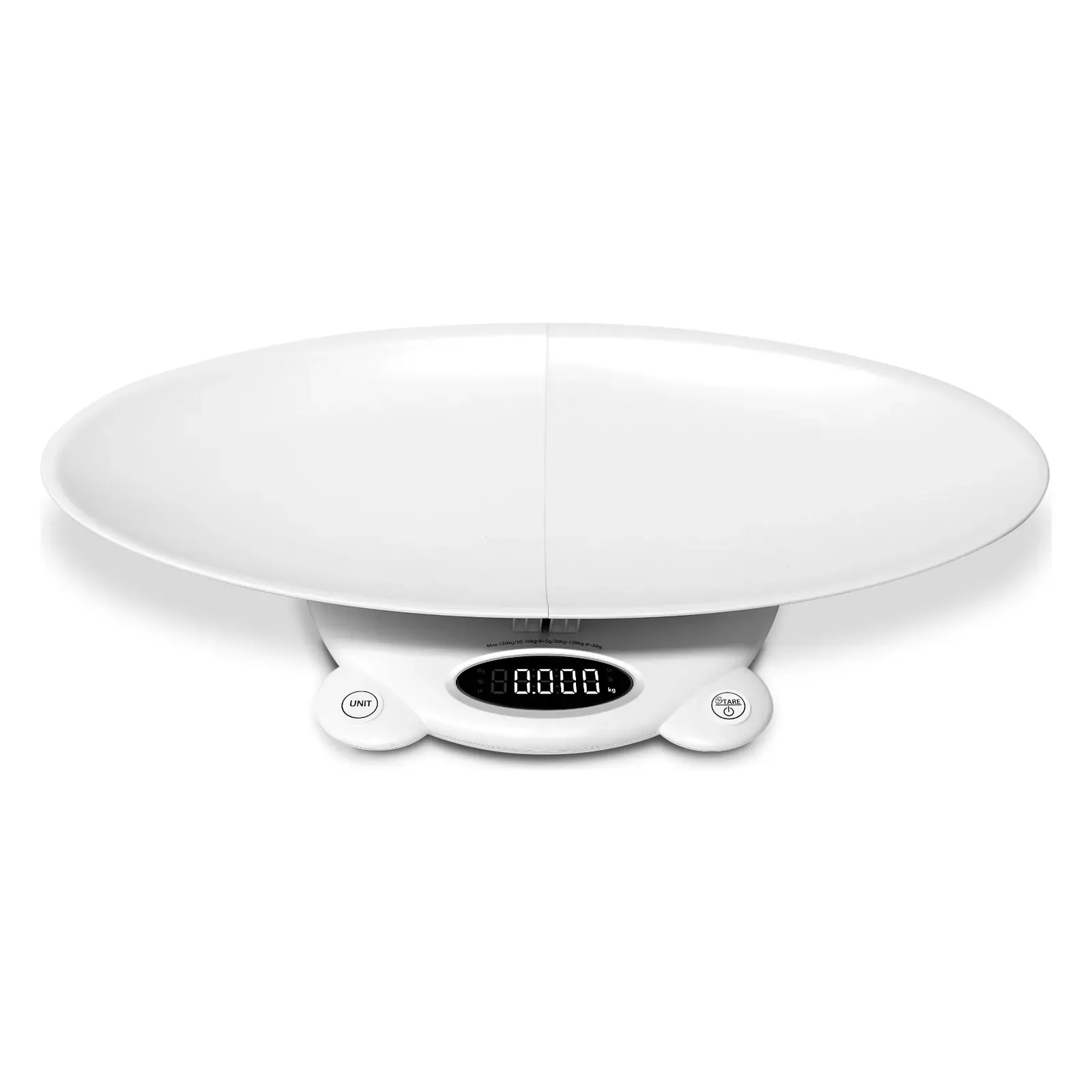
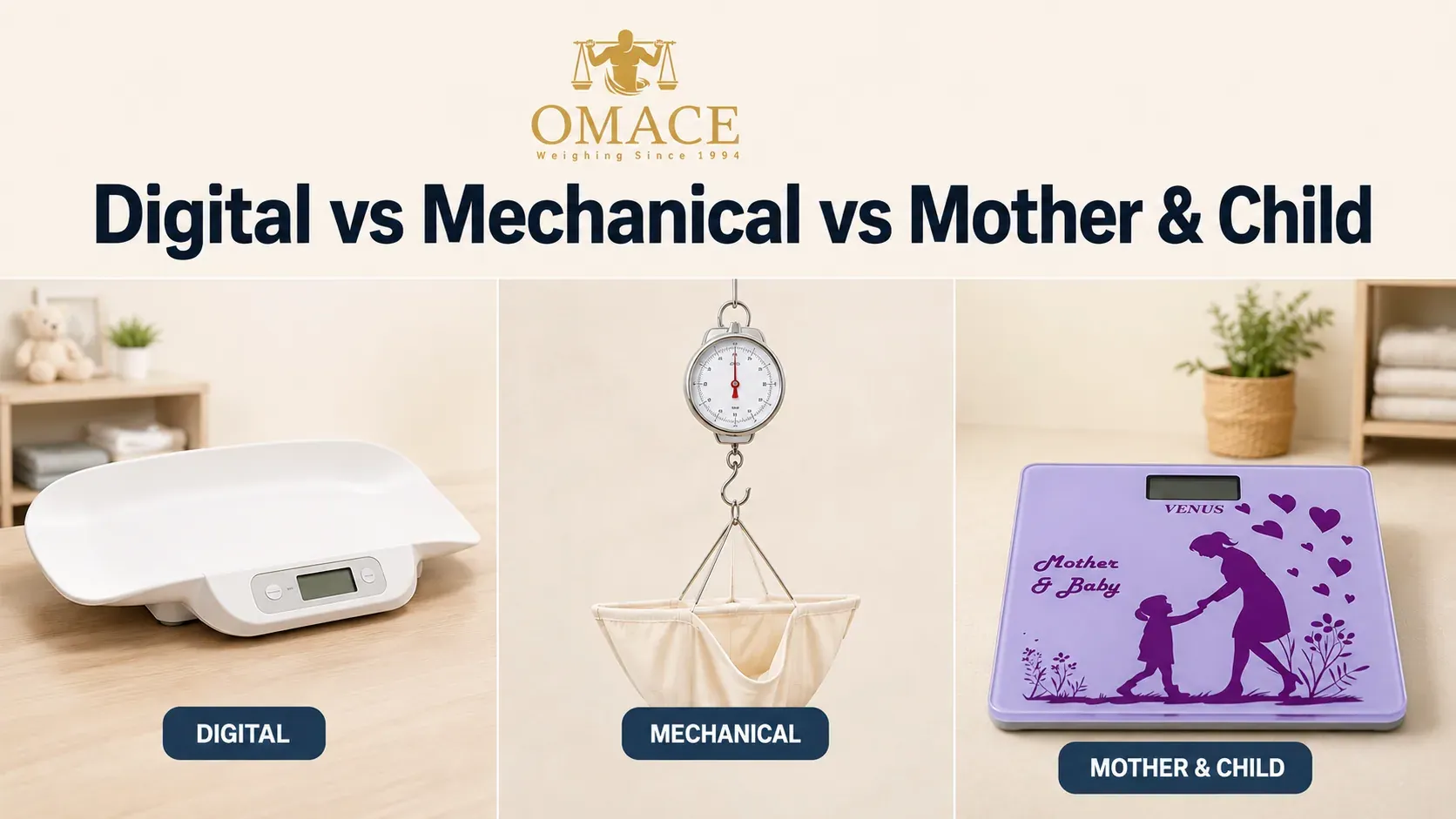
A baby needs a scale made for babies. Baby scales have a curved tray or a sling, a small weight range and fine steps, so the number on the display means something for a body of 3 to 10 kg. The main kinds are the digital tray scale, the hanging scale with a sling, and the Bluetooth tray scale that sends readings to a phone. How to choose between them is covered in How to Choose a Baby Weighing Scale.
You also need a flat, firm table or bed, a clean cloth for the tray if you like, and a few minutes when the baby is calm. A baby who has just been fed and changed is usually the easiest.
Steps to weigh a baby on a baby scale
- Place the scale on a hard, level surface. A soft mattress makes the reading drift, so use a table or a firm bed with the scale on a board.
- Switch the scale on and wait until it shows zero.
- Decide how the baby will be weighed. The cleanest way is undressed, including the nappy. The American Academy of Pediatrics says a baby may instead be weighed in a clean nappy, but only after the scale has been zeroed with that same nappy on the tray.
- If you use a cloth or blanket on the tray, put it on the empty scale first and press TARE. The display goes back to zero with the cloth on it.
- Lay the baby on the back in the middle of the tray. The AAP guidance says nothing should touch the baby except the tray, so keep your hand close for safety but not resting on the baby.
- Wait for the number to settle, read it and write it down with the date.
A warm room matters, because an undressed newborn gets cold quickly. Keep a towel ready and dress the baby straight after the reading.
How taring works for a nappy and blanket
Taring tells the scale to treat whatever is on the tray right now as zero. Put the nappy or blanket on first, press TARE, and the display shows zero. Everything added afterwards is the baby alone. If the cloth moves or you add a second one, tare again, otherwise the extra weight is counted as baby.
Use the same arrangement each time. A baby weighed naked one week and in a wet nappy the next shows a difference that has nothing to do with growth. Weigh at about the same time of day too, ideally before a feed or at the same point after one, so the numbers can be compared.
Hold-and-subtract: weighing a baby on an adult scale
Hold-and-subtract means you step on an adult scale, note your own weight, then step on again holding the baby, and subtract. It is the method people reach for when they have no baby scale, and it works as a rough check. It is too coarse to track a newborn, for three reasons.
- An adult scale is built for adult loads. Many show weight in steps far larger than the few grams in a baby's daily change, so small gains do not show at all.
- The baby's weight comes from a subtraction of two readings, and each reading carries its own rounding. The errors add up.
- Your own weight changes with clothes, a meal or a phone in your pocket, and a wriggling baby moves your balance on the platform.
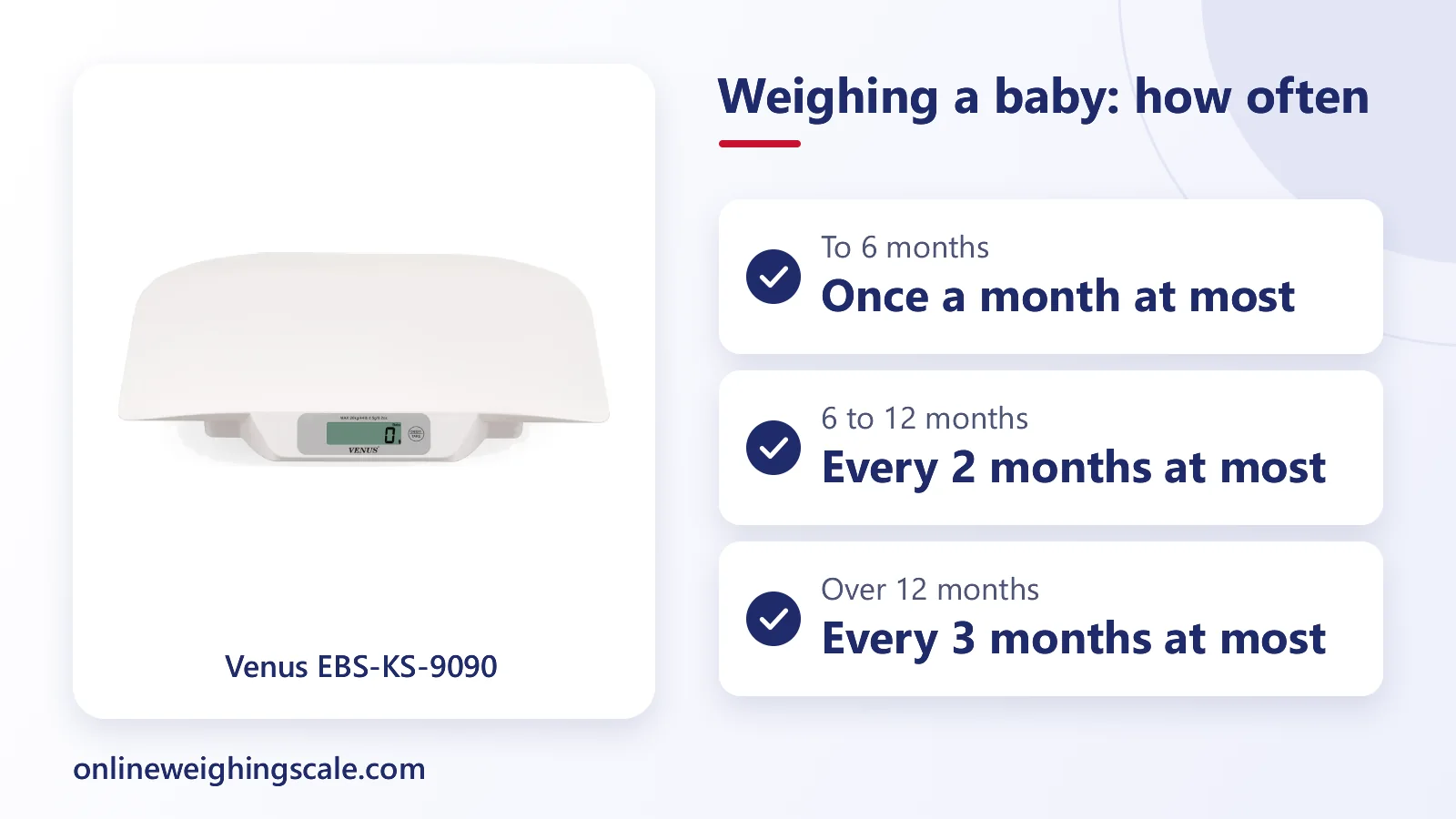
A baby scale such as the Venus EBS-KS-9090 Infant Weighing Scale measures to 5 g on a 20 kg range, ₹2619 including GST, and that fine step is what makes it useful for a small baby. The related method of guessing weight without any scale is explained in How to Check Weight Without a Weight Machine.
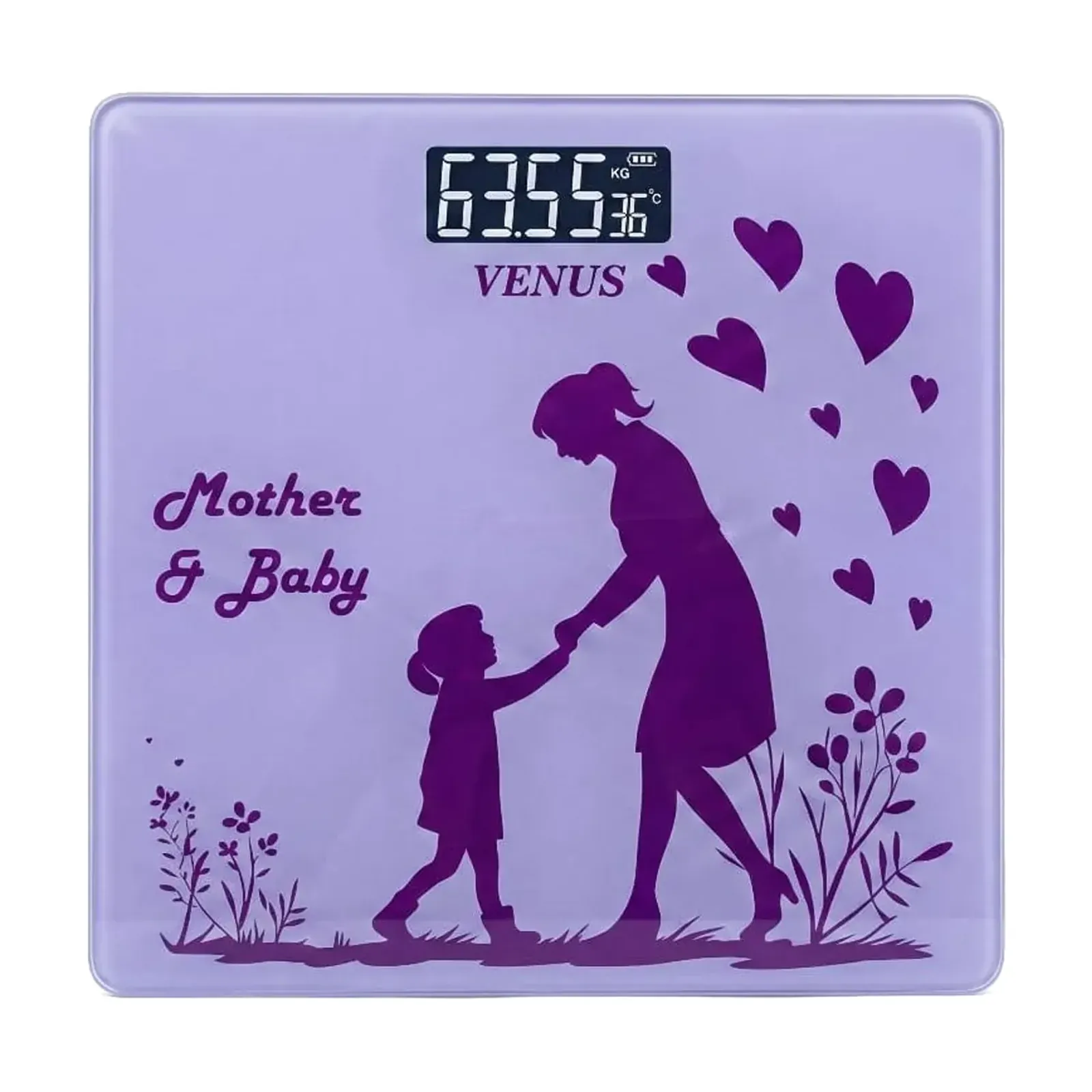
Omace Brands Private Limited also makes mother-and-baby bathroom scales, such as the Venus EPS-05 Mother and Child Weighing Scale at ₹729, which has an auto tare feature for the baby. These are for a baby held in the arms, and the baby tray scales above suit tiny babies better.
How to weigh a baby with a hanging scale and sling
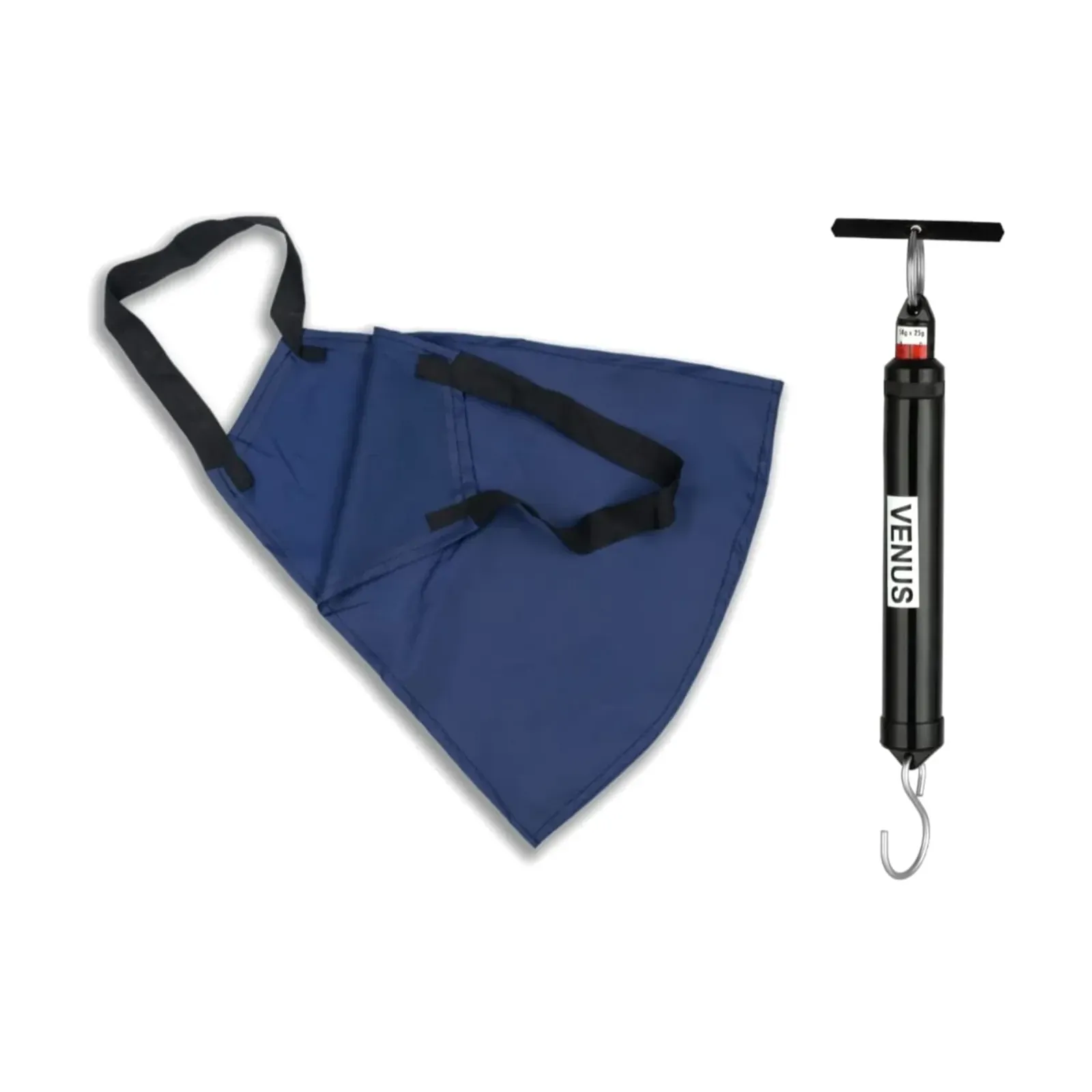
A hanging baby scale carries the baby in a cloth sling hooked to the scale. The Venus HSTB-5 Spring Balance for Newborn (5 kg, ₹419) is a mechanical version with a sling and needs no battery. Hang it from a firm hook or hold it by its ring at eye level, put the baby into the sling, lift slowly and read the dial when the needle stops. Never hang it from anything that may give way, and keep one hand under the baby while lifting. Check that the pointer rests on zero with the empty sling before every use.
How often should you weigh a newborn?
For a healthy baby, much less often than parents expect. The NHS says a baby is weighed at birth and again in the first week, and that where a baby is gaining weight and there are no worries, weighing should be no more than once a month up to 6 months, once every 2 months from 6 to 12 months, and once every 3 months after 12 months.
| Baby age | Weighing at most (if gaining well, no worries) |
|---|---|
| Birth and first week | At birth and again in week one |
| Up to 6 months | Once a month |
| 6 to 12 months | Once every 2 months |
| Over 12 months | Once every 3 months |
The same NHS page says health professionals record weight in the child's red book. In India the Mother and Child Protection card plays the same role, and you carry it to the clinic. Daily weighing at home creates worry, since normal ups and downs after feeds, passing stools or a different time of day look like a trend when they are not.
If your doctor or health worker asks you to weigh more often, for example because feeding is being watched, follow that advice and record the numbers in a notebook with the date and time.
Where babies are weighed in India
The government's growth monitoring programme is run through Anganwadi centres. A Press Information Bureau factsheet on Poshan Tracker says growth monitoring devices are provided at each Anganwadi centre, that the tracker uses the WHO Child Growth Standards, and that it had enabled growth monitoring for over 6.3 crore children aged 0 to 5 years as of May 2026 (PIB factsheet, checked November 2026). Your Anganwadi worker or the nearest health centre can tell you when and where your child is weighed.
A home reading is a helpful extra and never a replacement for these visits. Clinic scales are checked and used the same way each time, and the health worker plots the weight on a chart and reads it against your baby's age.
How to read the number at home
Write the reading in kilograms and grams, with the date, in the same book each time. What counts is the line over several weeks. One number alone says very little.
This guide does not give growth numbers, because those depend on age, sex and the chart used. The WHO-based monthly numbers are in Newborn Weight Chart, boys and girls growth is in Boys Growth Chart, and the gain expected month by month is in How Much Weight Should a Baby Gain. Charts are references. A scale shows weight and nothing more, it does not diagnose anything, and a doctor decides what a reading means for your baby.
When to speak to a doctor
Speak to your paediatrician, health worker or clinic when you notice any of these:
- Your baby is feeding poorly, is unusually sleepy, or has fewer wet nappies than before.
- Your baby seems unwell in any other way, whatever the number says.
- Your home readings keep going in a direction that worries you, after you have checked that the scale, the surface and the clothing arrangement are the same each time.
- You have any doubt at all about feeding or growth.
The NHS page says to raise worries about your baby's health or development with your health visitor or GP rather than wait for the next review. This is general information. Ask your doctor about your own baby's readings.
Keeping the baby scale accurate
Scales drift with knocks, heat and low batteries. Test yours with a known weight, such as a sealed 1 kg packet of sugar, and look for a reading that is clearly off. If it is, follow the steps in How to Read a Baby Scale and Check It Is Accurate. On Omace digital scales a long press of TARE opens calibration mode on some models and a long press of the M key on others, and the manual for each model shows which, and every Omace scale is factory calibrated and replaced under warranty if it reads wrong. The warranty covers manufacturing defects for 2 years. Omace Brands Private Limited has made scales in Bagru, Jaipur since 1994, and each scale is checked with certified test weights before dispatch.
Browse the full range in baby weighing scales. For a baby's length, which is measured on a board rather than a scale, see How to Use an Infantometer.
A simple routine for home weighing
Pick one scale, one surface and one arrangement, undressed or in the same nappy with the scale zeroed. Weigh at the interval your clinic suggests, write the date and the number in the book, and take the book to the next visit. If you cannot get a baby scale, hold-and-subtract gives a rough idea for an older baby, and your clinic remains the place for a reading you can rely on.