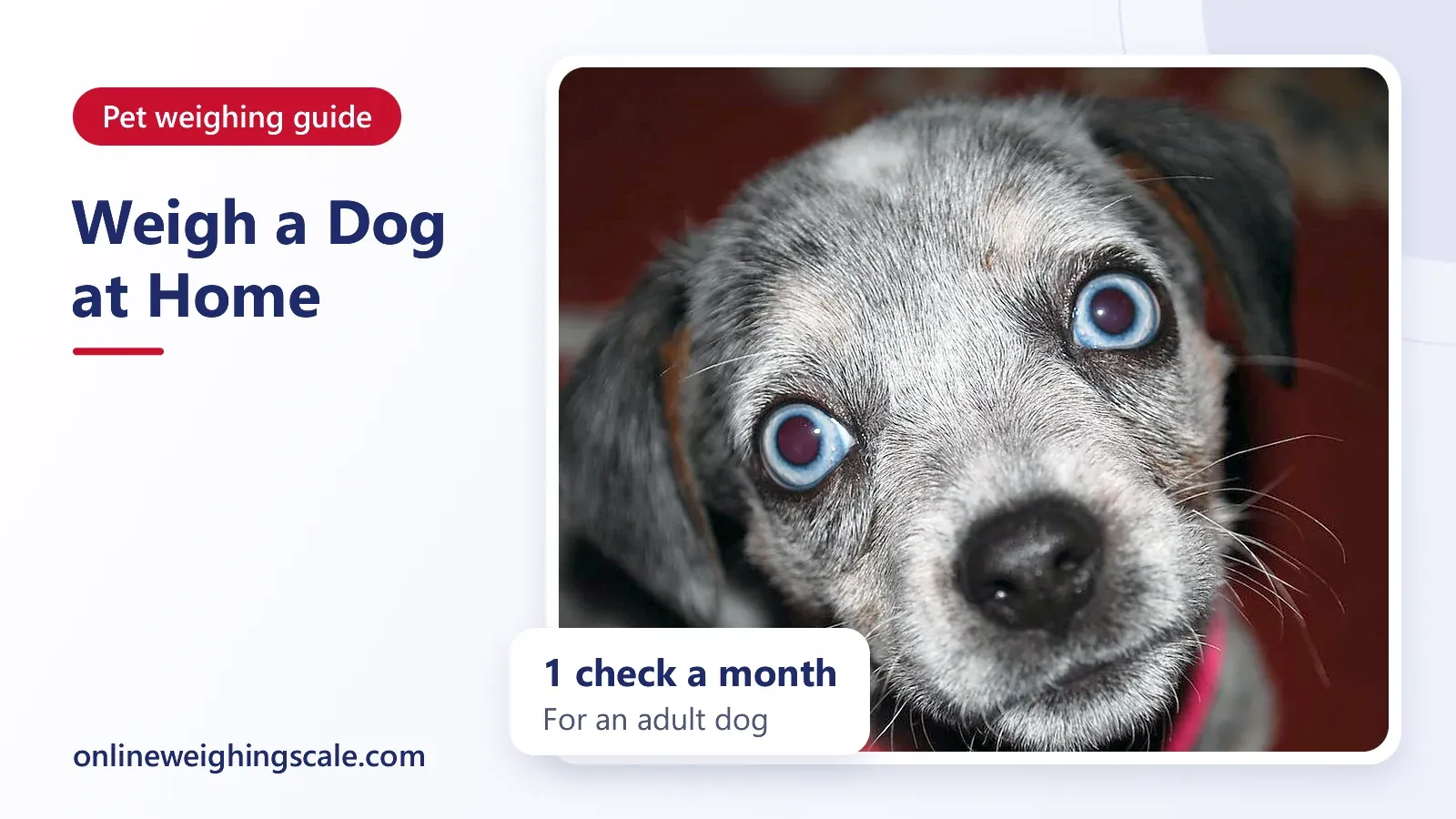
To weigh a dog at home, step on a bathroom scale alone, step on again holding the dog, and subtract the first number from the second. This hold-and-subtract method suits a dog you can lift with ease, and one reading a month is enough to see a trend. For a larger dog, a flat platform scale is the safer tool, and a vet decides what any weight means for your pet.
Why weigh a dog at home at all
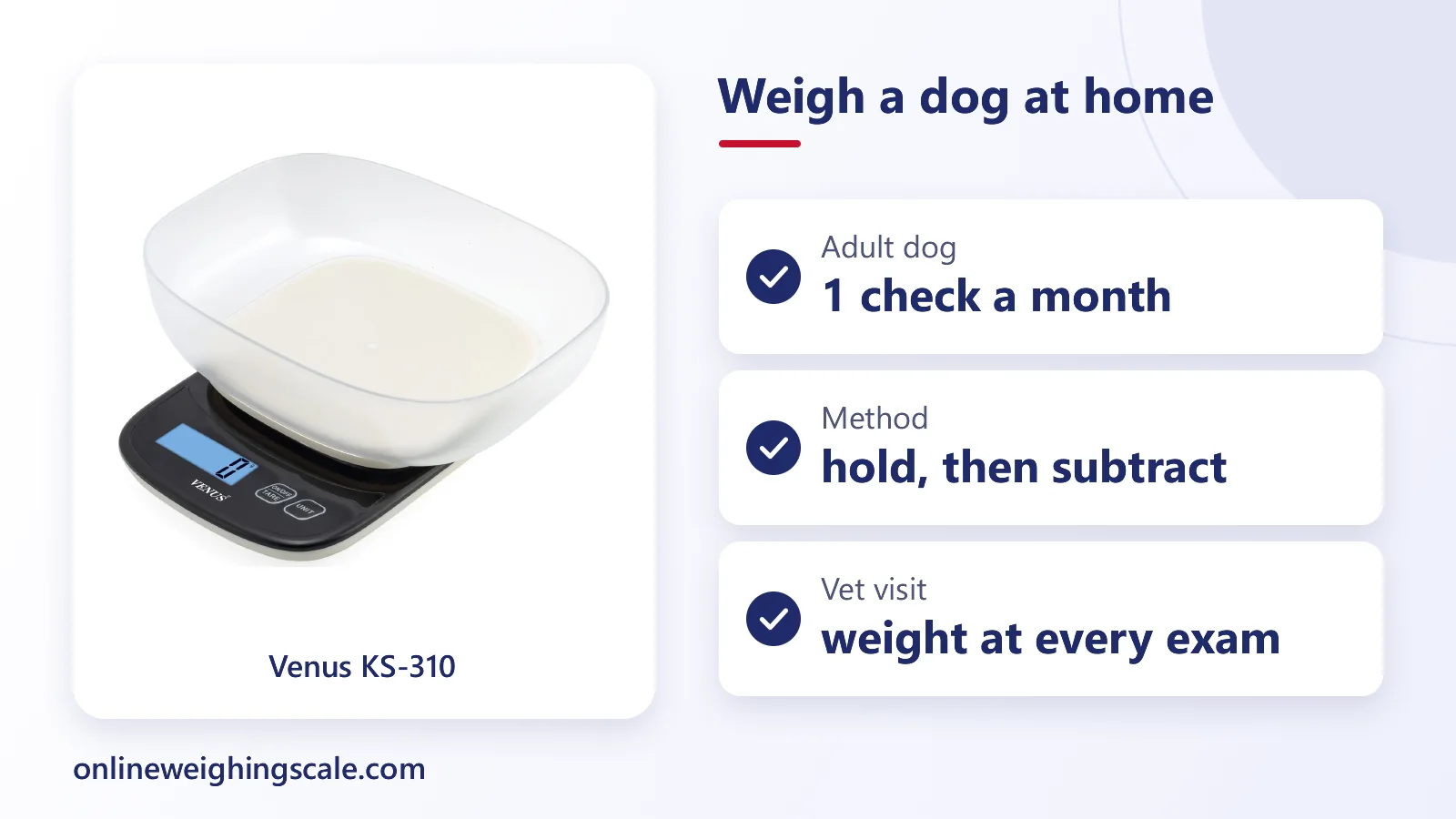
A dog's weight moves slowly, so a change is easy to miss when you see the animal every day. The Texas A&M veterinary college suggests owners check a pet's weight at least monthly at home so trends show up early. That article is about cats. It describes the owner weighing themselves, then weighing themselves with the cat, and doing the simple sum, which is the same hold-and-subtract method used here.
The US Food and Drug Administration tells owners that weight should come up at every vet visit. A home record gives the vet a trail between visits, which is more useful than one number from a nervous dog standing on a clinic scale.
A home scale is a tracking tool. It will not tell you the true weight to the gram, and it does not replace the vet's own scale. If the numbers surprise you, take the dog to the clinic and let the vet confirm. A vet decides about a pet's weight, and this post is general information only.
Method 1: hold and subtract on a bathroom scale
This is the method most families use, and it works for a puppy, a small dog or a cat you can pick up without a struggle. Follow the steps in order.
- Put the scale on a hard, flat floor. Carpet and rugs soften the reading, so tiles are best.
- Stand on it alone and write the number down. Wear the same clothes for the second reading and hold anything you will still hold then.
- Pick the dog up, step on again, and stand still. Wait until the display stops changing.
- Subtract the first number from the second. The difference is the dog.
Say you read 62.4 kg alone and 69.1 kg with the dog. The dog is 6.7 kg. Write that in a notebook or a phone note with the date.
How wrong can this method be
Two readings go into one answer, so the small errors of both add up. A restless dog adds more. If the dog scrambles, the display jumps and the number you read is a guess. Wait for a steady value, and if you cannot get one, try a second method.
An adult bathroom scale is built for heavy loads, so its display steps are coarse next to a small dog. This is plain reasoning, not a measured error. For a young puppy the coarse steps matter more, and for a bigger dog they matter less. If you want to know how far your own scale can be trusted, our guide on how to calibrate a bathroom scale and check its accuracy shows a simple check with a known weight.
Keep the scale, the spot on the floor and the time of day the same each time. A simple habit helps: weigh at the same time of day, for example before the morning meal, so the comparison between months stays fair.
Method 2: a baby or kitchen scale for small pets
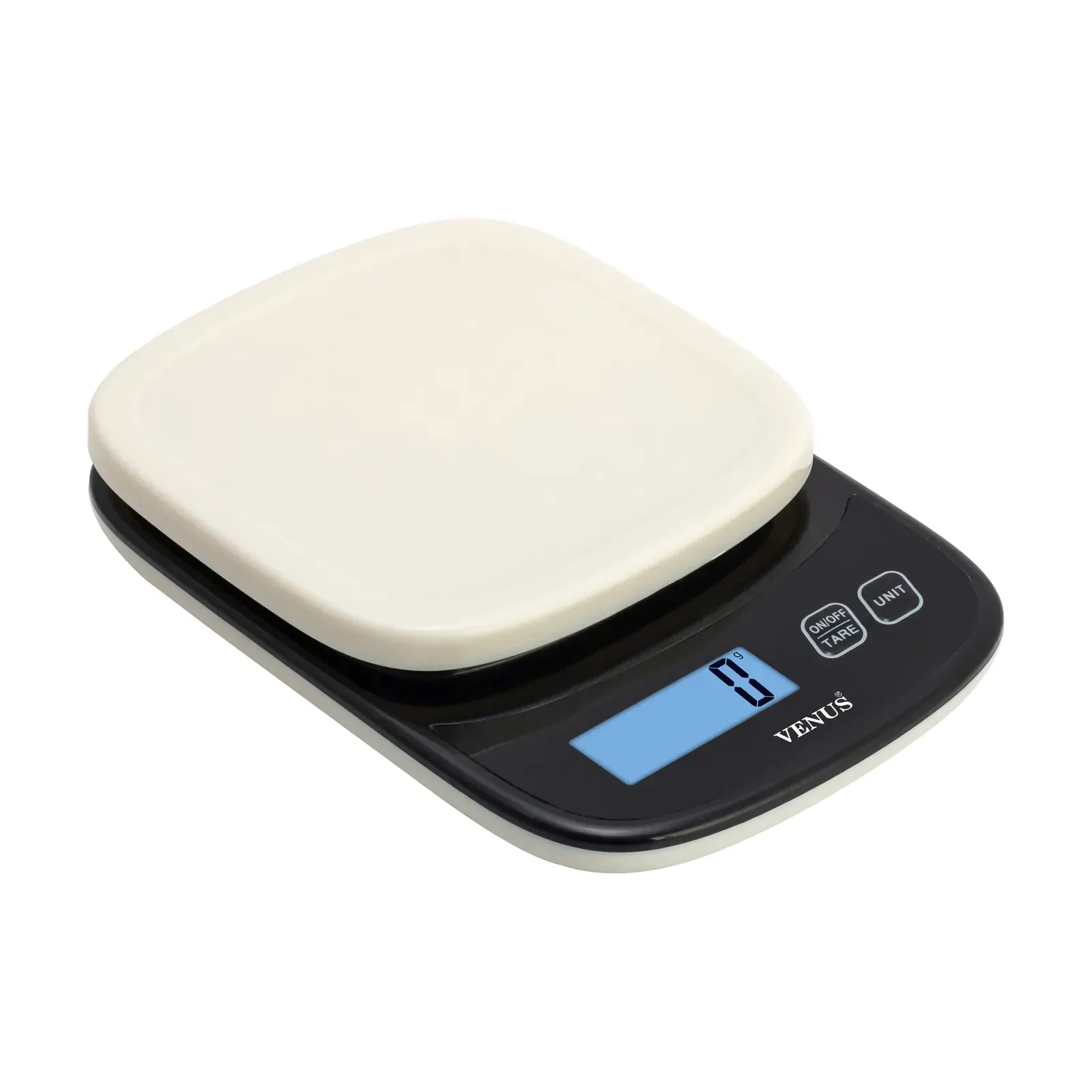
A tiny puppy or a kitten is better placed in a box or basket on a scale that reads in small steps. A kitchen scale such as the Venus KS-310 kitchen scale, which reads 10 kg in 1 g steps and has a tare key, gives a finer reading than hold-and-subtract, because the animal is the only large load on the platform. Check that your pet fits the platform with the container on it.
- Place a clean, lightweight container such as a cardboard box or a shallow basket on the scale.
- Press TARE (or ZERO). The display returns to 0 with the container still on it.
- Lift the animal in gently and keep a hand near, ready to steady it without pressing down.
- Read the number once the display settles. Lift the animal out and check that the display returns close to 0.
Taring removes the container from the answer. The post on how to choose a kitchen scale explains tare in plain words, and the one on how to read a baby scale shows how a curved tray and a steady reading work.
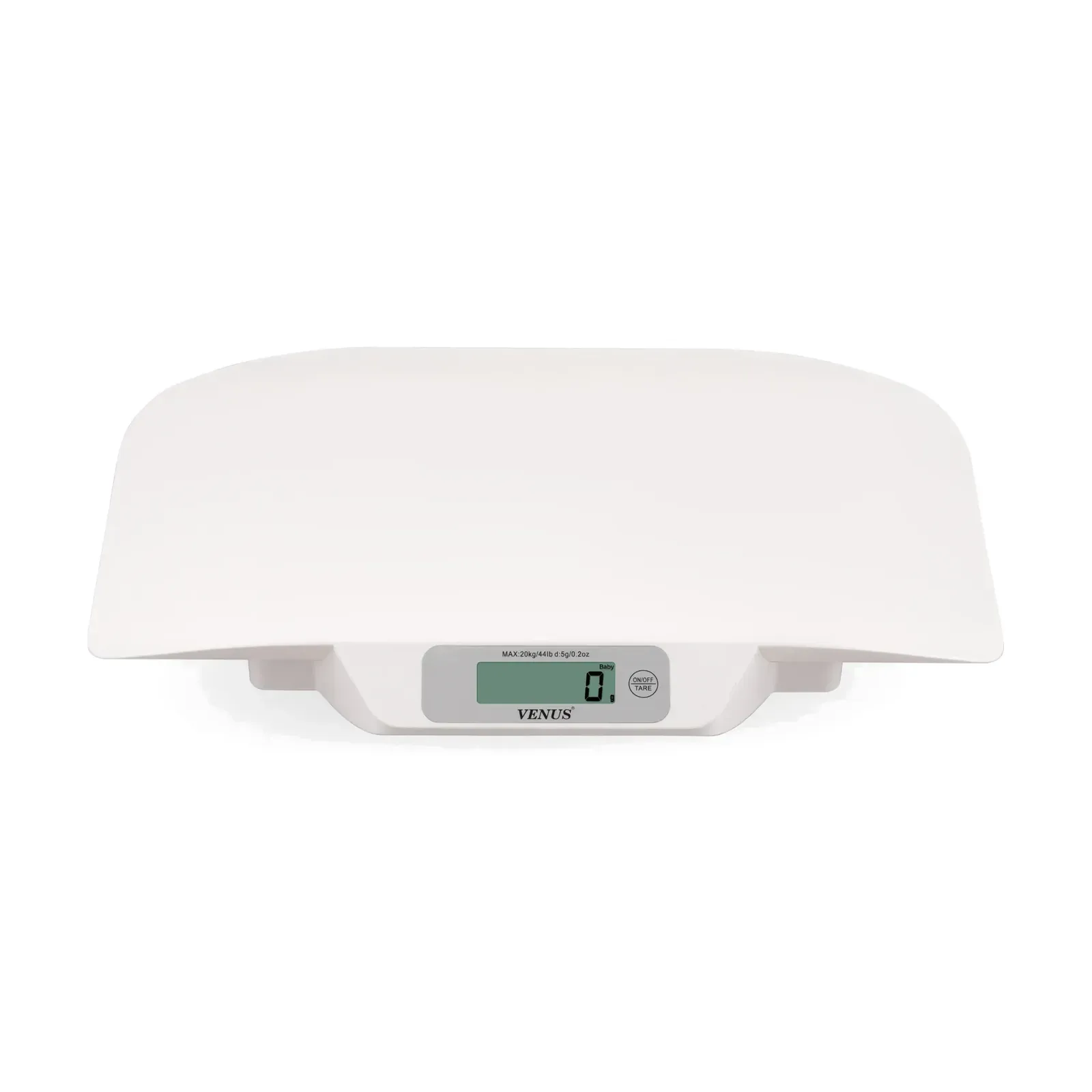
Omace Brands Private Limited does not sell a scale made for pets. People do use a baby weighing scale such as the Venus EBS-KS-9090 infant weighing scale (20 kg in 5 g steps, curved tray, tare) for a kitten or a small puppy because the tray holds a small body and the steps are fine. That is an owner's choice, not a use Omace promotes. Check the maximum load printed on the scale before you use it, and never leave an animal alone on a tray.
Method 3: a platform scale for a big dog
A dog you cannot lift is better weighed on a flat platform. A strong, low platform with a wide top lets the dog walk on and stand. Many vet clinics use this kind of scale, and a family with a large breed can ask the clinic whether the dog may step on it for a quick check.
A home variation is a firm, flat board that spans a personal scale. Weigh the board alone, then weigh the dog on the board and subtract the board. It only works if the board rests fully on the scale's feet and the dog stands calmly. A glass-top bathroom scale and a bouncy dog are a poor mix, as glass can crack and the dog can slip.
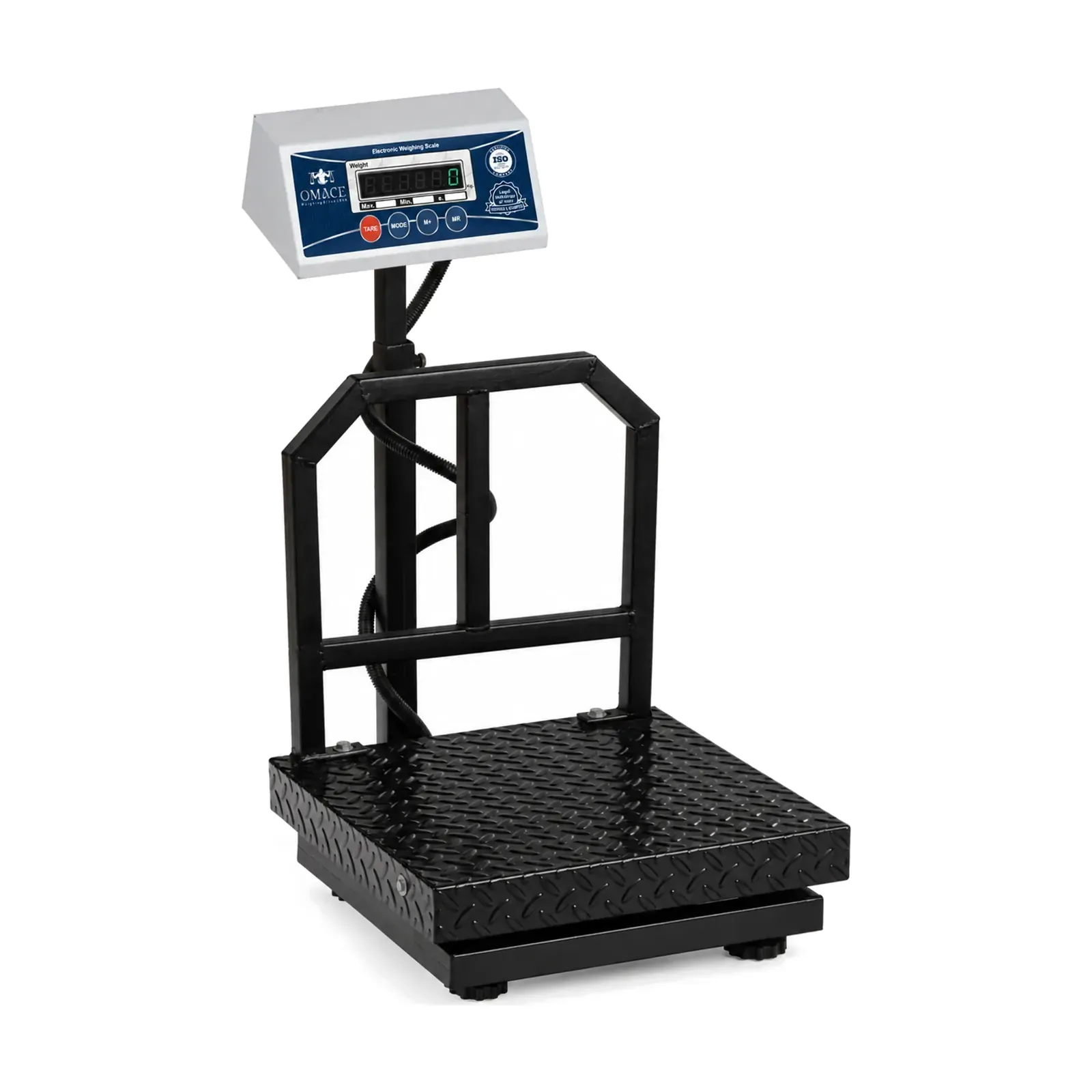
A platform weighing scale with a large top, such as the Omace Om-PS-MS platform kanta (100 kg to 500 kg), suits a farm, a kennel or a clinic that weighs many animals. Omace makes platform scales for shops and farms, and they leave Bagru stamped by Legal Metrology. They are made for trade and goods, so they suit an animal only when it stands calmly on the top and the load fits the scale's range. For a single pet, a clinic visit is often the simpler path.
Weighing a cat or a very small pet
Cats rarely sit still on a bathroom scale, so hold-and-subtract is the usual way. A cat that tolerates a carrier can be weighed in it: weigh the empty carrier first, then the carrier with the cat, and subtract. Do it calmly, a few minutes after the cat has settled.
Check the body as well as the number
A single number does not say if a dog is the right shape. Vets also score the body. The World Small Animal Veterinary Association publishes body condition score charts that vets can use at every visit to judge fat stores. The FDA page suggests quick checks at home:
- From above, a healthy pet has a visible waist.
- Run your hands along the side, and you should feel the ribs without pressing hard.
- From the side, the belly should tuck up slightly instead of sagging.
The same FDA page advises owners to ask the vet to explain the scoring system and where the pet falls on it. Dogs differ a great deal by breed, coat and build, so a number that suits one dog says little about another. Ask your vet about a good weight and a time frame, and never set one by yourself.
How often to weigh
For an adult dog, once a month is a steady rhythm and matches the Texas A&M advice for pets. A growing puppy changes fast, so many owners weigh more often and bring the notebook to vaccination visits. Ask your vet how often suits your puppy.
Write down the date, the scale used, the method and the number. After a few months the page shows a line. A line that climbs or falls without a clear reason is a reason to call the clinic. Loss with the same food and exercise is worth a vet visit sooner rather than later, and it is no moment to try a new diet on your own.
Which scale suits which pet
| Pet | Practical option | Note |
|---|---|---|
| Kitten or toy-breed puppy | Baby or kitchen scale with a lightweight container and tare | Fine steps, small load |
| Small dog or cat you can lift | Bathroom scale, hold and subtract | Same scale, same time of day |
| Medium dog | Bathroom scale with a board, or a vet visit | Weigh the board first |
| Large dog | Platform scale at a clinic or a kennel | Needs a flat, firm top |
If you are choosing a scale for the house, our notes on the best weight machine for home use and the Venus EPS-2799 electronic weight machine for body and the wider personal weighing scale range show what to look for: a stable base, a clear display and a tare key.
Farm animals in one paragraph
A goat, a calf or a buffalo cannot be held, and a kitchen or bathroom scale will not do. Farm animals are weighed on a livestock platform or a hanging scale with a frame. Any scale that carries animals needs checking against known weights from time to time, and our post on how to check an animal scale explains how.
Keep a simple weight record you can trust
A home scale that is checked now and then and used the same way gives numbers you can compare. The habit matters more than the gadget. Keep one scale for the pet, check it with a known weight, and keep the notebook near it. When something looks off, the vet will have a few months of numbers to read. The post on mass versus weight explains why the display shows kilograms.
This is general information. Ask your vet about your own pet's weight and diet.