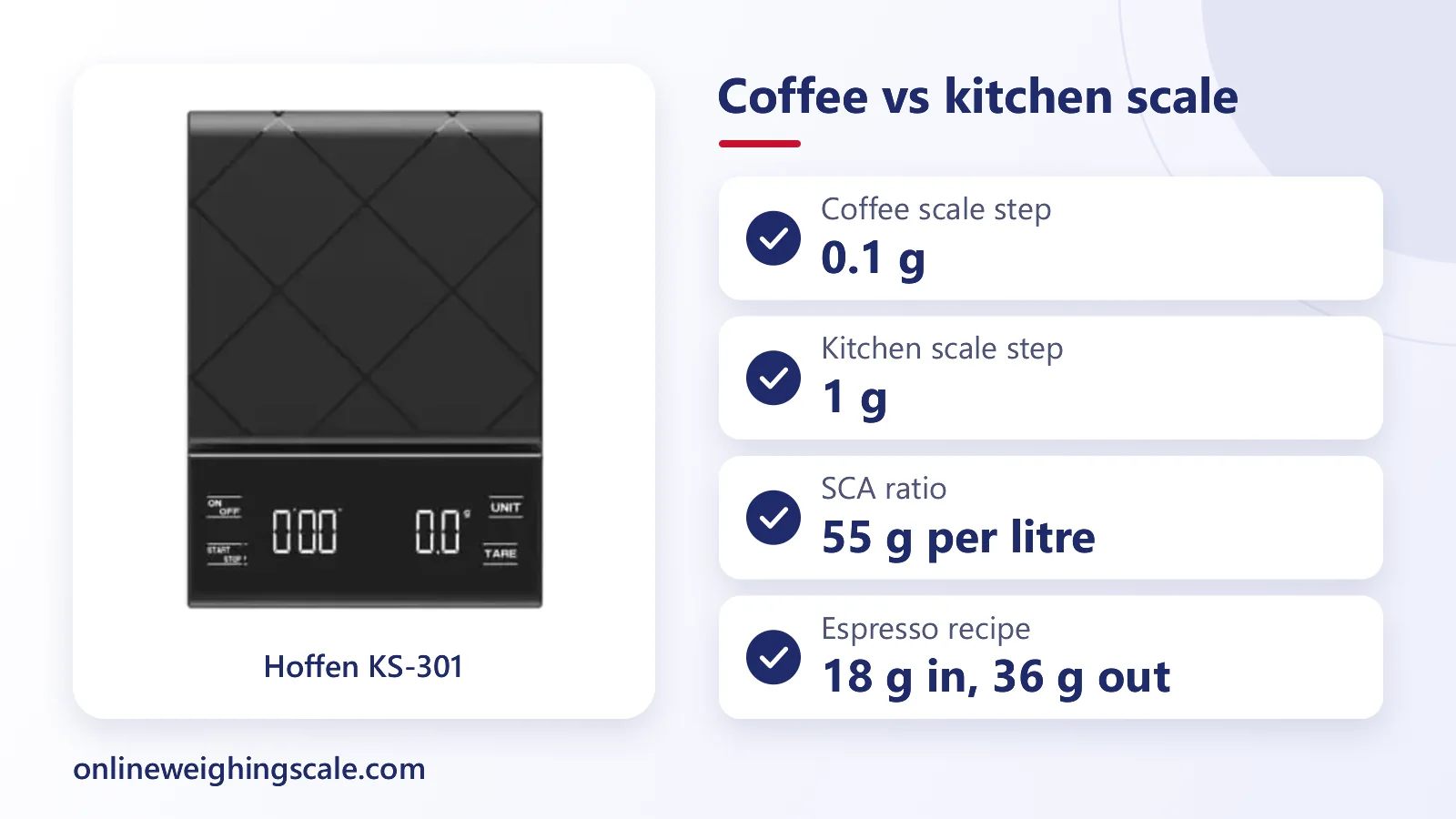
A coffee scale and a kitchen scale both weigh in grams, but a coffee scale reads in 0.1 g steps and carries a built-in timer, while most kitchen scales read in 1 g steps and have no timer. That one step decides whether a scale is enough for your brew. For a French press or a litre of cold brew, a kitchen scale does the job. For espresso and pour-over, where the dose is 15 to 20 g, a coffee scale is worth having.
This guide sets the two side by side, shows the arithmetic behind the 0.1 g figure, and says honestly which brews need which scale. If you already own a kitchen scale, you may not need to buy anything.
What is the difference between a coffee scale and a kitchen scale?
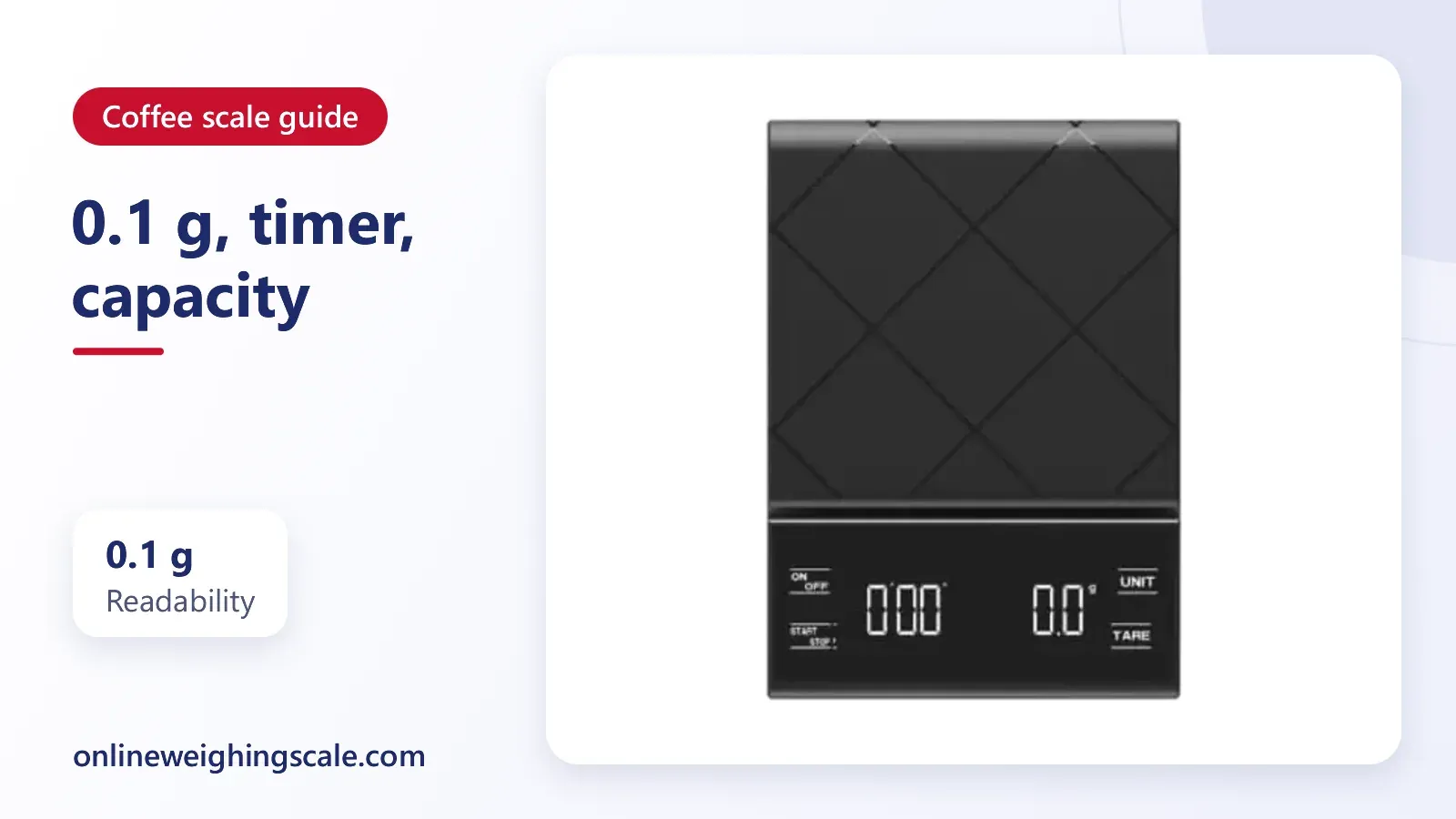
A coffee scale is built for small doses and timed pours. It reads 0.1 g, shows a stopwatch next to the weight, and usually tops out at about 3 kg. A kitchen scale is built for flour, rice and vegetables. It reads 1 g, has a larger capacity of 5 to 10 kg, and has no brew timer.
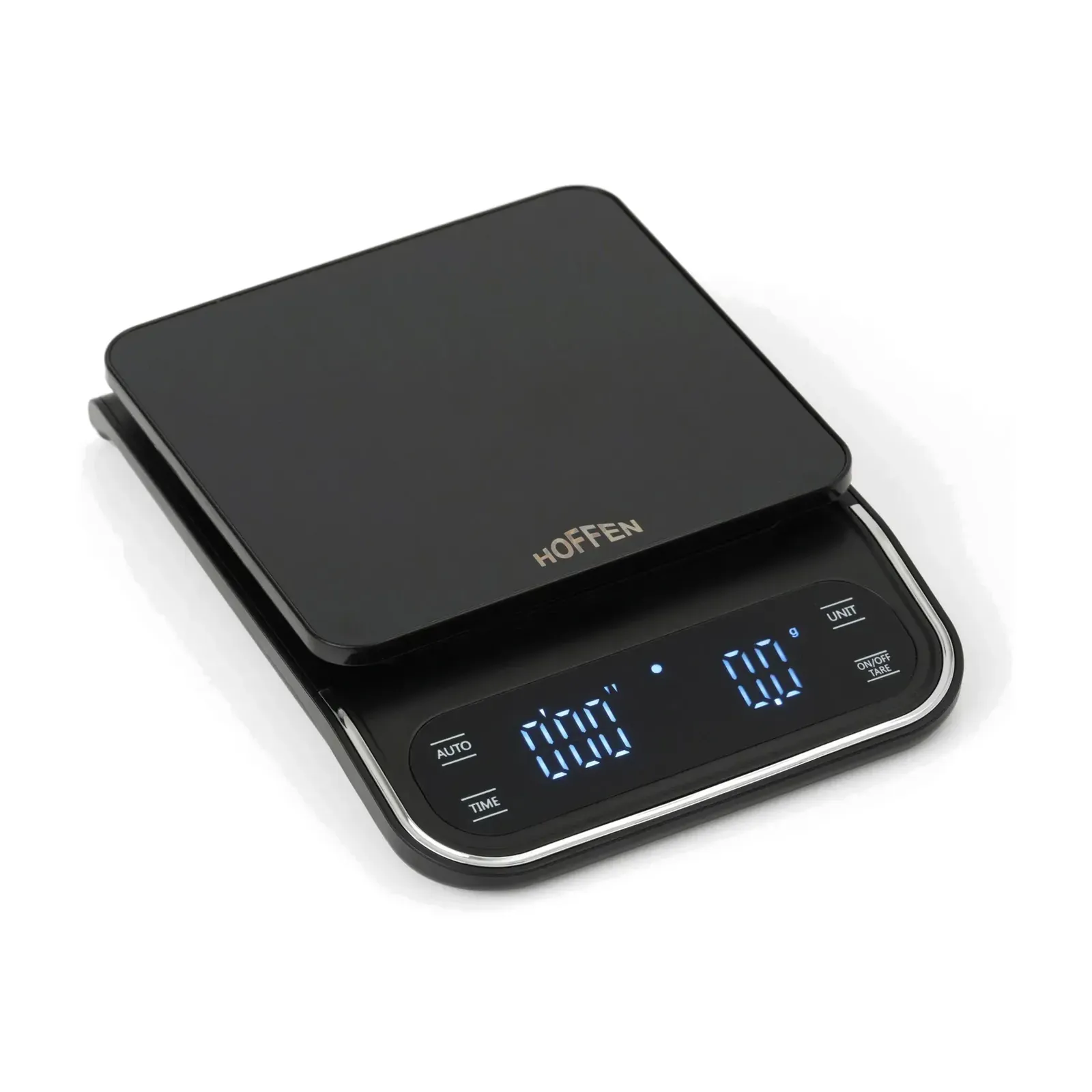
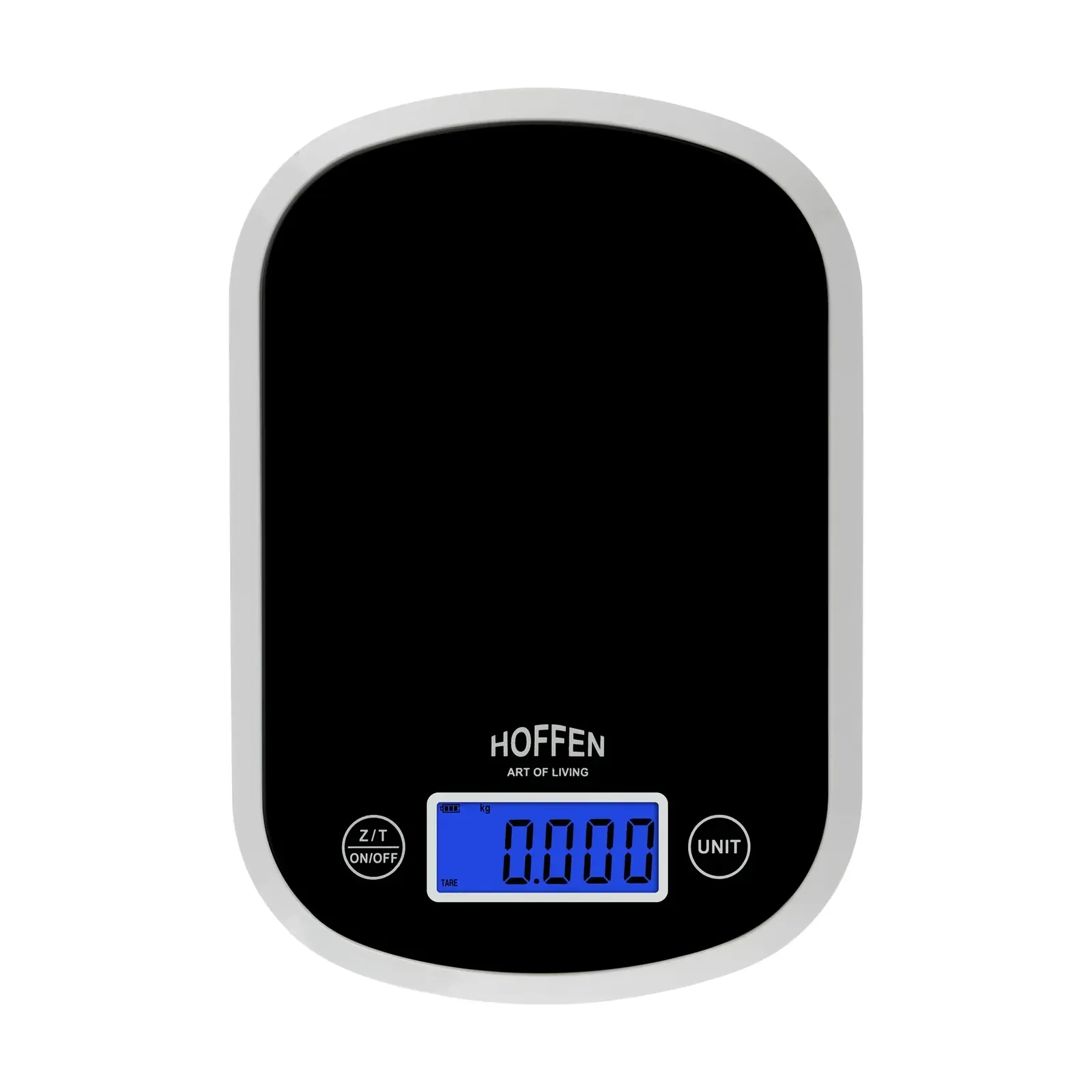
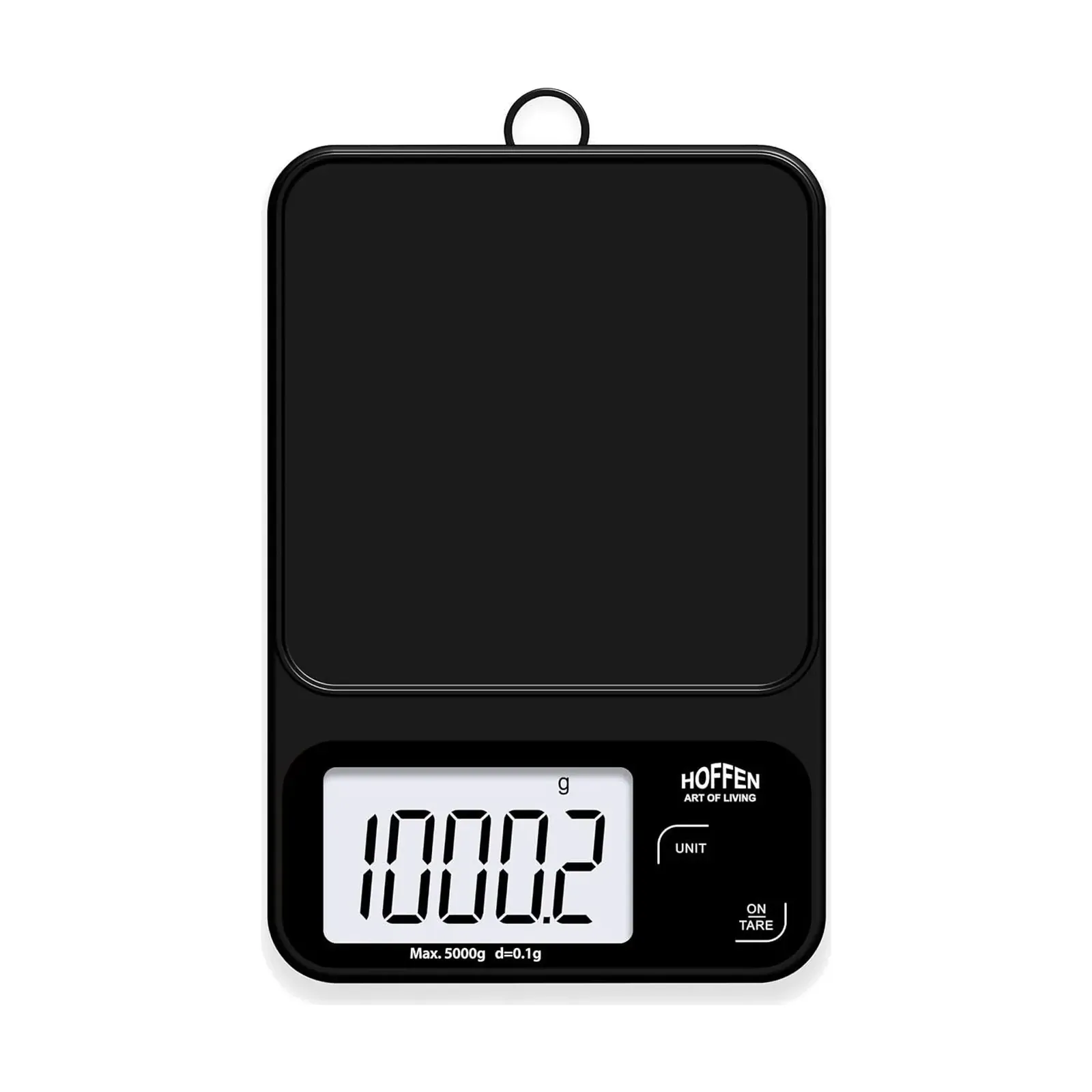
Both use the same basic sensor, a load cell under the platform. The difference lies in how finely the scale divides the weight and what else it shows. For a digital scale, OIML R 76-1 defines the scale interval as the difference between two consecutive indicated values, which is the 0.1 g or 1 g step discussed here. On the coffee scale range, the Hoffen KS-303 reads 3 kg at 0.1 g with a timer. On the kitchen scale range, the Hoffen KS-601 reads 5 kg at 1 g.
| Feature | Coffee scale | Kitchen scale |
|---|---|---|
| Readability | 0.1 g | 1 g on most models |
| Built-in timer | Yes, shown beside the weight | No, use a phone |
| Capacity | About 3 kg | 5 to 10 kg |
| Best for | Espresso, pour-over, drip, small doses | French press, cold brew by the litre, baking |
| Omace range price | ₹1,575 to ₹1,785 | ₹289 to ₹1,149 |
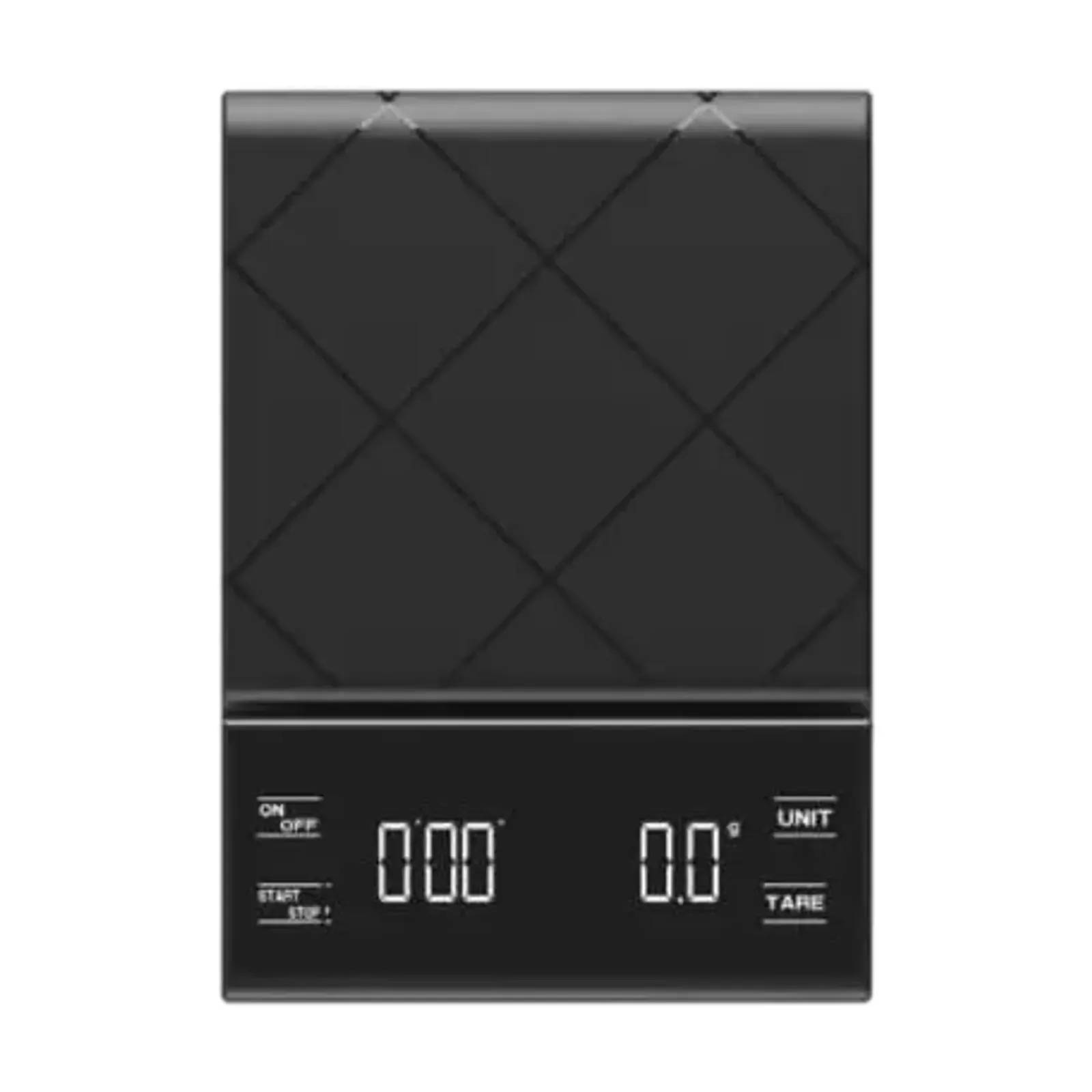
The Omace prices above are today's prices including GST, taken from the shop. The coffee models are the Hoffen KS-301 at ₹1,575 and the KS-303 at ₹1,785. The kitchen scales run from the Venus SF-400 at ₹289 to the Venus KS-305 at ₹1,149.
Why does 0.1 g matter when you weigh coffee?
Because the dose is small. A single espresso recipe of 18 g of coffee in and 36 g of espresso out is written to a tenth of a gram, as our coffee scale calibration guide explains. A scale that moves in 1 g steps cannot tell 18.0 g from 18.9 g.
The arithmetic is simple. On an 18 g dose, a 1 g step is about 5.6 per cent of the coffee. On a 0.1 g scale the same step is about 0.6 per cent. In a cup of espresso a few per cent of dose change is easy to taste, because the water runs through a small, tightly packed bed of coffee.
Brew ratio is the weight of water against the weight of coffee. The food scientists of the UC Davis Coffee Center express it in grams of coffee grounds per litre of water, and name it with brew strength and extraction yield as one of the three measures that describe a cup. A dose you cannot weigh finely moves all three. Each method's ratio is set out in our coffee to water ratio chart.
What does the timer add?
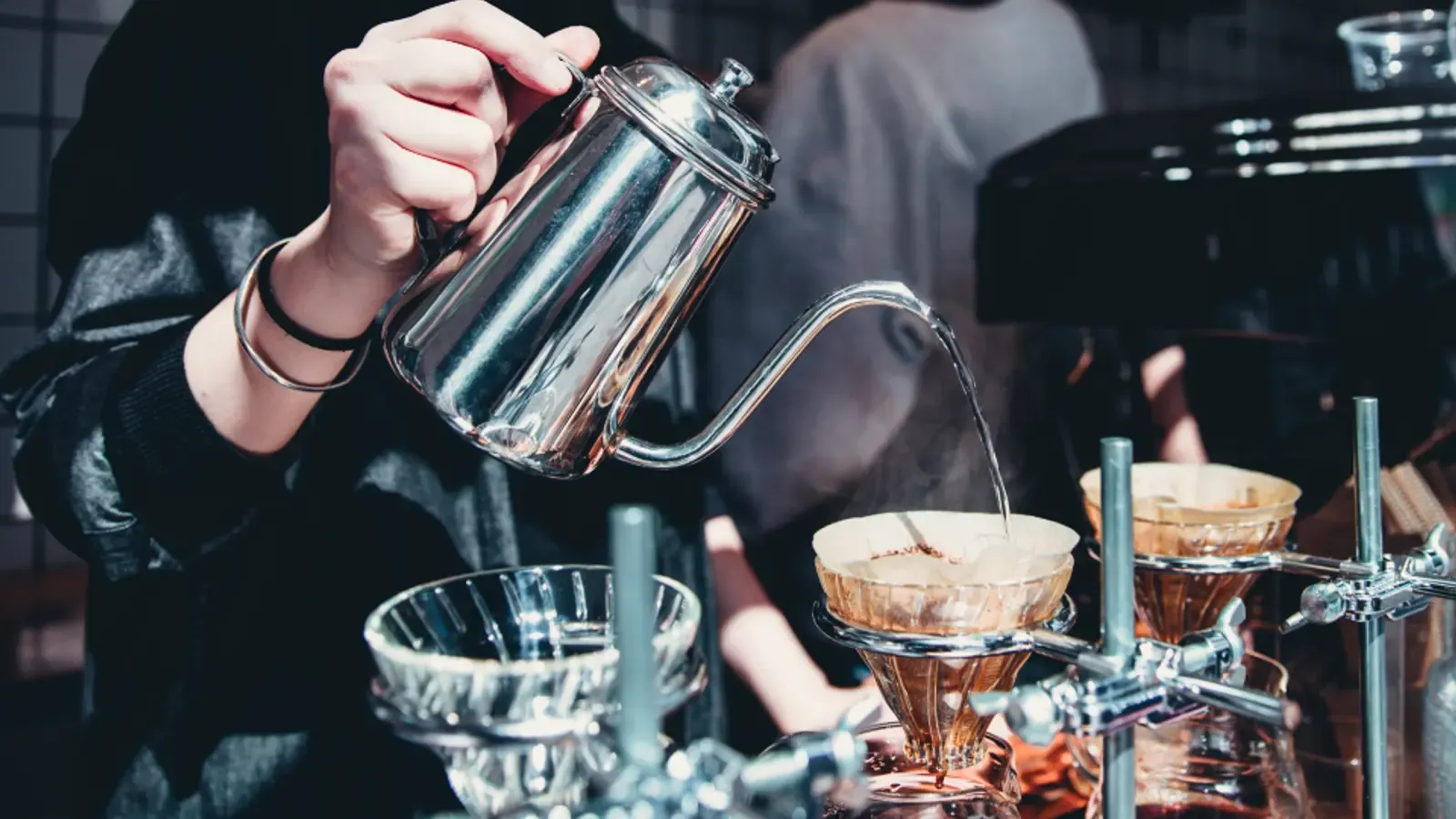
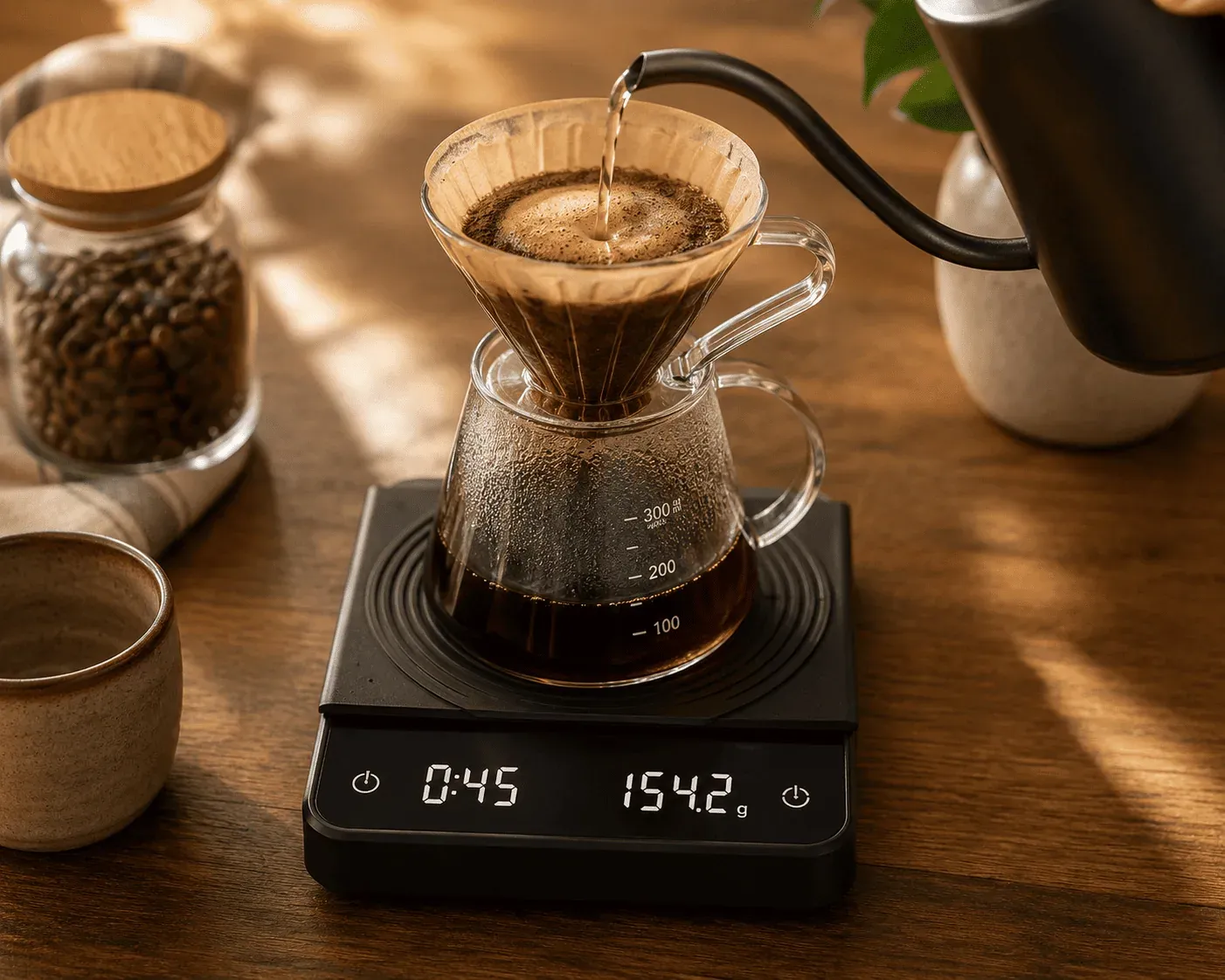
A timer lets you read weight and time on one screen. Pour-over and espresso both depend on how long the water takes, and you can watch the weight rise while the seconds run. With a kitchen scale you hold a phone in the other hand, or you guess.
Many people also find that the timer is the part they use most. Pour-over recipes are written as steps such as pouring a set weight by a set time. With a built-in stopwatch you can follow a recipe without keeping a second device wet and in reach. The Hoffen KS-301 coffee weighing machine also comes with a brew timer that counts up to 99 minutes 59 seconds, an anti-slip rubber mat and three AAA batteries, per its page in the shop. The KS-303 has touch keys marked AUTO, TIME, UNIT and ON/OFF-TARE, a 145 × 145 mm stainless steel platform and units of g, oz, lb and ml.
When is a kitchen scale enough for coffee?
A kitchen scale is enough when you brew a large amount and the dose is big. A French press recipe is written by the litre, so a 500 mL pot takes a dose near 30 g. A 1 g step is then only about 3 per cent of the dose. You will not taste that against a four-minute steep.
Cold brew is even more forgiving. Our cold brew coffee guide is made by the litre with a large dose. On a dose of 70 g or more, 1 g is under 1.5 per cent of the coffee, and the brew sits for many hours anyway. A Hoffen KS-601 digital kitchen scale at ₹629 weighs this well.
The same holds for South Indian filter kaapi when you measure by the spoon-and-scoop habit and only want a rough weight. A kitchen scale makes the dose repeatable day to day, which is the main gain from weighing at all. If you are not sure how many grams a cup of ground coffee is, the grams to cups chart gives a starting point, though a weighed dose is always more consistent than a scoop.
When do you need a coffee scale?
You need one for espresso, pour-over, drip and any recipe with a dose under about 25 g. In those brews each gram is a large share of the coffee, and small shifts change strength and extraction. Espresso also needs the output weighed in the cup, which means 36 g, 40 g or similar read in tenths.
A coffee scale also helps if you change recipes often, because 0.1 g lets you move the dose by small, repeatable amounts while you tune the grind. With a 1 g scale the smallest change you can make is 1 g, which on an 18 g dose is a jump you cannot undo by feel.
If you want a lower-cost option, the Hoffen KS-301 digital coffee weighing machine weighs 3 kg at 0.1 g with a timer for ₹1,575. The Hoffen KS-303 digital coffee weighing scale has the same 3 kg and 0.1 g and costs ₹1,785.
Can a 0.1 g kitchen scale stand in for a coffee scale?
Sometimes. A few kitchen scales read 0.1 g. The Hoffen KS-201 smart kitchen scale with app weighs 5 kg at 0.1 g and sends the weights to a phone over Bluetooth, for ₹729. It does not have a built-in brew timer, so you would still time the brew on another device.
The Hoffen Digital Spoon Scale reads 500 g at 0.1 g and costs ₹939. It suits measuring a dose into a spoon, but it is a small tool for ingredients and not designed around a brew.
Look at three things before you buy. First, readability: 0.1 g for espresso and pour-over. Second, a timer, if you will pour by time. Third, the size of the platform against your cup, kettle or dripper, because a scale that is smaller than the cup base is awkward to read. For the full buying checklist for kitchen use, see how to choose a kitchen scale for Indian cooking.
Do you need to calibrate either one?
Check, do not assume. Place a known test weight in the centre and see whether the scale reads it correctly three times in a row. On Omace digital scales a long press of TARE opens calibration mode on some models and a long press of the M key on others, and the manual for each model shows which, and the steps are set out in our coffee scale calibration post.
A scale that reads 0.1 g is only useful if it is also accurate to that level. The scale interval says how finely the display steps, and says nothing about how close the reading is to the true weight. The difference is explained in accuracy vs precision.
Who makes Omace coffee and kitchen scales?
Omace Brands Private Limited makes weighing scales at G-29 RIICO Industrial Area, Bagru, Jaipur, and has been in the weighing trade since 1994. Read more on the about page and see its quality documents on the certificates page. Every scale is checked with certified test weights before dispatch, and each product is replaced under warranty if it reads wrong. The warranty covers manufacturing defects for 2 years.
Which one should you buy?
Pick by the brew you make most. If it is a French press or cold brew, buy a kitchen scale and keep the money. If it is espresso, pour-over or any small, timed dose, buy a coffee scale. If you do both, the coffee scale handles every brew on this page, since 3 kg is far more than any pot of coffee weighs.