Body fat can be estimated in six ways, and BMI, the number most people try first, is not one of them. This guide sets out what each method measures, where it is done and what limits its reading, so you can choose one for home and know when a clinic is worth a visit. Every figure is an estimate, and none of them diagnoses anything.
Why no method gives the exact figure
Nobody can lift out the fat from a living body and weigh it. Every body fat test therefore measures something else, such as thickness of skin folds, resistance to a small current, body volume or X-ray absorption, and then converts it into a fat estimate with a formula. Each formula carries assumptions, and each assumption can be wrong for a particular person.
That is why two methods can give two different numbers for the same person on the same day. Neither is lying. They are answering slightly different questions. The sensible use of any of them is to repeat the same method under the same conditions and watch the direction over weeks, not to chase one reading.
BMI is not a fat measure
The US Centers for Disease Control and Prevention says BMI does not directly measure body fat, and that it cannot tell fat from muscle and bone or show where a person carries fat. CDC still calls it a quick screening measure, one to be read together with blood pressure, cholesterol and a physical examination.
The UK National Health Service makes the same point from the other side: its obesity guidance says the BMI calculator cannot tell the difference between muscle and fat, so a muscular person can land in the overweight band without much body fat. You can still work out your number on our BMI calculator and read how it sits against height in the height and weight chart for India, but treat it as a starting point and not as a fat reading.
Waist and waist-to-height: the home test with a tape
The World Health Organization notes in its obesity and overweight fact sheet that measures such as waist circumference can also be used to identify overweight or obesity. A waist figure says something about fat around the middle, which BMI cannot show.
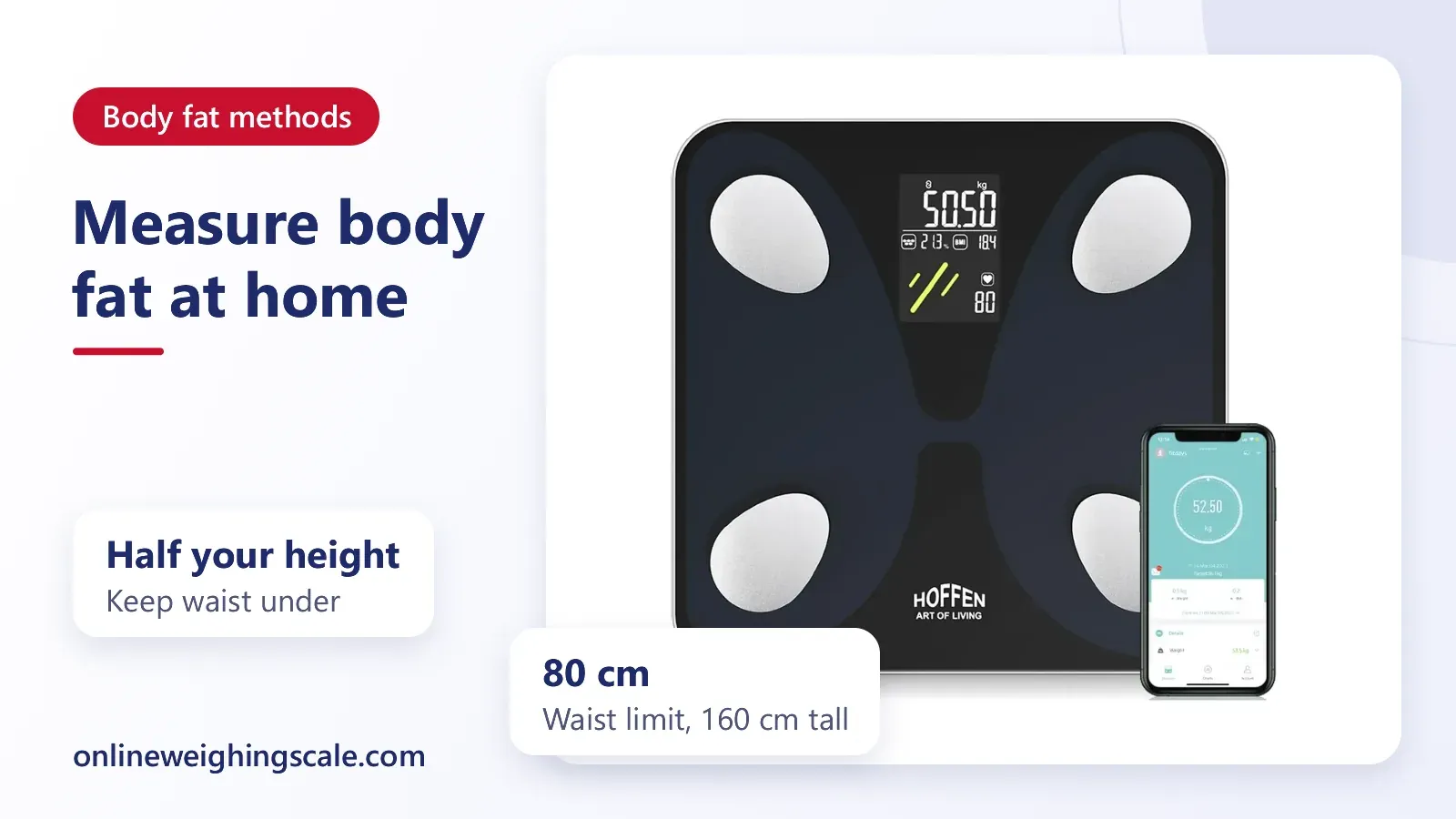
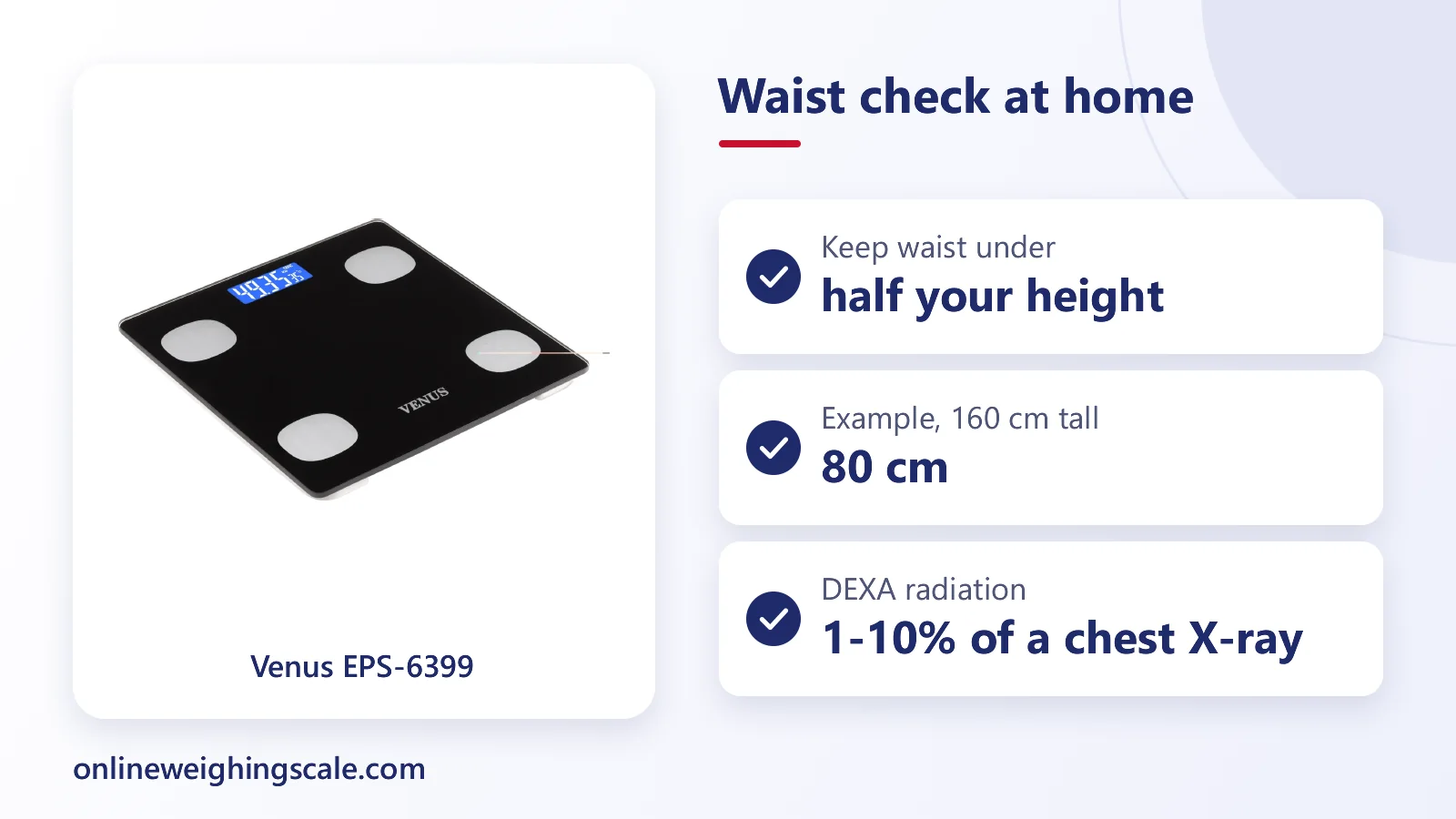
The simplest version is the waist-to-height check. The NHS advises keeping your waist size to less than half your height and lists a waist more than half your height as a reason to see a GP. For someone 160 cm tall, half the height is 80 cm; for someone 172 cm tall it is 86 cm.
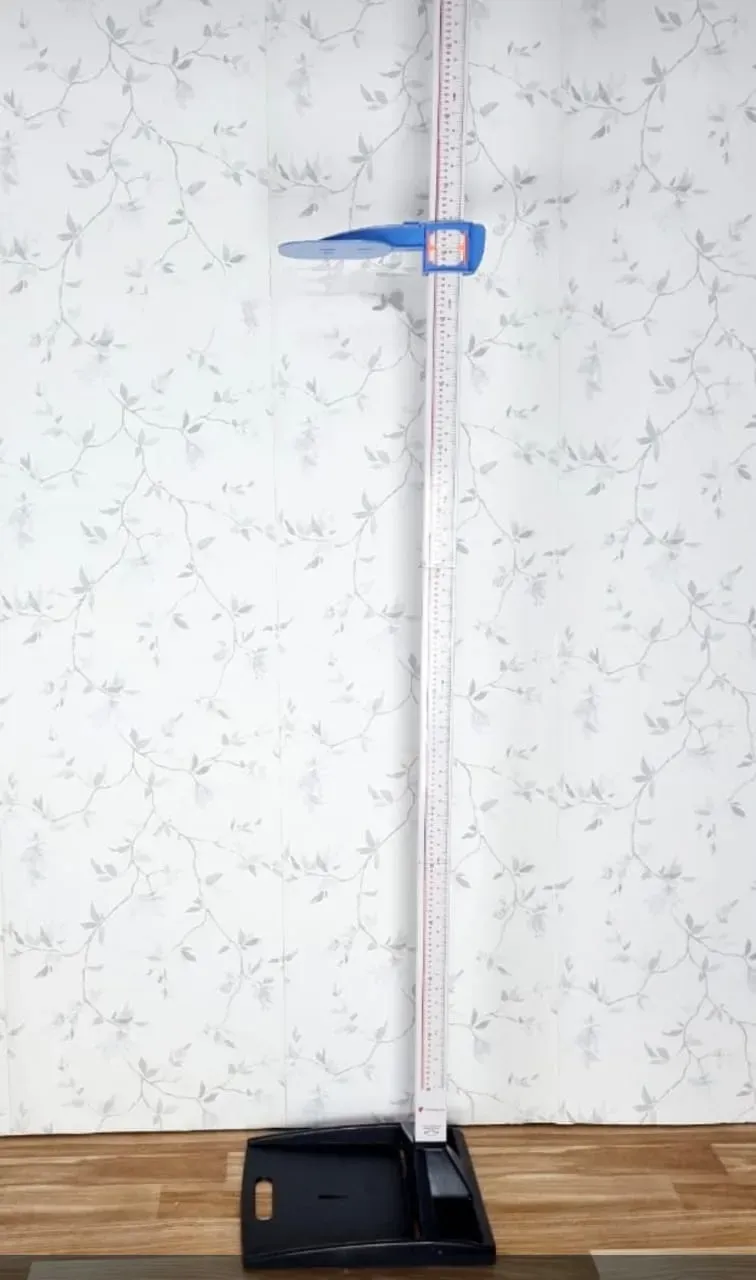
Measure the same way every time: a soft tape, snug against the skin without pressing, around the middle at the same spot, standing relaxed. A tape that is read wrongly is the usual source of error, so see our guide on how to read a measuring tape in cm, mm and inches. For the height half of the sum, a wall-mounted stadiometer or the steps in how to measure height accurately give a better figure than guessing.
Skinfold calipers
A body fat caliper pinches a fold of skin and the fat under it at set places on the body, and the thickness in millimetres goes into a formula. It costs little and needs no electricity. A 2021 narrative review in sports practice describes skinfolds as an inexpensive technique that needs only calipers and a tape measure.
The same review lists the weak points. The experience of the person measuring is crucial, a difference of as little as 1 cm in the site can change the result, and there are over a hundred formulae to turn skinfolds into a body fat figure. Its authors suggest reporting the sum of skinfolds in millimetres instead of converting it to a percentage. At home, a caliper is only as good as the person pinching, so repeat it with the same hands at the same sites.
Bioimpedance scales and handheld devices
Bioimpedance analysis, or BIA, passes a small current through the body and reads how much it is resisted. A review of body composition methods explains that this is used to estimate total body water and then fat-free mass, assuming that 73 per cent of fat-free mass is water. The same review calls the method portable, inexpensive, simple and quick, not recommended for people with pacemakers, and notes that single-frequency devices cannot tell fluid compartments apart well.
Because water is the starting point, hydration matters. The 2021 sports review says BIA output can be affected by temperature and hydration status, that electrode placement matters, and that large variability exists between devices. It adds that BIA may be a useful tool for tracking change if the method is standardised. Our posts on how a smart scale measures body fat and whether smart scales are accurate cover home scales in more detail, and lean body mass explains the fat-free side of the reading.
DEXA vs BIA: which one for what
DEXA, also written DXA, is a low-dose X-ray scan that separates bone, lean tissue and fat, for the whole body and for regions. CDC says it measures body composition precisely but is expensive and not widely available. The body composition review puts the radiation at 1 to 10 per cent of a chest X-ray and says the equipment needs a trained technician.
DEXA is also not free of error. The review notes that fat-mass error rises with trunk thickness, and the 2021 sports review says a meal before the scan can raise measured fat mass by as much as 2.6 per cent, so athletes are asked to fast overnight. Tall people may not fit the scanner bed. Because of the radiation, the sports authors call it not suitable for frequent monthly scans.
So the usual split is simple. DEXA suits a one-off, careful look at body composition or a reference point, ordered or advised by a clinician. BIA suits frequent, cheap, same-time-of-day tracking at home, with the knowledge that hydration moves the number.
Underwater weighing and air displacement
Hydrostatic or underwater weighing finds body density by weighing a person under water, and it has long served as the reference other methods are checked against. The 2021 sports review notes that it needs specialised equipment and can be uncomfortable. Air displacement plethysmography reaches body volume without immersion, sitting inside a closed chamber. The body composition review calls it noninvasive, fast, free of radiation and reliable for body fat in adults, though the equipment is expensive and it tended to read fat mass higher than DXA and the four-compartment model in the studies it describes.
Both are found in university labs, sports science centres and some hospitals, not in the neighbourhood clinic. For most people in India they are curiosities rather than choices.
The six methods side by side
| Method | What it measures | Where it is done | Main limits |
|---|---|---|---|
| Waist and waist-to-height | Fat around the middle, by tape | Home | Not a fat percentage; depends on tape placement |
| Skinfold calipers | Thickness of skin folds, converted by formula | Home, gym, clinic | Skill of the person measuring; over 100 formulae |
| Bioimpedance scale or handheld | Body water through a small current, then fat-free mass | Home, gym, clinic | Hydration, temperature, device-to-device variation |
| DEXA | Bone, lean and fat mass by low-dose X-ray | Hospital or imaging centre | Cost, access, radiation, fasting advice, scanner size |
| Underwater weighing | Body density by weight under water | Specialised labs | Equipment, discomfort, assumed tissue densities |
| Air displacement | Body volume in a closed chamber | Labs and some hospitals | Cost; may read fat higher than DEXA |
What to use at home
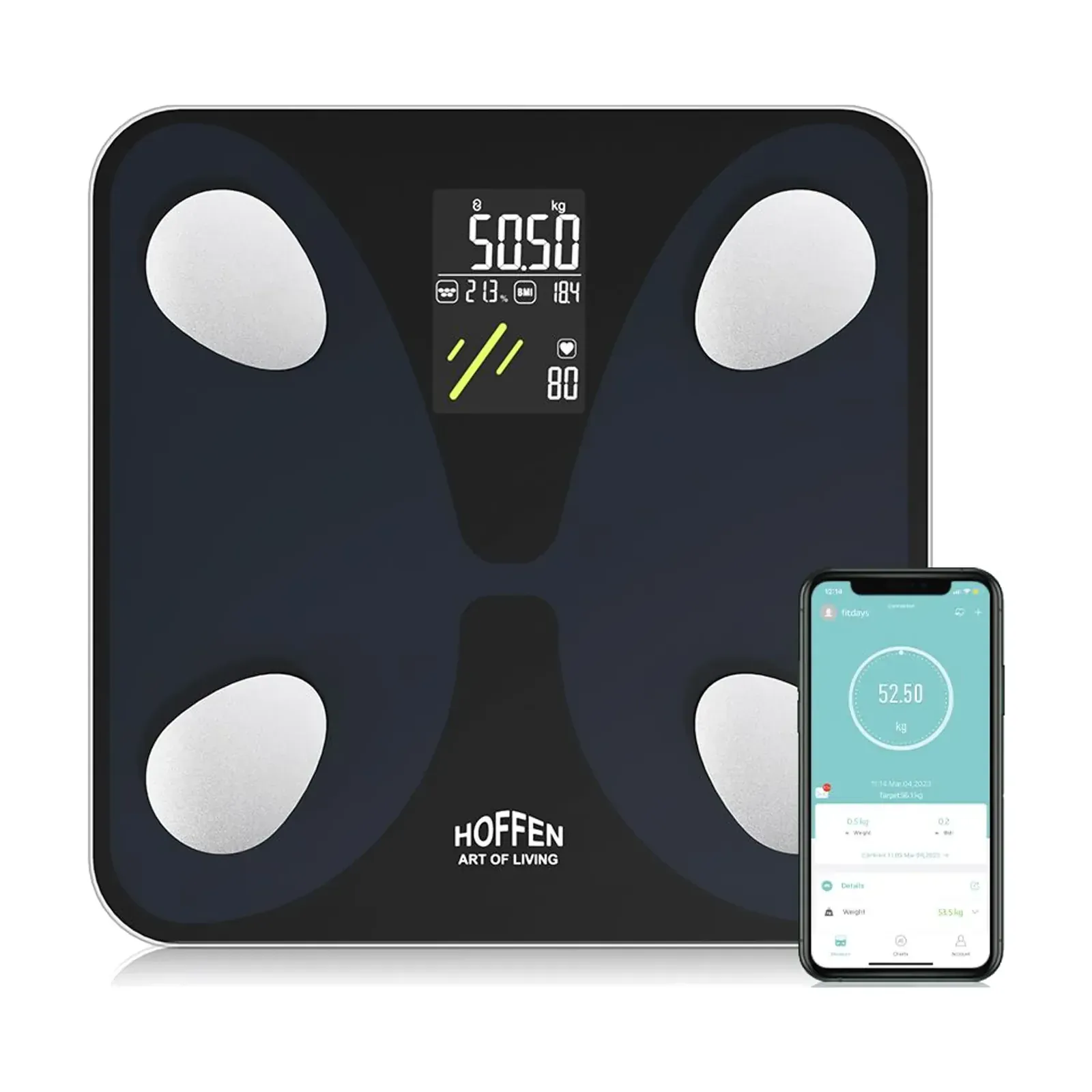
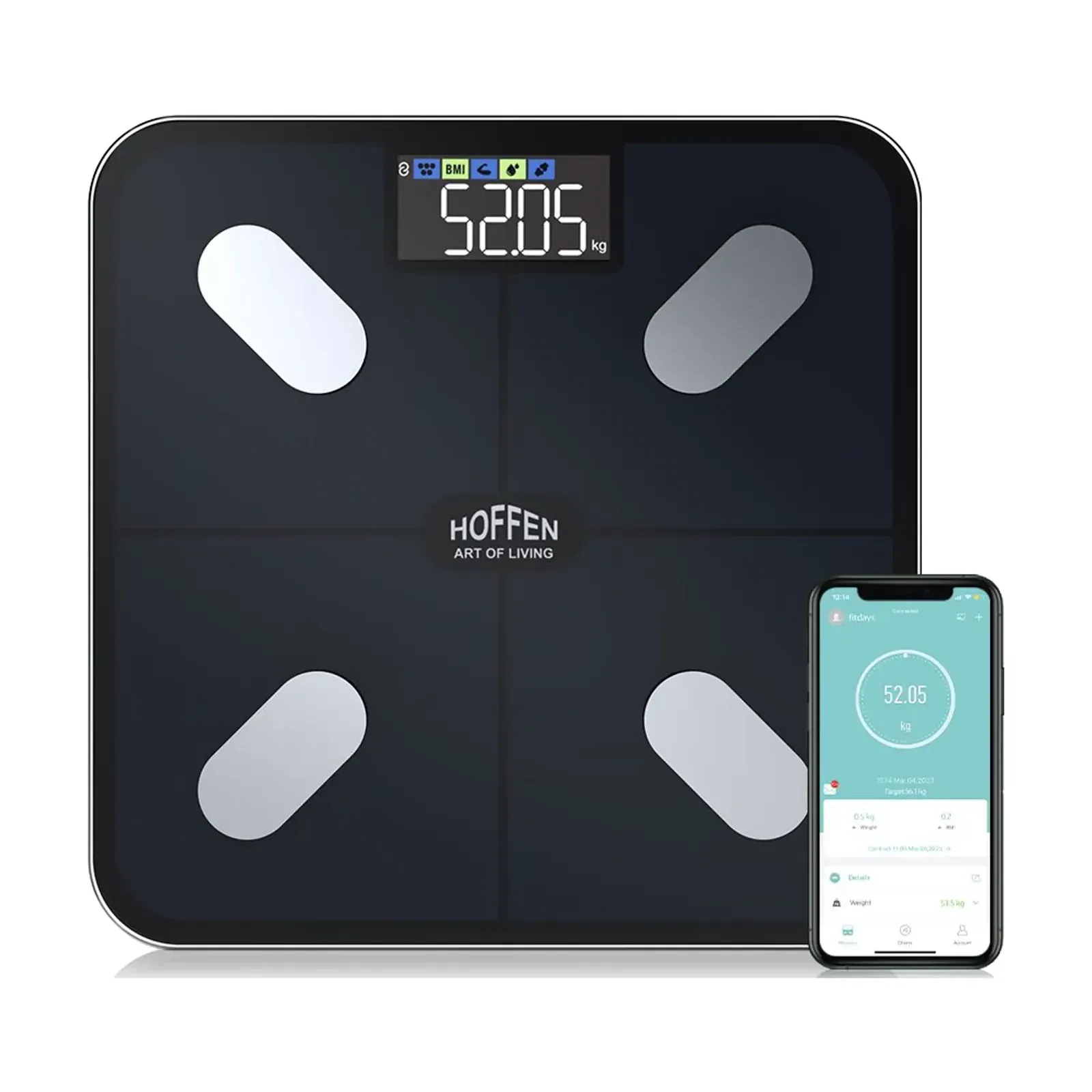
Two checks cost almost nothing: your waist against half your height, and your weight on a scale you trust. If you also want a body fat reading, a body scale can show one next to the weight. Omace Brands Private Limited sells Hoffen body scales for this, among them the HO-45 smart body composition scale at ₹2619 and the HO-36 body fat analyzer scale at ₹1569. The other models are listed under smart weighing scale. The number they show is an estimate, so read it as a direction over weeks and not as a verdict on a single morning.
To keep home readings steady, weigh and measure at the same time of day, with similar food and water intake beforehand, on the same hard flat floor. A few changes in one week usually reflect water, not fat. If the weight itself looks odd, our guide to checking a bathroom scale for accuracy comes first, and anthropometry explains the wider set of body measurements.
Reading the result with care
No home method sets a target for you, and no number here is a reason to feel bad about your body. Charts and cut-offs are references that clinicians use with other findings. A scale or a caliper cannot diagnose anything, and body composition figures are estimates that move with water, food and the device.
This is general information. Ask your doctor about your own readings, especially if your waist is more than half your height, if your weight changes without a reason, or if you are pregnant, have a pacemaker or are unwell.