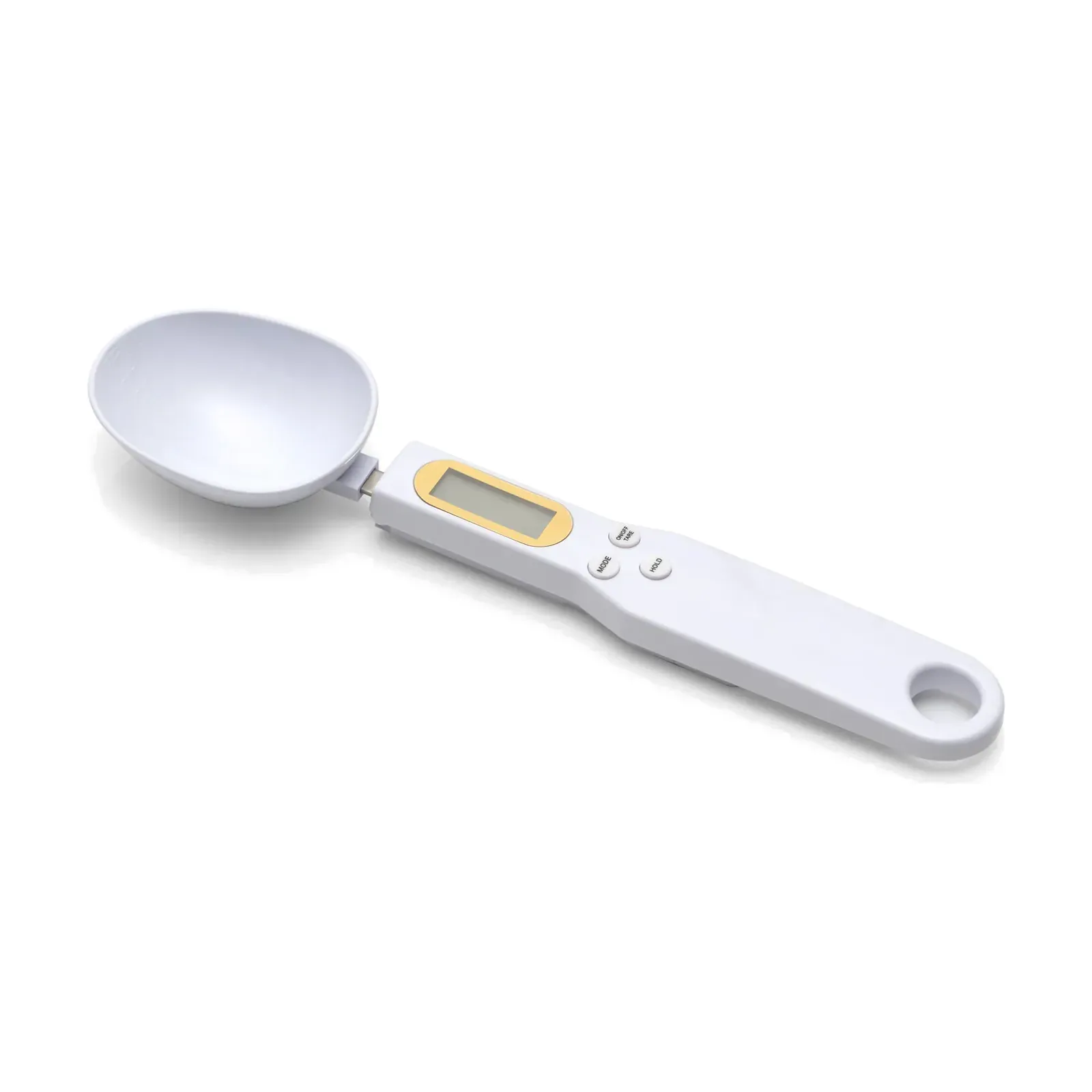
A digital spoon scale is a small scale built into a spoon, and Omace Brands Private Limited lists one that reads in 0.1 g steps up to 500 g. Fit the spoon, press the tare key until the screen shows zero, scoop, hold it level and read the weight from the handle.
This guide walks through that routine, explains the tare, hold and mode keys, and covers cleaning, the coin cell and the limits of a hand-held scale. The product details come from the Hoffen digital spoon scale page on this store.
What a spoon scale is
A spoon scale puts a weighing sensor under the bowl of a spoon and shows the reading on a small screen in the handle. You scoop an ingredient and the number appears at once. There is no separate bowl, no flat platform and no counter space needed.
That suits small amounts. A teaspoon-sized pinch of masala, a measure of tea leaves or a scoop of baking powder is hard to read on a large kitchen scale, because the scale may step in whole grams. A spoon scale that reads in 0.1 g steps shows the difference between 2.0 g and 2.4 g. For bigger quantities such as flour or rice, a bowl scale is the better tool, and the guide to choosing a kitchen scale explains how to pick one.
The Hoffen spoon scale in numbers
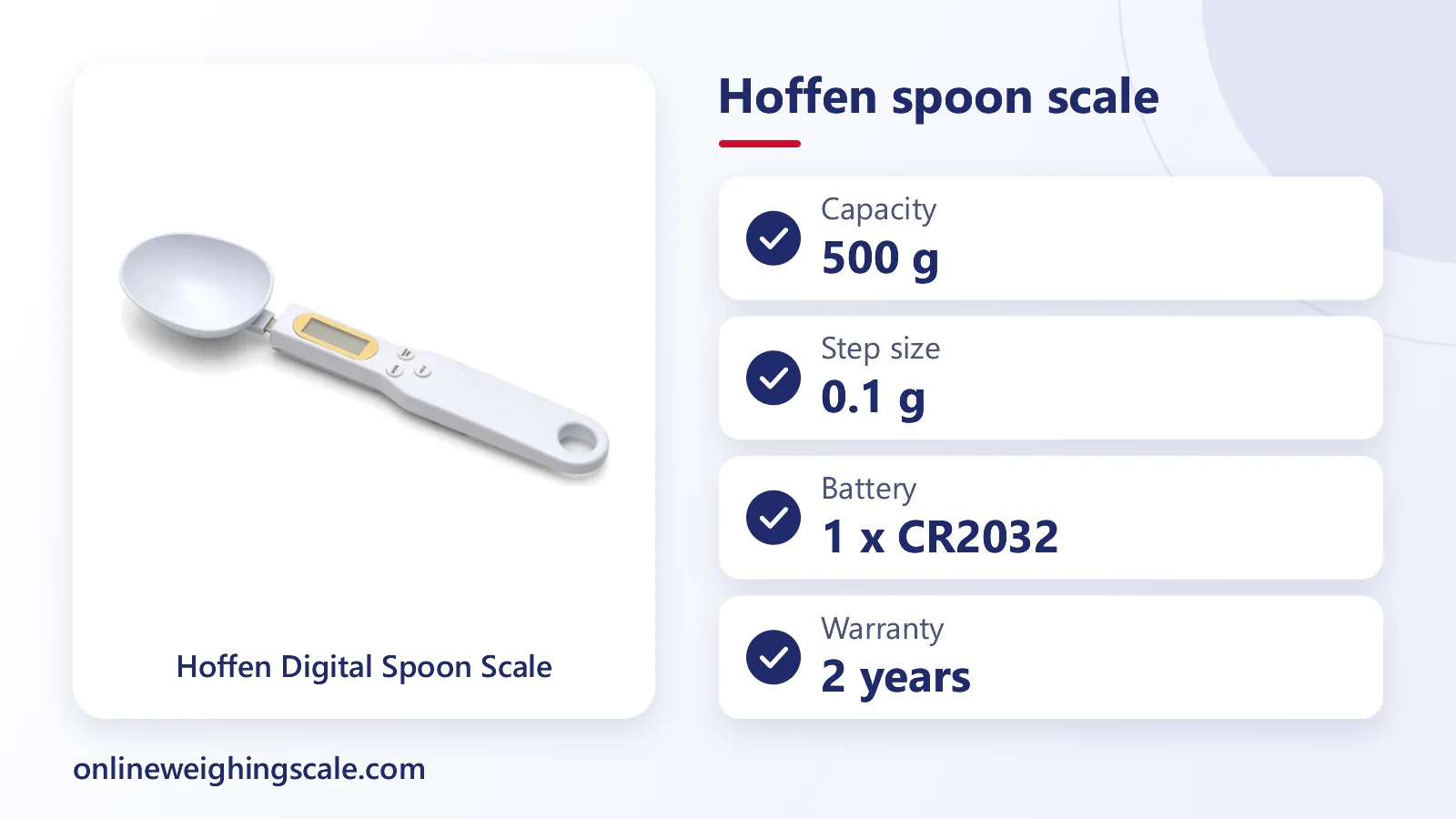
The Hoffen Digital Spoon Scale (HO-SPOON) is listed at ₹939 including GST. Its capacity is 500 g and it reads in 0.1 g steps. The store page lists these details:
| Detail | What the page says |
|---|---|
| Capacity | 500 g |
| Step size | 0.1 g |
| Units | Grams, ounces, carats and grains |
| Display | LCD in the handle |
| Keys | ON/OFF TARE, MODE and HOLD |
| Spoon | Detachable plastic spoon |
| Power | One CR2032 coin cell, with auto power-off |
| Weight of the scale | 60 g |
| Operating range | 10 °C to 40 °C |
| Warranty | 2 years on manufacturing defects |
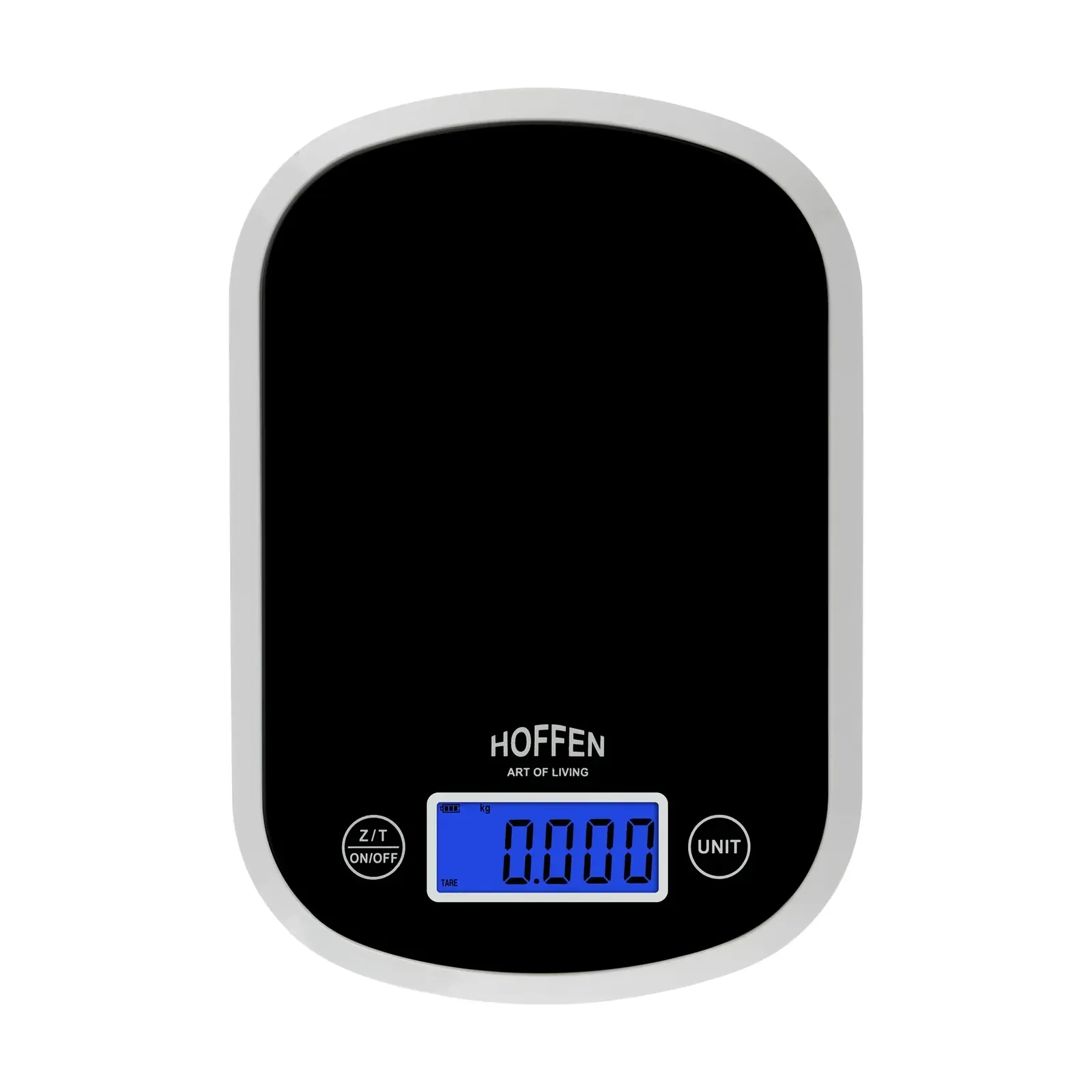
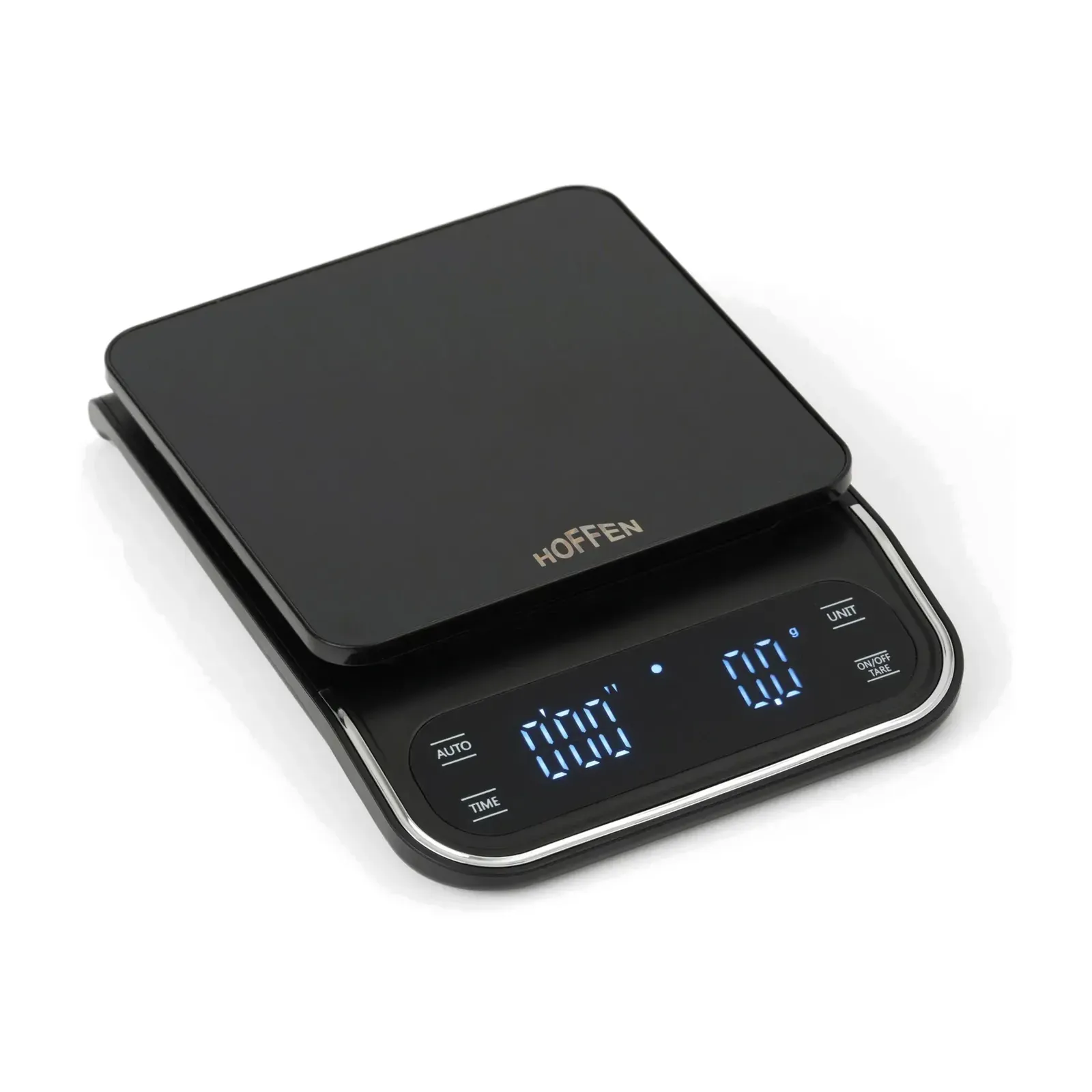
The full listing is on the digital spoon scale page. Other kitchen models are under kitchen scales, such as the Hoffen KS-601 digital kitchen scale (5 kg x 1 g) and, for coffee with a timer, the Hoffen KS-303 digital coffee weighing scale (3 kg x 0.1 g).
How to use a spoon scale, step by step
- Fit the spoon firmly. The spoon comes off for washing, so push it fully onto the handle before every use. A spoon that sits loose can shift the reading.
- Put the scale on a steady hand or a flat surface. Keep it away from a running fan or a gas flame, since moving air can make the digits drift.
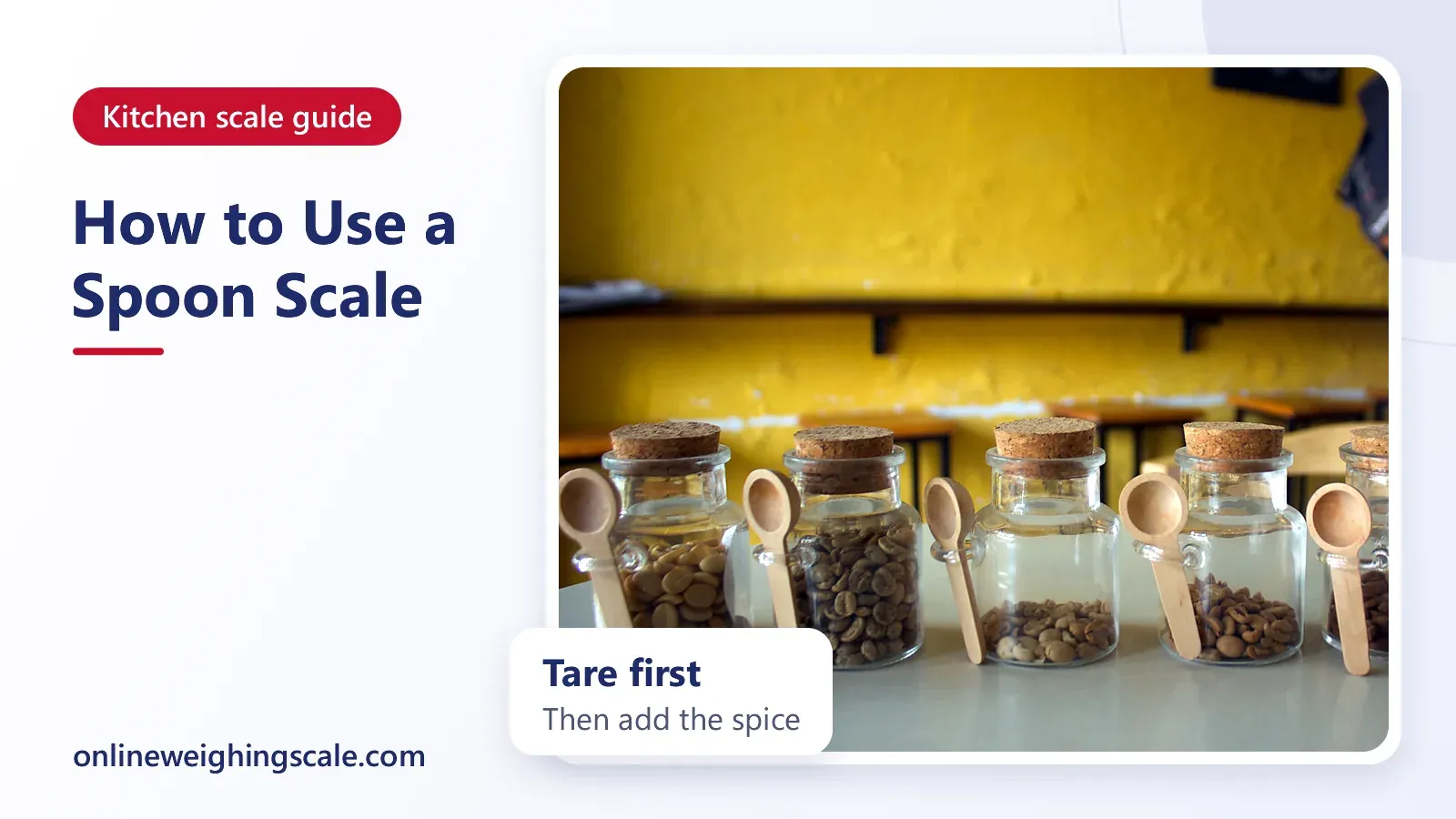
- Press ON/OFF TARE with the spoon empty. Wait until the screen shows 0.0 g. This zero is the starting point for everything that follows.
- Scoop the ingredient. Fill the spoon the way you would for a recipe, then level it gently if you want a repeatable amount.
- Hold the spoon level and still. A tilted spoon or a shaking wrist changes the number. Let the digits settle for a second before you read them.
- Read the weight on the handle. If you need to move your hand to see the screen, press HOLD first. The reading stays on the display after you tip the spoon.
Never load more than 500 g into the spoon. For anything near that range, a bowl scale is safer for the sensor and easier to read.
What the tare key does
Tare sets the display to zero with whatever is on the scale at that moment, the job of the tare device that OIML R 76-1 describes for weighing instruments. With the empty spoon, it removes the spoon's own weight, so the screen shows only the ingredient.
Tare also lets you add ingredients one after another. Scoop the first spice, note the number, press tare, then scoop the second. The screen now shows only the new amount. If you tip the spoon over a cup, you can also tare the cup on a kitchen scale and then add the spice from the spoon, but the spoon scale itself reads only what is in its own spoon.
A common mistake is pressing tare when the spoon is not empty or while the scale is swaying. The screen then zeroes at the wrong point and every later reading is off by that amount. If a reading looks odd, empty the spoon, press tare again and repeat.
The hold key and the mode key
HOLD keeps the last reading on screen, which is useful when the scoop is tilting as you tip it out or when the handle is hard to see from where you stand. Press it again to release the display and go back to live readings.
MODE changes the unit. The page lists grams, ounces, carats and grains. Indian recipes and masala tins use grams, so keep the scale in grams for cooking. Carats and grains matter more for gems and small precious items. The NIST SI conversion tables give the metric carat as exactly 0.2 g and the grain as exactly 64.79891 mg. The units of measurement guide explains how the units relate to grams.
What to weigh with it
The store page lists spices and masalas, coffee beans and tea leaves, yeast, salt and baking powder, protein powder, supplements and baby formula as intended uses. Some of these deserve a comment.
- Spices and masalas. Garam masala, haldi and red chilli powder vary in how densely they pack, so a level spoon of one is heavier than a level spoon of another. A weight is more repeatable than a volume.
- Tea and coffee. A small, steady dose gives a steady cup. If you brew by ratio, the coffee to water ratio chart shows the dose for each method.
- Baking powder, yeast and salt. These are used in small amounts, and an error of half a gram matters more here than with flour.
- Protein powder and supplements. Follow the serving size printed on the tin or the label, and ask your doctor or dietitian if you take it for a health reason.
- Baby formula. Follow the mixing instructions on the tin and what your paediatrician advises. The WHO guidelines on powdered infant formula say to add the exact amount of formula the label gives, because adding more or less powder than instructed could make infants ill. A spoon scale is a measuring aid and does not replace the scoop and the ratio the manufacturer sets.
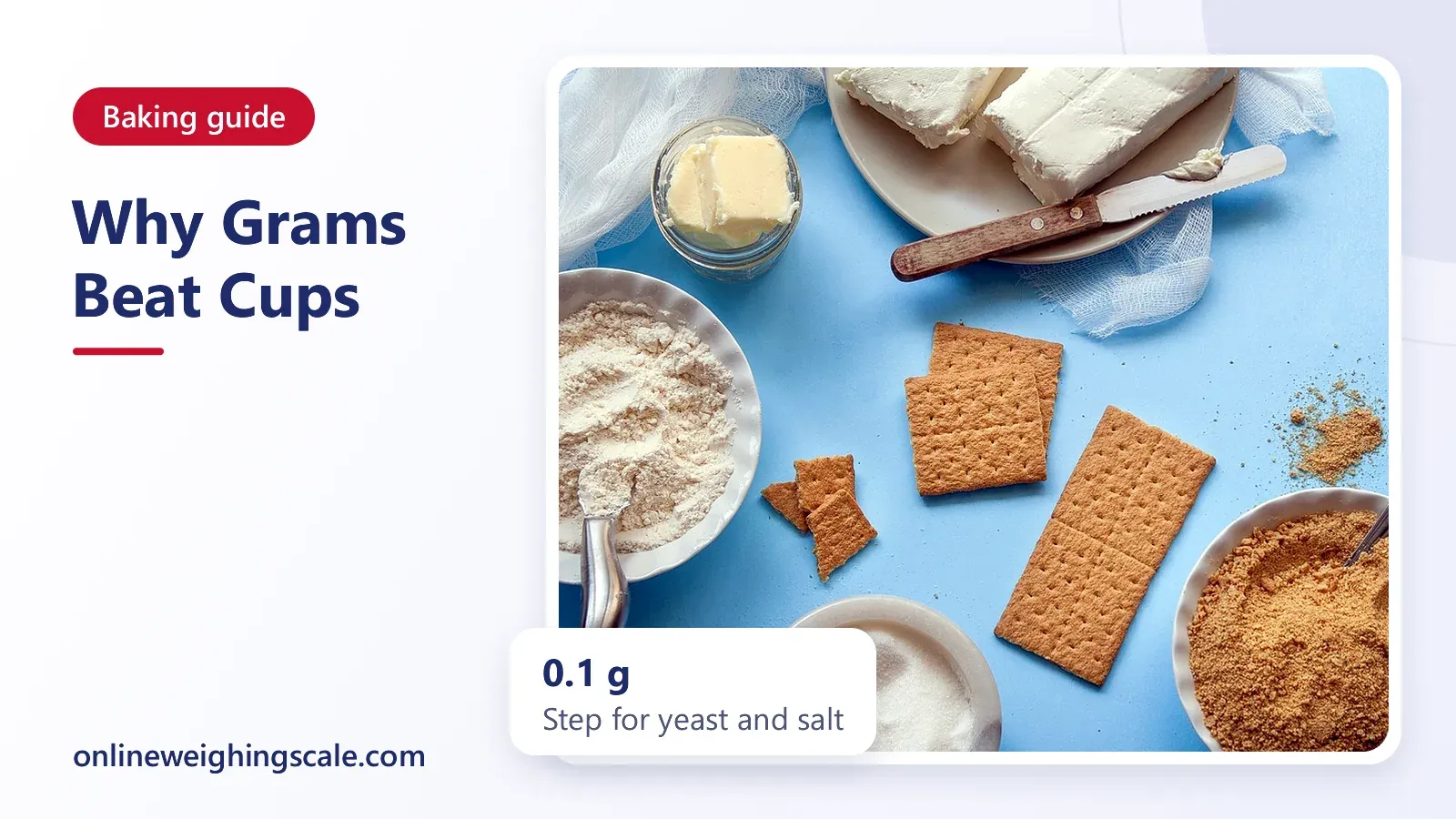
For converting a recipe from cups and spoons into weight, the grams to cups conversion chart lists common Indian ingredients.
Keeping the reading steady
A hand-held scale has more ways to go wrong than a flat scale on a counter, so a few habits help.
- Rest your elbow on the counter. A supported arm shakes less.
- Scoop over the pot, not away from it, so you do not carry the full spoon across the kitchen and spill.
- Take the reading when the digits stop changing. Powder settling in the bowl of the spoon can move the number for a moment.
- Weigh the same way each time. If you level the spoon once and heap it the next time, the readings will differ.
- Keep it away from steam. A bubbling pot just below the spoon is a poor place to read a number.
If you want a number you can trust for something that matters, such as a measured dose, do the weighing twice. Two readings within 0.1 g or 0.2 g of each other give you confidence. A third, very different reading tells you something was moving.
Cleaning the detachable spoon
The spoon comes off for washing. Pull it away from the handle, wash it with ordinary soap and water, and dry it before you fit it back. The page says the handle must not go in water. Wipe the handle with a damp cloth and then a dry one, because water inside the handle can damage the electronics.
Sticky ingredients such as jaggery powder or oily masala leave a film on the spoon. Wash it after every session. A film adds weight, and a tare with a dirty spoon hides that weight only until you wash it.
Battery and storage
The scale runs on one CR2032 coin cell, and the box includes one. The page says to replace the cell when the display dims. Auto power-off switches the scale off when you leave it, which saves the cell between uses.
Store it in a dry drawer, within the 10 °C to 40 °C operating range the page gives, with nothing heavy on top. Do not leave it in a hot car or next to the gas stove.
Limits to know before you rely on it
- Small amounts only. The spoon holds a scoop, not a bowl of flour. For larger amounts, use a kitchen weighing scale.
- It is not a trade scale. It is a kitchen tool and should not be used to sell goods by weight.
- Hand movement shows up in the reading. A steady surface gives a steadier number.
- The plastic body and coin cell suit gentle kitchen use. Do not tap the spoon on the pot rim to clear it, and do not drop it.
If a reading looks wrong, check the simple things first: a loose spoon, a tare done with powder still on the spoon, a weak cell. The kitchen scale calibration guide shows a quick check with household items, and the not working guide lists other causes. The warranty covers manufacturing defects for 2 years; batteries and physical damage are not covered. For service questions, write to Omace through the contact page.
A simple routine for the kitchen
Keep the scale beside the masala box. Fit the spoon, tare, scoop, read, and wash the spoon when you are done. After a week the routine takes a few seconds, and recipes that once depended on a heap of the spoon start to give the same taste each time.