
The parts of a weighing machine are a pan or platform, a load cell, a mainboard, a display, a keypad, a power supply and a body with feet. Each does one job, and each fails in a way you can recognise.
Knowing the names helps in two places. It lets you describe a fault clearly to a repairer, and it stops you replacing a part that was never the problem. This guide follows the path of a load through a digital kanta, from the pan to the number on the screen, and then covers the spring balance in a short section.
How a digital weighing machine works, in one line
A digital weighing machine turns the push of a load into a small electrical signal, converts that signal into a number and shows it. Everything in the body exists to do one of those three steps.
The international recommendation for non-automatic weighing instruments, OIML R 76-1, lists the typical modules of such an instrument as the load cell, the indicator, a data processing device, a weighing module, a terminal and a primary display. The shop-floor names below map onto those terms.
The load receptor: pan or platform
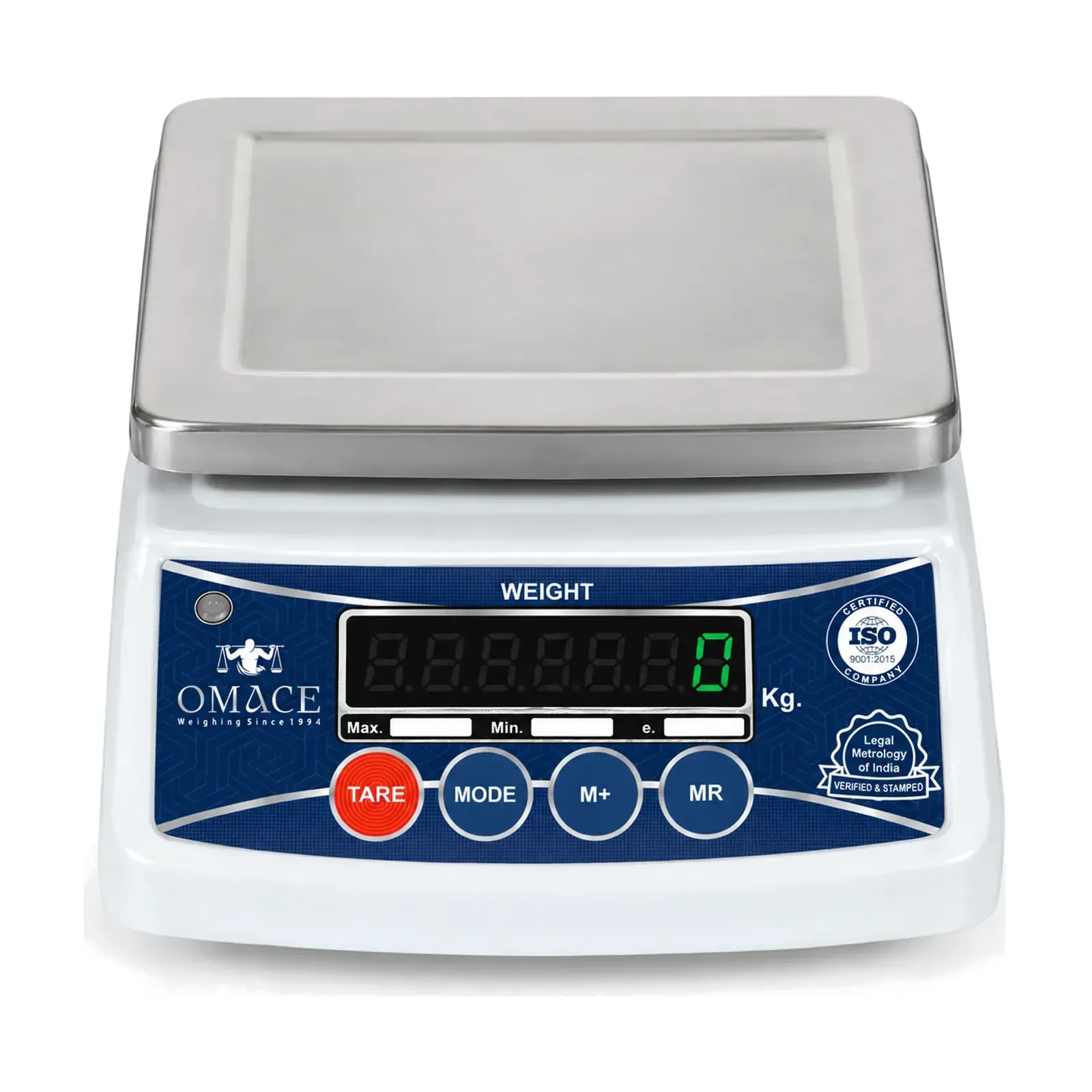
The pan, tray or platform is the part you put the load on. OIML R 76-1 calls it the load receptor, the part of the instrument intended to receive the load. Steel pans on kitchen and jewellery scales, a stainless plate on a shop counter scale and a large checker plate on a platform scale all do the same job.
A bent or loose pan is a real fault. If the pan touches the body, a ring or a frame, part of the load never reaches the sensor and the reading comes out low or jumps. Keep the gap around the pan clear of dust, rice grains and spilt liquid.
The load cell: the sensor that feels the weight
OIML R 76-1 defines a load cell as a force transducer that measures mass by converting it into another measured quantity, its output. In a shop scale it is the metal block under the pan that bends very slightly when a load presses on it. Strain gauges stuck to it change their electrical resistance as it bends, and that change is the signal. The full working principle, types and ratings are in our guide to what a load cell is.
It is the most important part of the machine and the one most easily hurt. A drop, an overload or a hard knock can leave it permanently off. The usual signs are a reading that drifts while nothing is on the pan, a zero that will not settle, or a machine that is accurate at one weight and wrong at another.
The mainboard and the A/D converter
The mainboard, which shopkeepers also call the PCB or circuit board, carries the electronics. In OIML R 76-1 terms this is the indicator, an electronic device that may perform the analog-to-digital conversion of the load cell signal, process the data and display the result in units of mass. Its key stage is the analog to digital converter, which reads the tiny voltage from the load cell and turns it into a count. A processor then multiplies that count by a stored calibration factor to get grams or kilograms, applies the tare, and sends the result to the display.
Calibration is where that stored factor is set. If you are wondering why a machine that was fine last year now reads off, the factor may need resetting. Our guide to calibrating a digital weighing scale covers the steps. Omace digital scales, such as the Ace KN 10 kg weighing scale, open calibration mode when the TARE key (or, on some models, the M key) is held for about 5 seconds; the manual for your model shows which. Stamped trade scales are sealed, so only a registered repairer recalibrates those.
Signs of a board problem include a display that shows garbage, a machine that switches on and off by itself, and keys that work on some days and not on others. Water and damp air are the usual cause. A board with green or white powder on its tracks has been wet.
The display
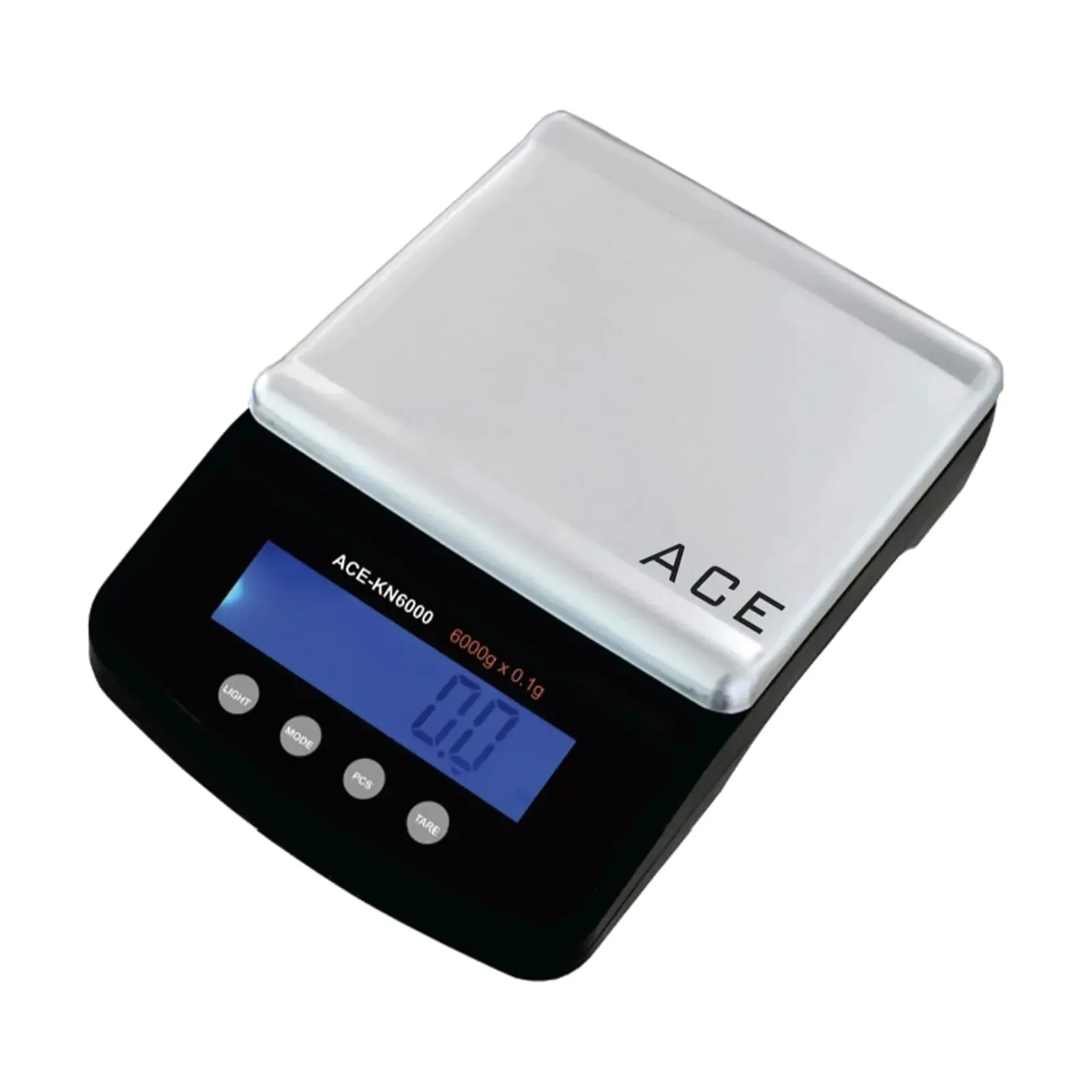
The display shows the result. Small scales use an LCD with a backlight. Counter scales use red or green LED digits, often on both the shopkeeper's and the customer's side. The display does no measuring, so a wrong number with a healthy display points to the load cell or board, not the screen.
Faults here are visible: missing segments, a dim screen, a screen that stays blank while the machine clicks when keys are pressed. A dim display with an otherwise normal reading usually means a weak battery or a weak charger, not a dead screen.
The keypad
The keypad is a set of rubber or membrane keys. The ones you use daily are ON/OFF, ZERO, TARE, unit and, on counter scales, price and count keys. How the zero and tare keys differ is explained in our post on tare and zero.
Keys wear out first on machines used all day in a shop. A key that needs a hard press, or one that fires twice, is a worn membrane. A sticky key often means oil or sugar under the sheet. Cleaning with a barely damp cloth, never a wet one, saves many machines.
The power supply: adaptor, transformer or battery
Digital scales run on dry cells, a rechargeable battery, a mains adaptor, an internal transformer, or a mix. Counter scales commonly carry a rechargeable battery and a charging circuit so the shop keeps working in a power cut. Battery life and what to do about weak cells are covered in our guide to the weighing scale battery.
Power faults look like other faults. A weak battery causes a flickering display, a reading that changes without any load, or a machine that dies when you put on a heavy weight. Change the batteries or try another adaptor of the same rating before you open anything.
The body, feet and level bubble
The body or housing holds everything and protects the electronics. The feet, which are usually adjustable screws, let you set the machine flat. Platform scales and many counter scales have a small level bubble, a circle with a bubble that must sit in the middle.
A scale on a tilted counter or a soft mat can read differently from the same scale on a hard flat top. Level it, check the bubble, and keep the feet screwed into the base. A missing foot is enough to put a scale out.
The seal and stamp plate on trade scales
Scales used to sell goods by weight carry a verification stamp and a seal that prevents access to the calibration. Omace shop, platform, chicken and crane scales, such as the Om-TT-ECO kirana weighing machine, leave the Bagru factory verified and stamped by Legal Metrology, and the stamp is valid across India. Stamping is compulsory on platform and crane scales. Treat the seal and stamp plate as parts of the machine that you leave untouched. Read more in our post on legal metrology in India, or on the Department of Consumer Affairs Legal Metrology page.
Parts, jobs and signs of failure at a glance
| Part | Its job | Sign it is failing |
|---|---|---|
| Pan or platform | Takes the load | Touches the body, low or jumping reading |
| Load cell | Senses the weight as a signal | Drift, zero will not settle, wrong at some weights |
| Mainboard and A/D converter | Converts and calculates | Garbage digits, random restarts |
| Display | Shows the result | Missing segments, dim or blank screen |
| Keypad | Takes your commands | Keys need hard press or fire twice |
| Power supply | Feeds the circuit | Flicker, dying under a heavy load |
| Body and feet | Protects and levels | Rocking, bubble off centre |
| Seal and stamp plate | Proves the scale is verified | Broken seal, missing plate |

Which part to suspect first
Start with the cheap, outside parts. Check that the pan is clear, the scale is level, and the batteries or charger are good. Most complaints end there.
If the machine still misbehaves, think about the path of the signal. A wrong reading on a bright, clear display points to the load cell or the stored calibration. A damaged or blank display points to the board or the display itself. For a step-by-step list of symptoms, use our guide to a weighing scale not working.
Do not open a sealed trade scale yourself. For the repair route, see our post on weighing machine repair.
Parts of a mechanical spring scale
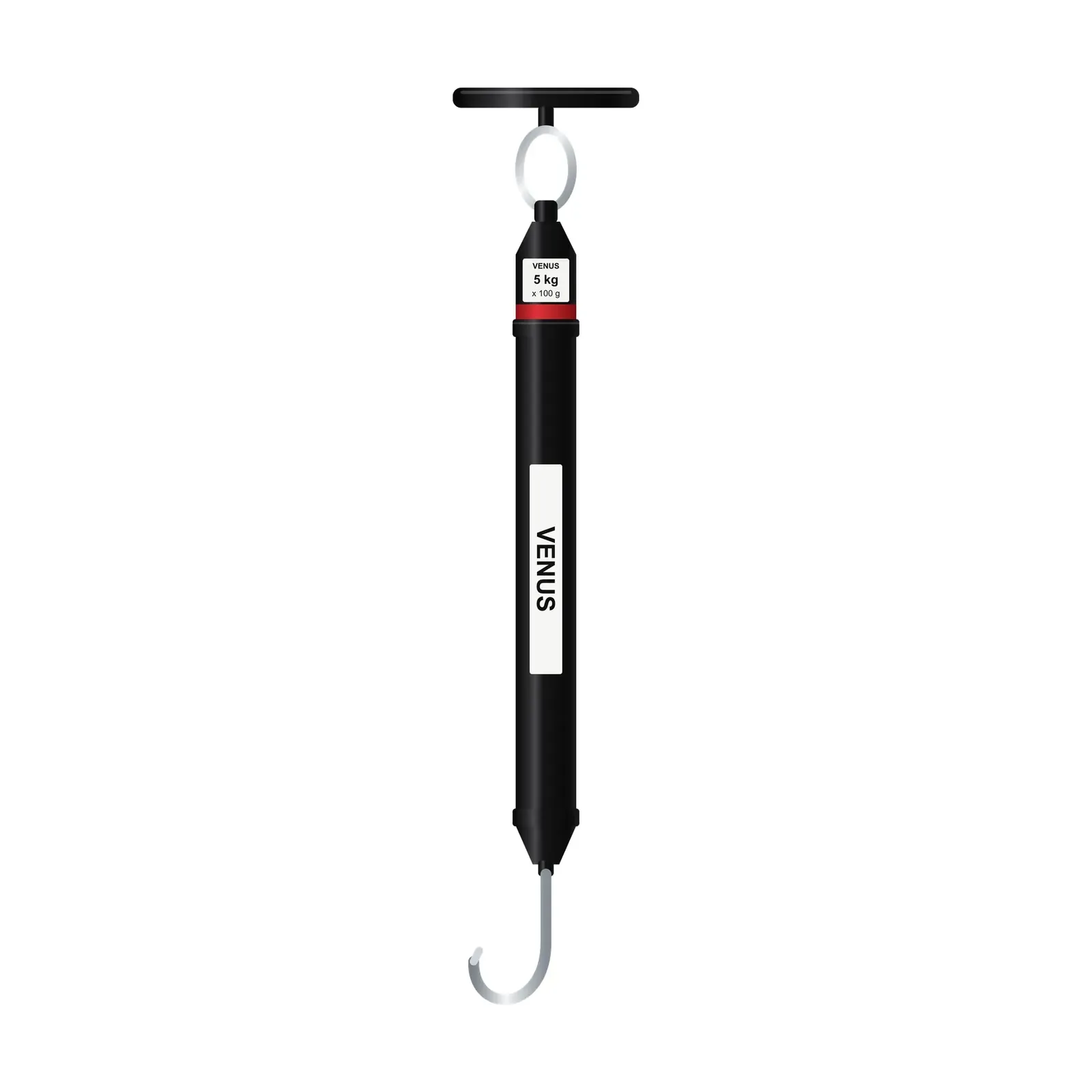
A spring balance has far fewer parts. A hook takes the load, a spring stretches, a pointer moves along a printed dial or a tube marked in kilograms, and a casing holds it together. Within its working range, a spring stretches in proportion to the force on it, which is the idea described as Hooke's law, so the pointer position tells you the weight. The Venus tubular spring balance works this way, with no battery.
Spring scales fail in simple ways. The spring tires after years of heavy loads or over-stretching, the pointer no longer returns to zero, and the dial slips. A zero adjustment screw or ring corrects small errors. A bent hook or a rusty spring means it is time to replace the balance.
What Omace does when a commercial scale needs repair
Omace Brands Private Limited repairs its commercial scales when the buyer asks. The buyer pays the shipping both ways and the repair cost. Spare parts depend on availability, so ask Omace first through the contact page and name the part you suspect.
Every Omace scale is factory calibrated, and a scale that reads wrong is replaced under warranty. Every scale carries a 2-year warranty on manufacturing defects; batteries and physical damage are not covered. The company's certificates are on the certificates page.
Keeping the parts healthy
Most parts last for years with small habits. Keep the scale away from water and from direct heat. Do not drop loads onto the pan. Stay under the stated capacity, because the load cell is hurt first by overloading. Take the batteries out if the scale will sit unused for months.