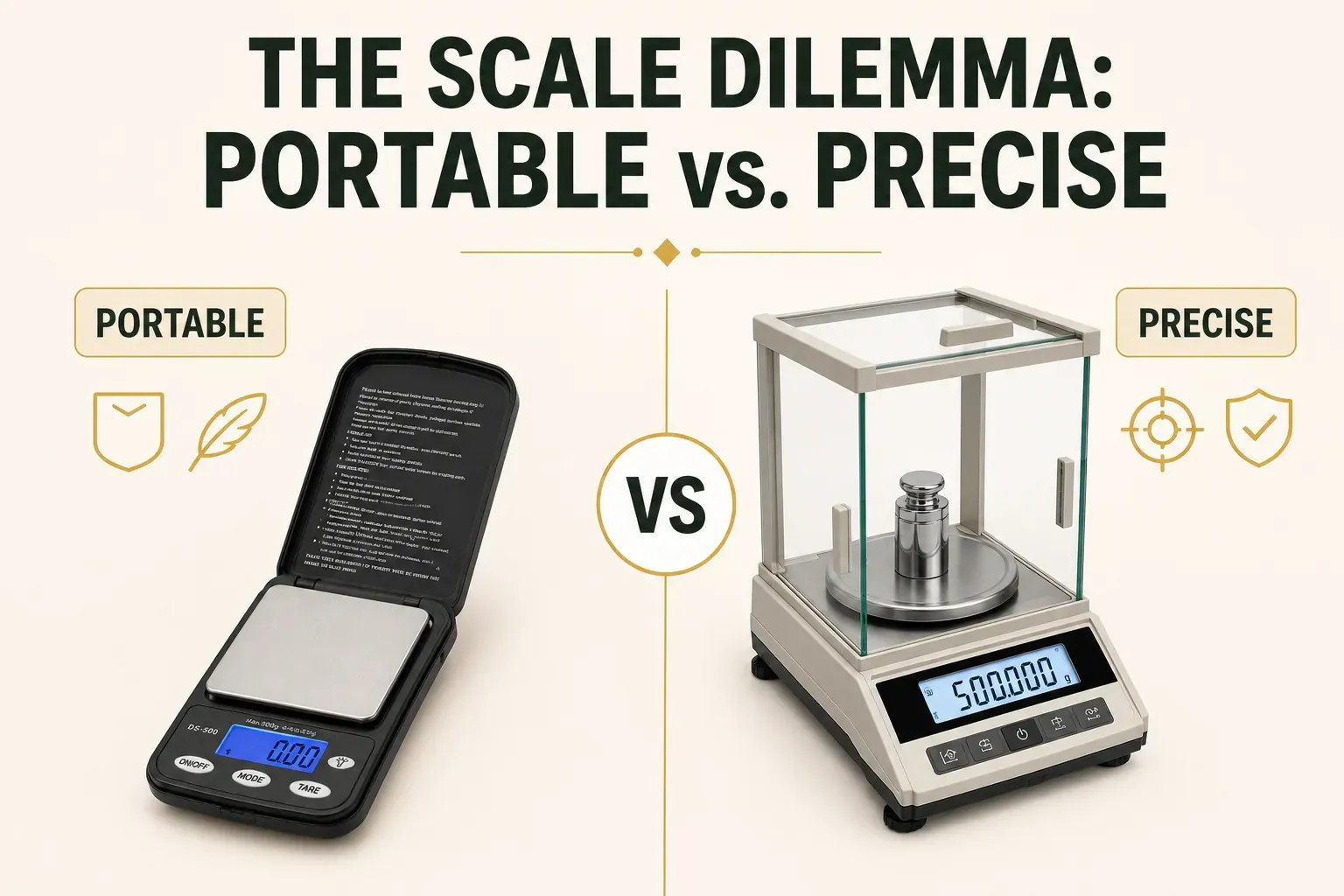
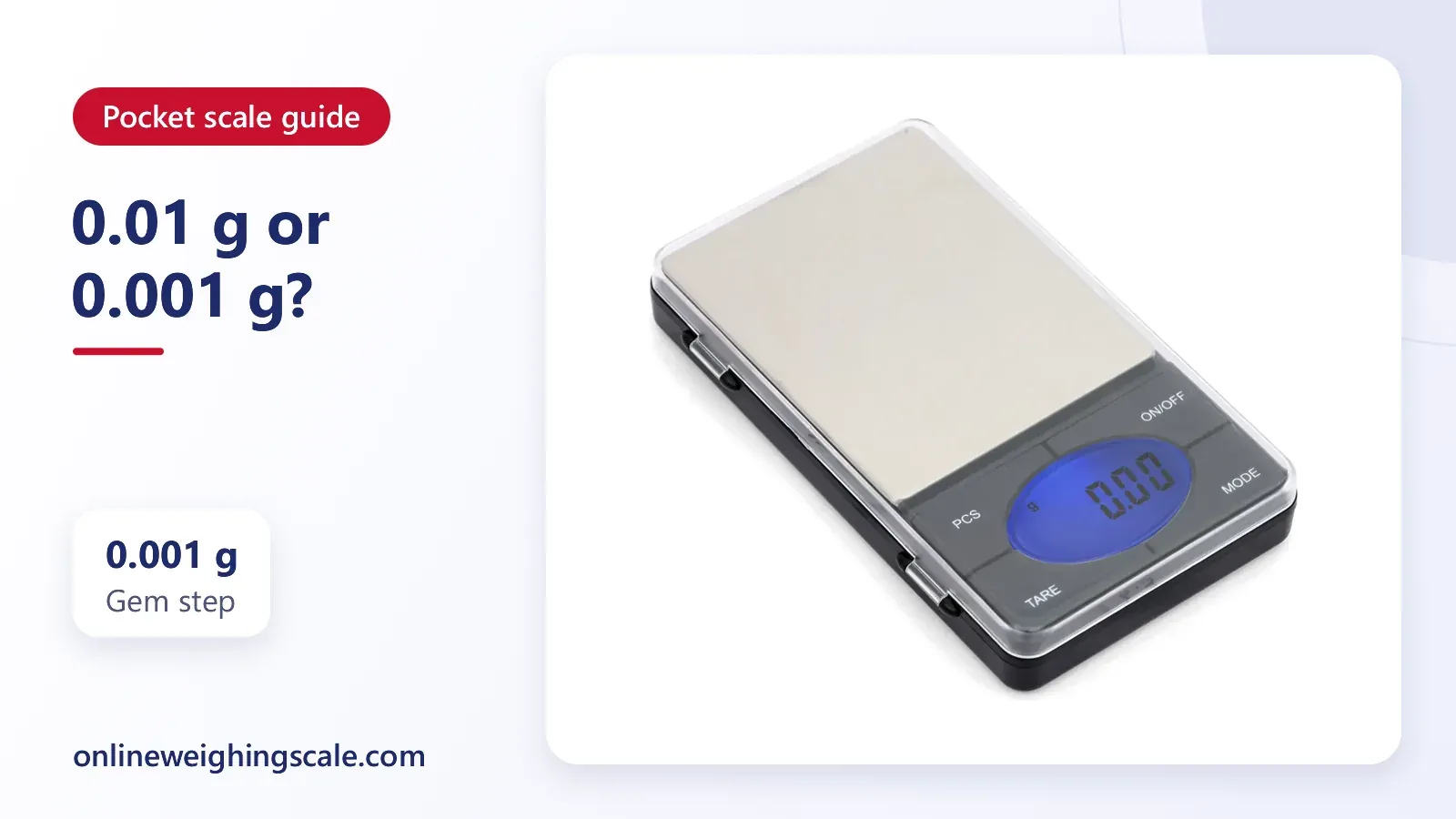
How to choose a pocket scale comes down to two numbers, capacity and readability. A 0.01 g model with 300 g to 500 g capacity covers most gold, silver, spice and hobby weighing, and a 0.001 g model with 50 g capacity suits gems and tiny samples. Omace Brands Private Limited gives a 2 year warranty on manufacturing defects on every pocket scale.
Start with what you weigh, then pick capacity
A pocket scale is a small battery scale, usually phone-sized, with a steel pan and a lid that closes over it. Capacity is the heaviest load it takes. Readability, also called division, is the smallest step the display shows. The two pull against each other, so the first job is to write down your heaviest and lightest item.
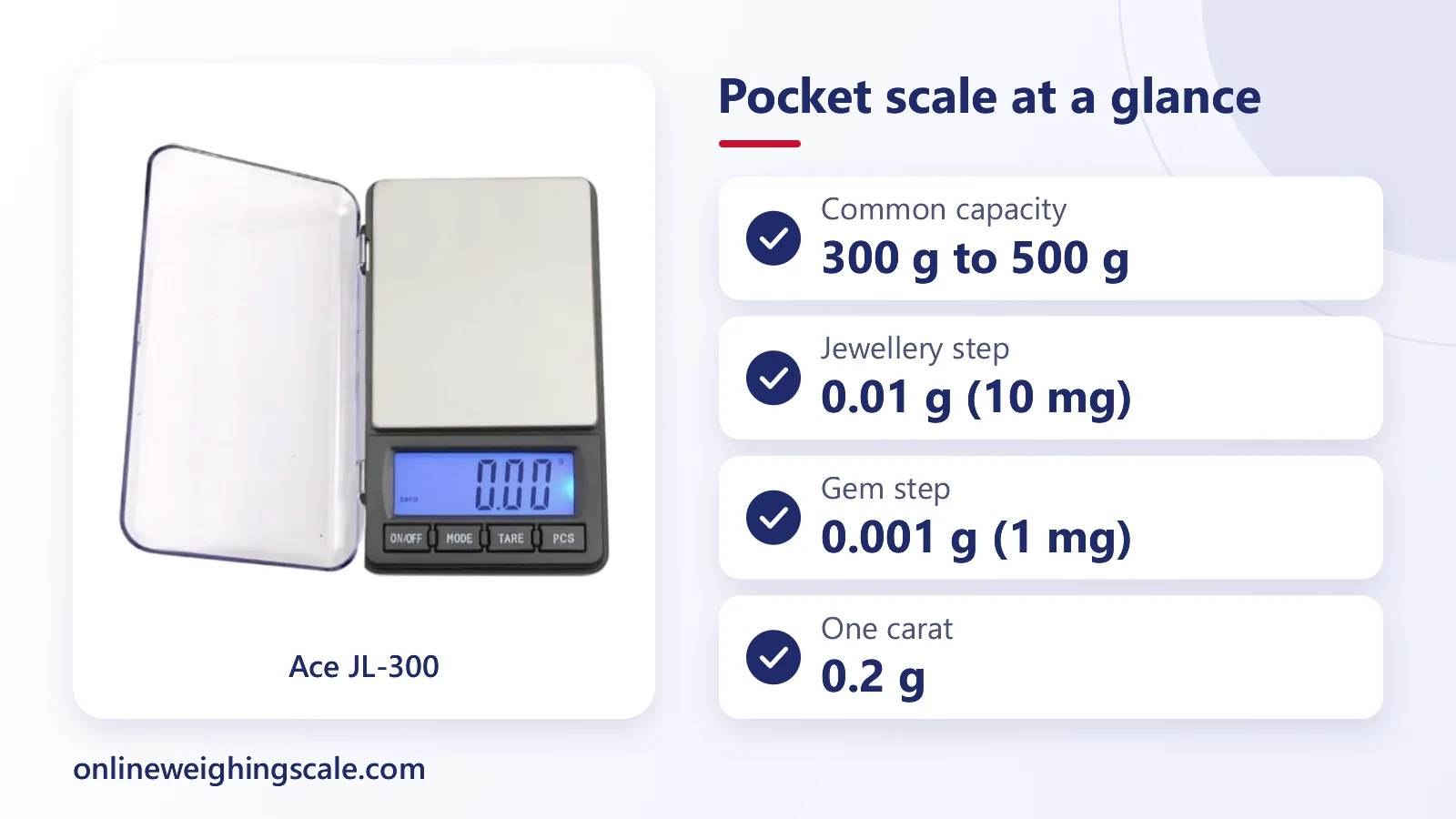
Capacity of 300 g to 500 g is the common range for a pocket scale. It takes a gold chain, a bangle, a bag of saffron or a coin collection in one go. A 50 g capacity is enough for gemstones, beads, seeds and lab practice, and the smaller range is what lets the display step in milligrams. A 50 g scale shows an overload sign the moment you place a heavy ring tray on it, so match the range to your heaviest item.
Leave a margin. Buy for the heaviest thing you will weigh at least once a month, not for the average item, because a scale loaded past its capacity can be damaged and will read wrongly afterwards.
Readability: 0.1 g, 0.01 g or 0.001 g
A scale that reads in 0.01 g steps shows hundredths of a gram, which is 10 mg. That suits jewellery checking, silver, coins, spices and most hobby work. A 300 g scale at 0.01 g has 30,000 steps across its range, so it serves both a few grams and a few hundred grams.
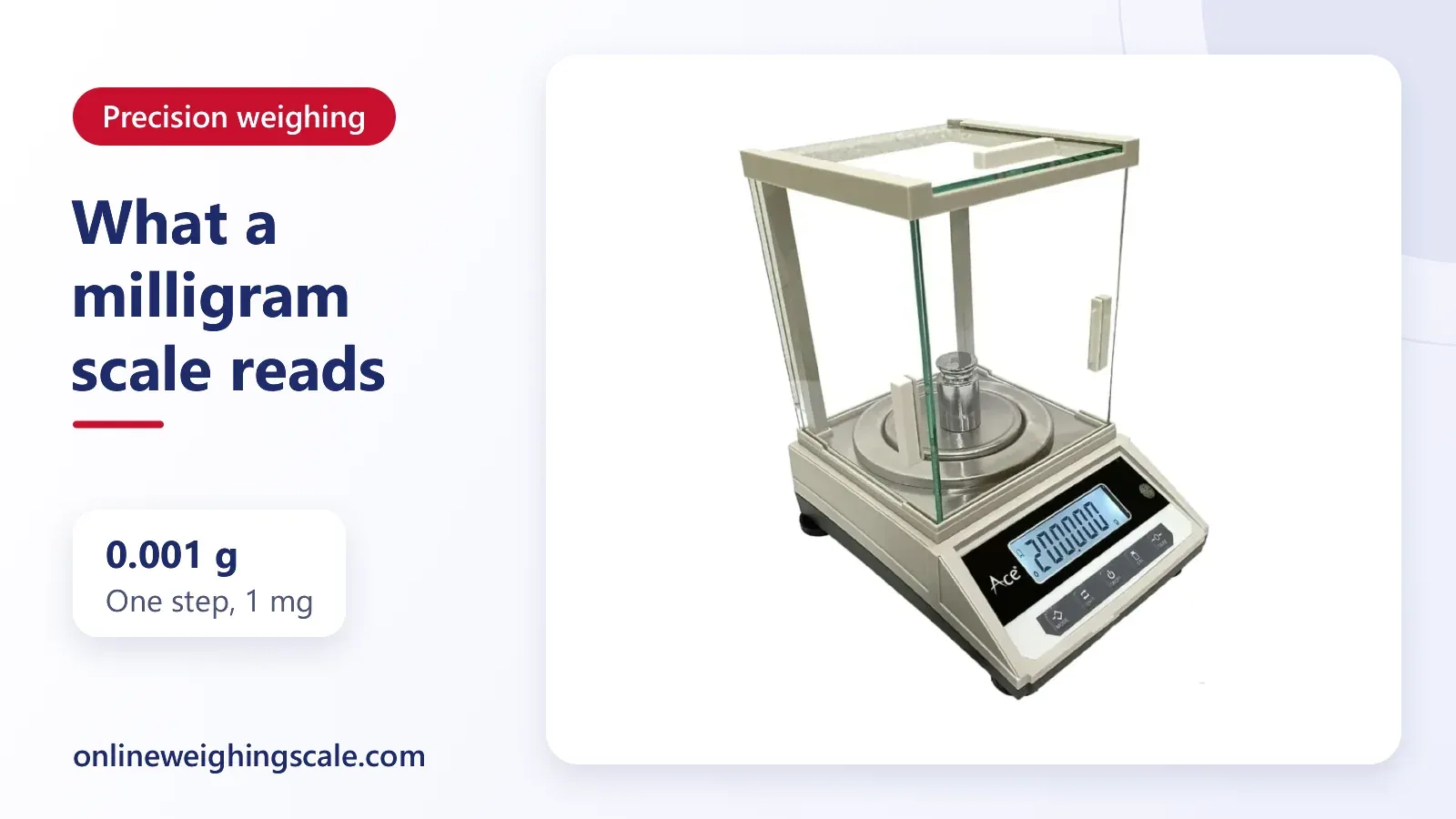
A 0.1 g pocket scale is cheaper and fine for kitchen and parcel weighing. It is too coarse for gold, where a single step of 0.1 g is a large amount of metal. A 0.001 g scale shows a single milligram. At that step even moving air and the oil on your fingers change the number, so these models come with a windshield, and some with a tweezer and dish, and they need a steady table. The separate post on the milligram scale and where 0.001 g is really used covers uses and checking in more depth.
More digits are not always better. A scale that shows 0.001 g and sits on a wobbly shelf gives a restless reading that no one can use. Match the division to the smallest amount that changes your decision. If a 0.05 g difference would not change a price or a recipe, buy 0.01 g.
Digits on the display and legal accuracy are different things. OIML R 76, the international rule for non-automatic weighing instruments, sets four accuracy classes: special (I), high (II), medium (III) and ordinary (IIII). The same document notes that it is not normally feasible to test and verify an instrument to a division below 1 mg, because of the uncertainty of the test loads. A pocket scale is a measuring tool for personal use. It is not a verified instrument for trade.
Units: grams, carats and tola
Look at the unit key before you look at the price. The Omace pocket scales with 0.01 g steps, such as the MH-300, LT-500 and CY-300, show grams (g), carats (ct) and tola. The 0.001 g models, such as the FN-50 and FC-50, show g, ct, oz, ozt (troy ounce), dwt (pennyweight) and gn (grain). Check that the product page lists the unit you quote in. A scale without carats is a nuisance for a gem buyer, and one without tola is a nuisance in a family jewellery shop.
The US National Institute of Standards and Technology describes the carat as 0.2 g, or 200 mg, so a 0.01 g step is 0.05 ct. The post on jewellery weighing units from tola to gram has the full conversion table. Grams stay the unit to write on a bill.
Features that matter day to day
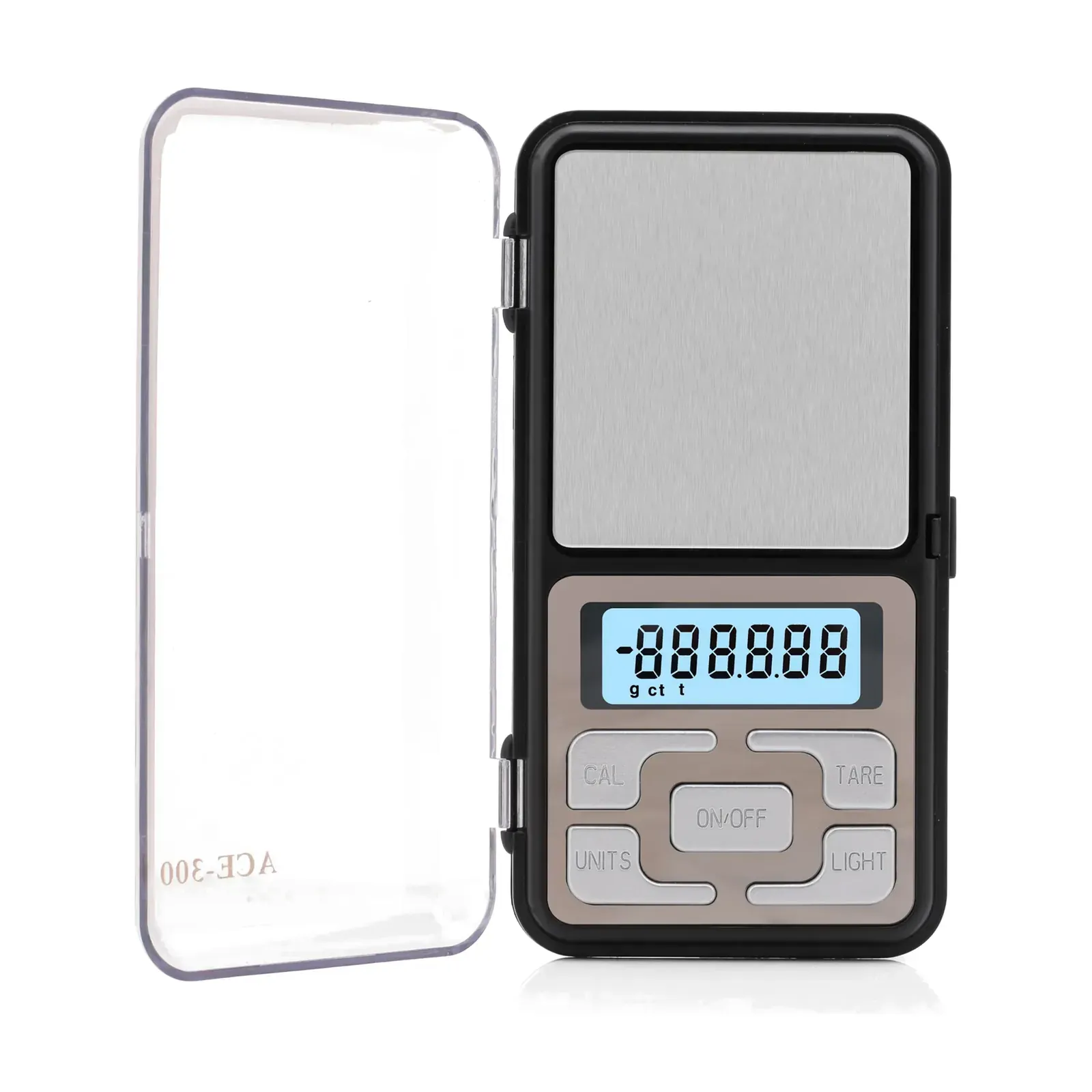
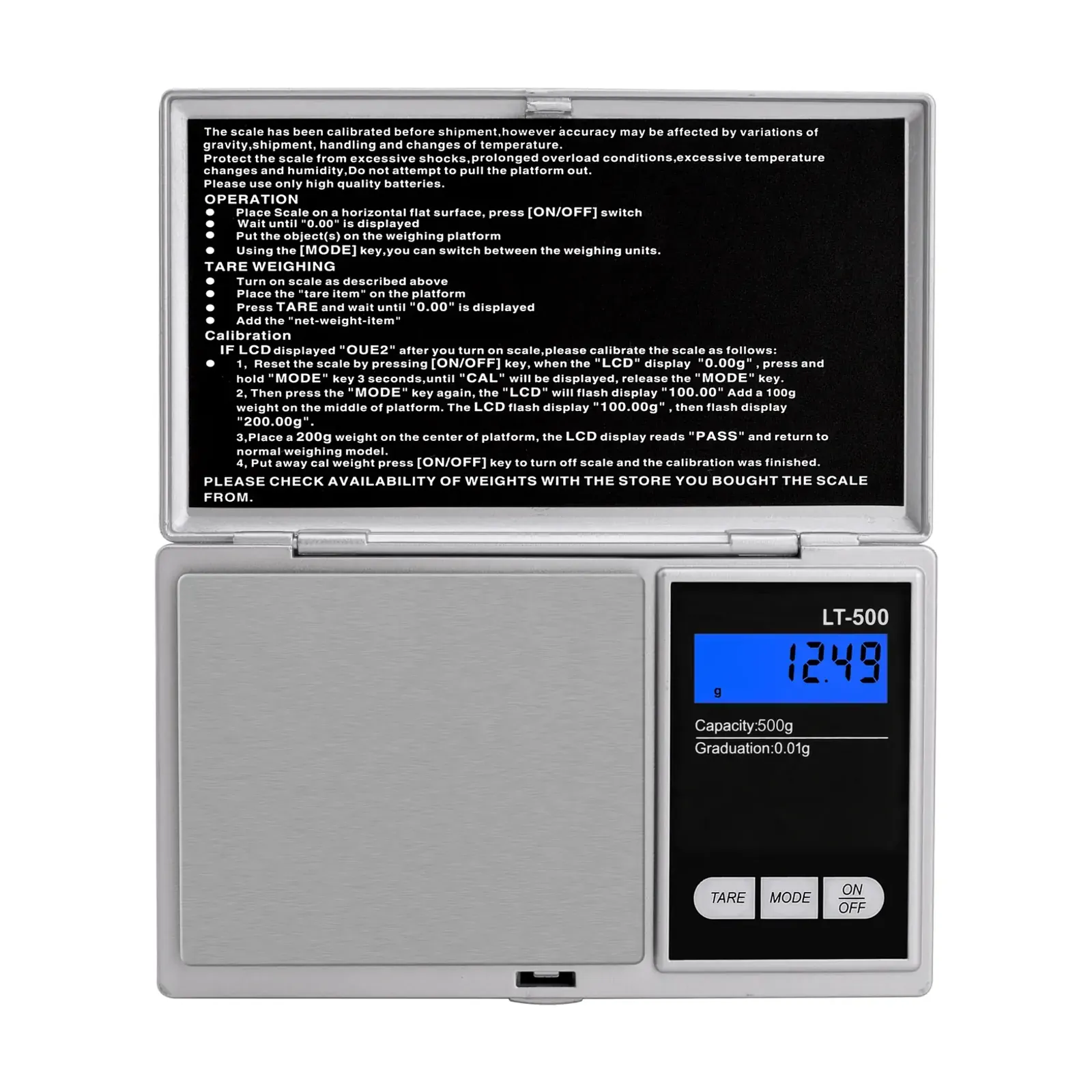
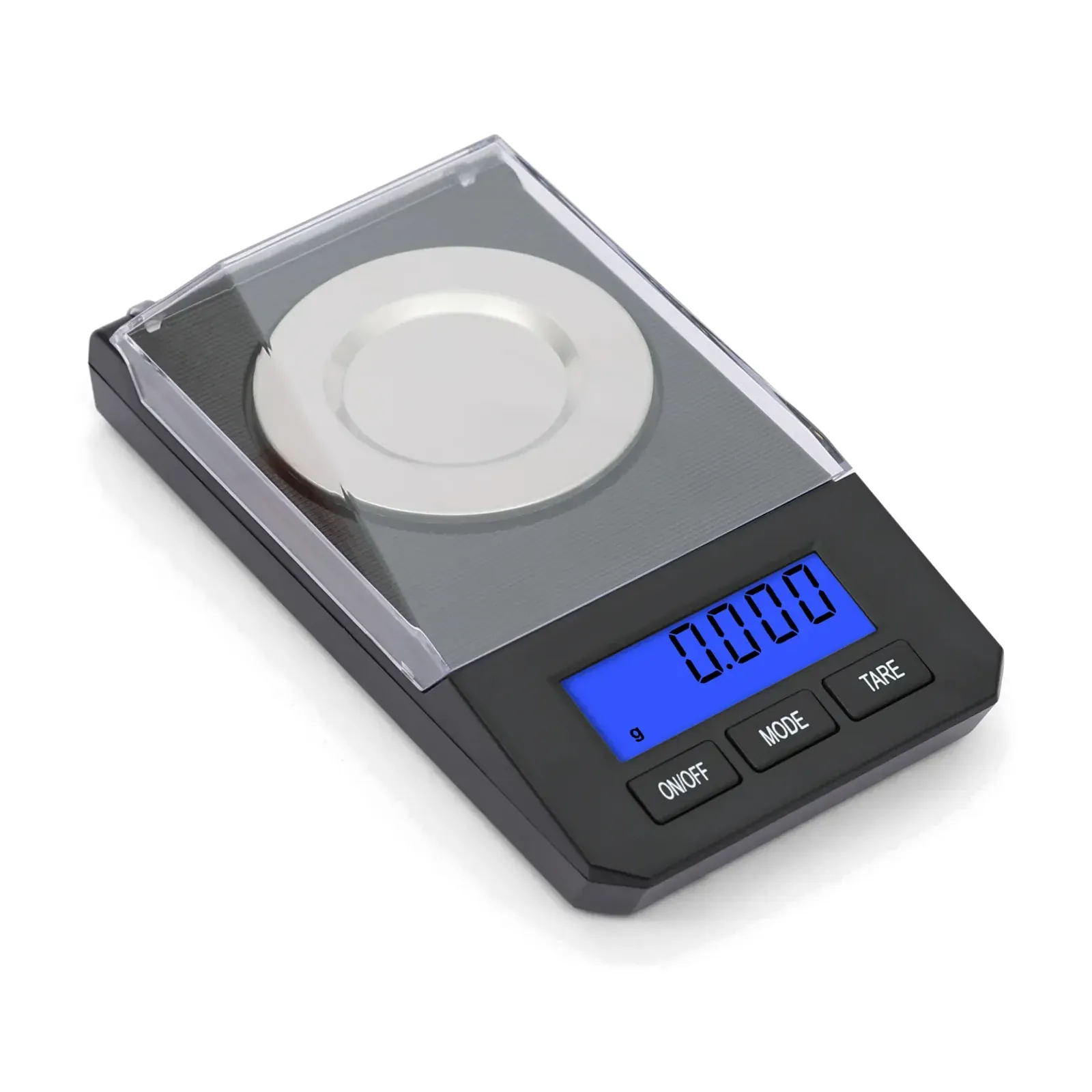
- Pan size. A 50 x 50 mm pan, as on the MH-300, holds a ring or a few gems. A 60 x 75 mm pan, as on the LT-500, takes a chain laid out flat. The 65 mm pan on the FN-50 is wide enough for a small dish.
- Lid or cover. A hinged clear lid or flip cover keeps dust and knocks off the pan in a pocket or bag.
- Backlight. A backlit LCD helps in a dim shop or at a function. A separate light key lets you switch it off to save the batteries.
- Tare. The tare key sets zero with a container on the pan, so you weigh only what you add.
- Counting key. A PCS key, as on the FC-50, counts identical pieces such as beads or tablets.
- Overload and low battery signs. Both warn you before a reading goes wrong.
- Auto off. The scale switches itself off to save the batteries.
Power: batteries before price
Omace pocket scales run on AAA batteries, two in most models and four in the FC-50, and the batteries are included in the box. When the low battery sign shows, change them at once. Remove them if the scale will sit unused for months. A scale that powers up slowly or flickers is usually asking for new cells.
Build and the calibration weight in the box
A flat steel pan and a firm body matter more than looks. Press lightly at the pan corner. If the number jumps, the platform or the case is loose. Look for a lid that really closes, since a pocket scale spends most of its life in a bag.
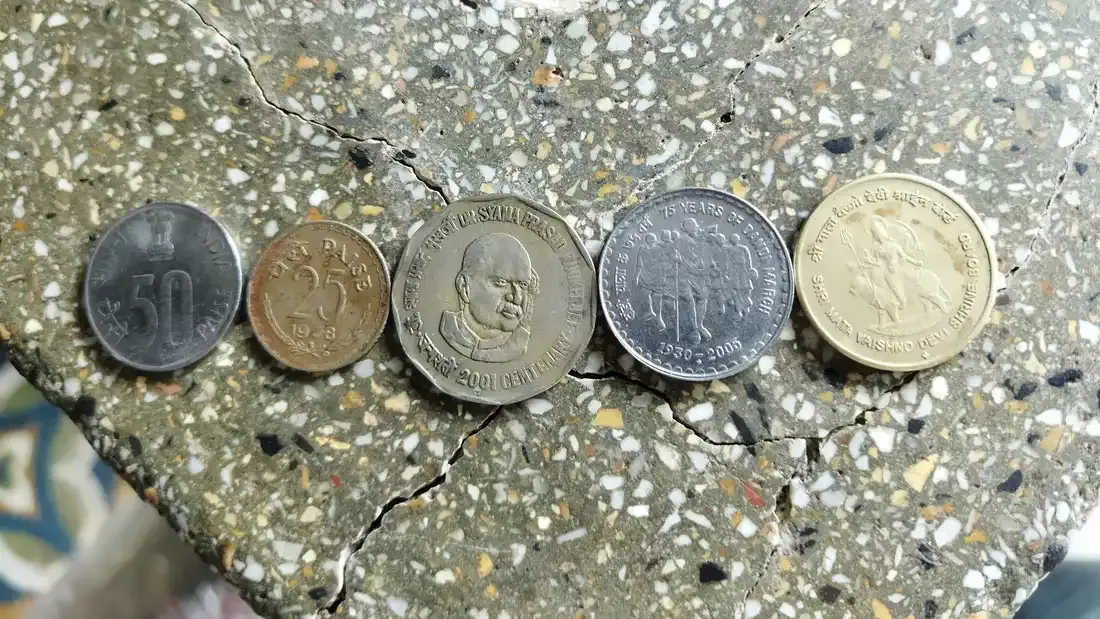
Ask which calibration weight comes with it. Omace factory-calibrates every scale and replaces it under warranty if it reads wrong. The product pages say that most Omace pocket scales are calibrated against a known weight that you supply, while the Ace GM-50 carat scale and the CT-50 diamond scale list their weights as supplied. Omace digital scales open calibration mode when TARE is held about 5 seconds, so follow the manual for that model. The step-by-step method, with coins as a quick check, is in the post on how to calibrate a pocket scale. If you are buying your own weights, calibration weights and their OIML classes explains which class is worth paying for.
The kinds of pocket scale compared
| Kind | Capacity | Reads to | Fits | Example |
|---|---|---|---|---|
| Pocket scale | 300 g | 0.01 g | Jewellery checks, silver, coins, spices | Ace MH-300 at ₹839 |
| Larger pocket scale | 500 g | 0.01 g | Bigger chains, bangles, hobby batches | Ace LT-500 at ₹1,149 |
| Milligram scale | 50 g | 0.001 g | Stones, seeds, small samples, lab practice | Ace FN-50 at ₹2,099 |
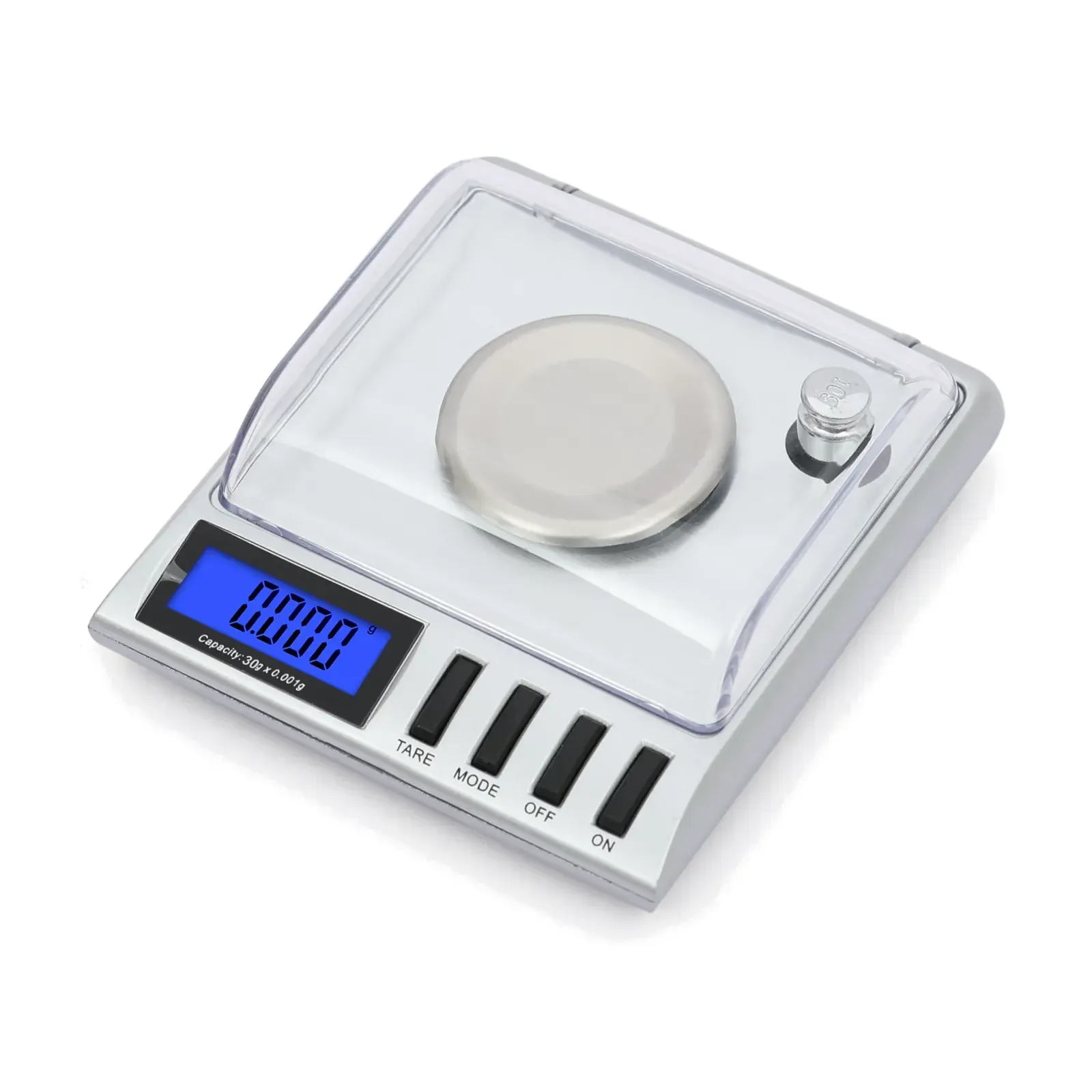
| Carat scale | 50 g | 0.001 g | Gem buyers who need carats, weights supplied | Ace GM-50 at ₹2,729 |
Prices are the Omace shop prices today and may change, so check the product page before you order. The Ace MH-300 precision pocket scale is the entry model and comes in 300 g and 200 g versions at 0.01 g. The Ace LT-500 digital pocket scale adds a 500 g capacity and a flip cover. The Ace FN-50 milligram scale reads to 1 mg up to 50 g under a clear windshield. The Ace GM-50 carat scale shows carats first and lists its tweezer, dish and weights.
Who needs which scale
A home user weighing spices, a coin collector or a silver hobbyist is well served by a 300 g scale at 0.01 g. A family that wants to cross-check a jeweller's weight at home also does well with it, and the post on gold coin weight and how to check one shows how to read the result. A parcel seller moving small batches may prefer 500 g. A gem dealer or a lab student wants the 50 g milligram class.
A simple test before you rely on any scale: weigh an object whose weight you already know. The post on the weight of everyday objects such as coins and eggs lists a few that are handy for this.
A pocket scale and a legal jewellery balance are different tools
A jeweller who sells gold by weight, or quotes a weight on a bill, needs an instrument that is verified and stamped under Legal Metrology rules. A pocket scale suits the customer and the bench hobbyist, who check and compare. It does not replace the stamped balance on the counter. Omace shop, platform, chicken and crane scales leave Bagru verified and stamped by Legal Metrology, and the stamp is valid across India.
Some states now ask a gold dealer for a balance that reads to 1 mg. The post on the 1 mg weighing scale rule for jewellers names the three gazettes read so far, and the jewellery scale buying guide for goldsmiths covers the counter balance itself. If the question is whether a small scale can stand in for a bench model in a working shop, read pocket scale vs bench scale before you buy.
Care and checks that keep it honest
- Place it on a hard, level surface, away from a fan, a cooler or a window draught.
- Switch it on and let the display settle at zero before every session, with the pan empty.
- Use the same test weight each week, such as a known coin or a certified weight, and note the reading. A drift of a few steps is a sign to recalibrate.
- Handle small items with a tweezer or a dish. Oil, moisture and dust add real weight at 0.001 g.
- Wipe the pan with a dry cloth and keep water away from the keys and the seam.
- Keep the lid closed when it is in a bag and do not stack heavy things on it.
If the scale still reads wrong after these steps, Omace replaces it under warranty, which covers manufacturing defects for 2 years. Contact details are on the contact page.
A short list before you pay
Write down the heaviest and lightest item, choose 0.01 g or 0.001 g to match, confirm the units you quote in, check that batteries are in the box, and ask whether a calibration weight comes with it. Then check the warranty period and the lid or case. Those points settle most of the choice.