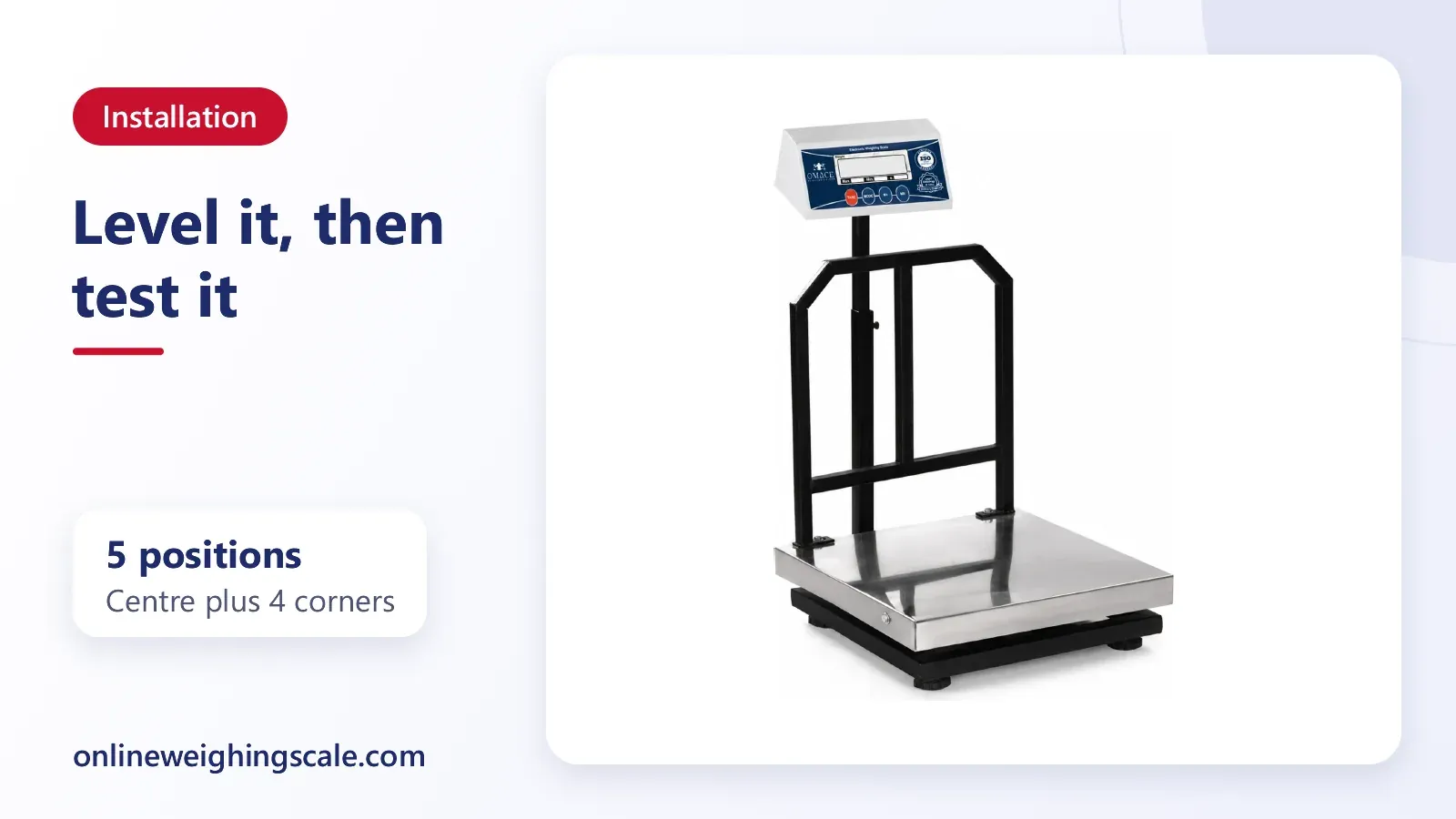
Platform scale installation takes about half an hour and decides how well the machine reads for years: a firm level floor, feet adjusted until the bubble sits in the middle, the indicator switched on and left to warm up, and a first check with a known weight. Do these in order, then load the pan in the centre and keep the platform clean underneath.
This guide is for the person who has just received a platform kanta, a 100 kg to 1,000 kg platform weighing machine, and wants it to read right on day one. It also covers the habits that keep it right afterwards.
Choose the spot before you open the box
A platform scale measures force through load cells under the platform. Anything that pushes or pulls on the platform from the side, or shakes the floor, shows up in the reading. Pick the spot with that in mind.
- A firm floor. Concrete is best. A wooden plank, loose tile or a floor that bounces when you walk on it will make the reading drift as the load shifts.
- Away from vibration. A running motor, a conveyor or a pump next to the scale moves the reading. OIML R 76-1, the international recommendation for non-automatic weighing instruments, expects an instrument to work correctly under the vibrations and draughts of its intended place, either by design or by protection (OIML R 76-1, clause 3.9.5). A scale in a draughty doorway or beside a fan is making that job harder.
- Room to load. Leave space on every side so a trolley or a person can reach the pan without leaning on the indicator or the platform edge.
- A dry place. Keep water, dust and direct sun off the platform and indicator. Washing the platform with a hose can push water into the load cell area, so wipe it instead.
- A power point or charging spot nearby. Most platform scales run on a rechargeable battery with a mains charger, so the indicator should sit within reach of a socket.
Unpack and remove anything that holds the platform
Lift the platform out by its frame, never by the indicator or its cable. Remove packing foam, cardboard and any transit screws, bolts or locking pieces that hold the platform still during shipping. If your model came with such fittings, the manual or the label near them says so. A platform that is still clamped will show a stuck reading or none at all.
Check the cable running from the platform to the indicator. It should lie free, with no sharp bend, no strain and no place where a wheel or a foot can crush it. Do not shorten, cut or splice it.
Set the feet and level the platform
Levelling is the step people skip, and it is the one that matters most. The platform stands on adjustable feet. Turn each foot until the platform sits steady with no rocking, and the bubble in the level indicator sits in the middle of its circle.
Many platform scales carry that bubble. OIML R 76-1 describes a levelling device as a device for setting an instrument to its horizontal reference position, and it describes the level indicator as showing when the permitted tilt has been passed: the bubble moves off centre and its edge touches a marking on the indicator (OIML R 76-1, clauses T.2.7.1 and 3.9.1.1). The same text says instruments installed in a fixed position are not put through the tilting test, so the level floor you give the scale is your part of the job.
- Place the platform in its final spot.
- Check the bubble. Note which side it drifts toward.
- Lower the feet on the high side or raise the feet on the low side, a quarter turn at a time.
- Press down gently on each corner. If any corner moves, a foot is not carrying its share. Adjust it until all four feet hold the platform firmly.
- Recheck the bubble after the last adjustment, because turning one foot moves the others.
If the floor itself slopes, a thin steel plate under a foot or a levelled concrete pad is better than screwing a foot out to its limit. A foot at the end of its thread is a weak support.
Place the indicator and connect the power
Mount the indicator on a wall bracket or a stand at eye level, where the display is out of direct sun and where nobody can knock it. Plug the platform cable into the indicator socket firmly, then charge the battery before the first use if the manual asks for it. Battery habits are in the post on weighing scale battery care.
Switch on and let it warm up
An electronic scale needs a short time after power-on before its readings can be trusted. OIML R 76-1 defines warm-up time as the time between applying power and the moment the instrument can meet the recommendation, and it requires that during the warm-up there is no indication or transmission of the weighing result (OIML R 76-1, clauses T.4.5 and 5.3.5). That is why many indicators show a count-down or a row of dashes at start-up. Your model's manual gives its own warm-up period. As a practical habit, switch on, let the display settle to zero, and wait a few minutes more before the first check if the room is much colder or hotter than the place the scale was stored.
With the platform empty, press ZERO or TARE if the display does not already show zero. The difference between the two buttons is explained in tare versus zero.
First check with a known weight
Do not trust a new scale because it switched on. Prove it with something whose weight you know.
- Use a certified test weight if you have one. A 20 kg test weight is a common choice on a 100 kg scale. If you have no test weight, a sealed 25 kg sack of a packaged commodity is a rough check only, since its weight can be a little off.
- Place the weight in the centre of the platform and note the reading.
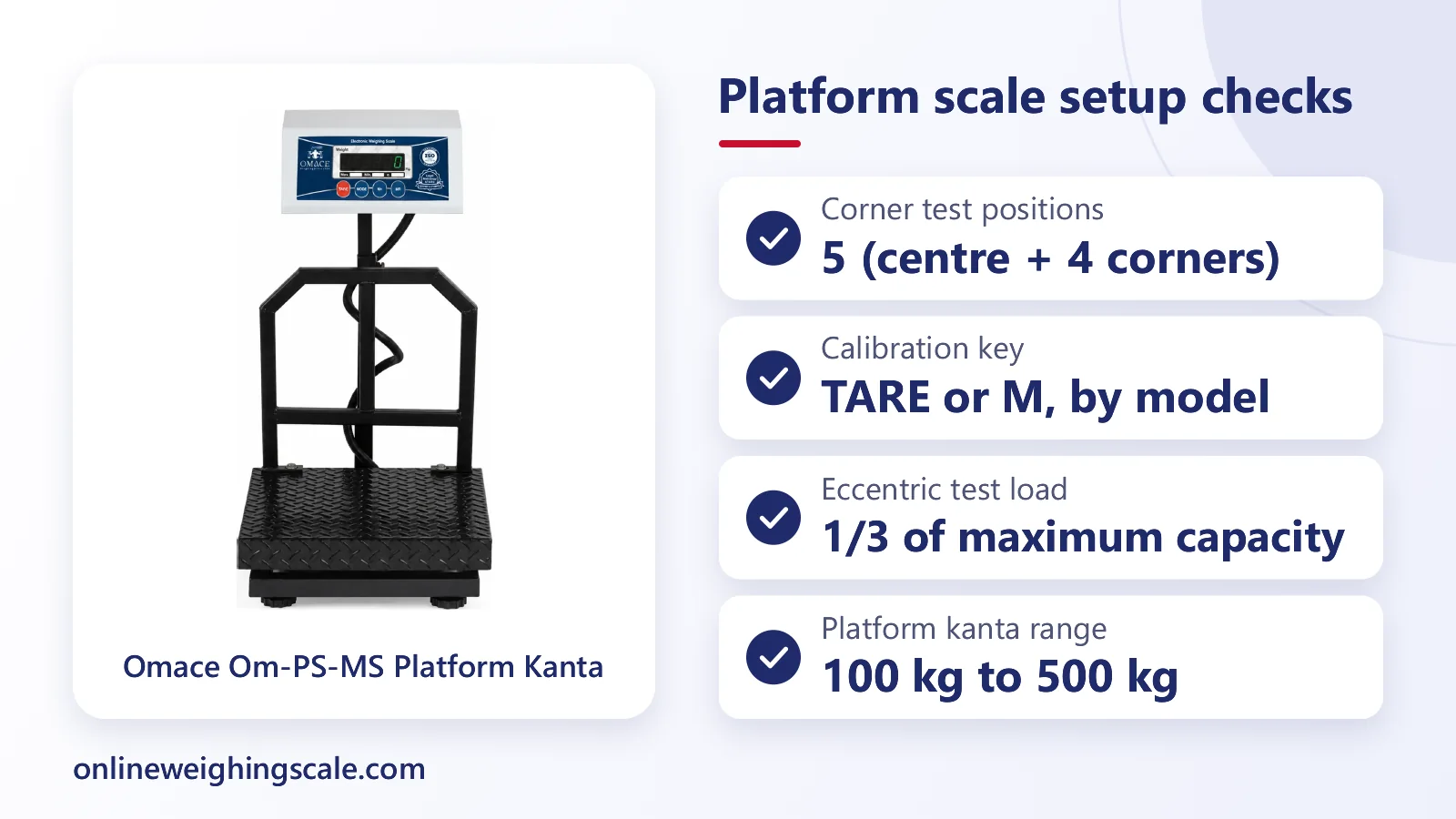
- Move the same weight to each of the four corners, one at a time, and note each reading. All five readings should agree within the last digit or two.
The corner test is the same idea OIML R 76-1 uses in its eccentric loading test: the indication has to stay within the permitted error wherever the load sits, and the test load is one third of the maximum capacity (OIML R 76-1, clauses 3.6.2 and 3.6.2.1). A test like that is done at the factory with controlled weights. At your site, a larger gap between corners than between repeat readings of the same position means the platform is not sitting evenly. Go back to levelling.
If the centre reading is wrong but the corners agree with each other, the scale needs calibration, not new feet. On Omace digital scales a long press of TARE opens calibration mode on some models and a long press of the M key on others, and the manual for each model shows which. Stamped trade scales are sealed, though, and a registered repairer recalibrates those. The general method is in what calibration is.
Stamping and the trade rules
If you sell by weight, the machine needs a Legal Metrology stamp. Omace Brands Private Limited ships its shop, platform, chicken and crane scales from Bagru, Jaipur, verified and stamped by Legal Metrology, and the stamp is valid across India. Stamping is compulsory on platform and crane scales. The meaning of stamping, and the cost of renewing it, are covered in legal for trade weighing scale and weighing scale stamping charges.
This post gives no renewal period or re-verification rule after a repair or a move to another state, because the General Rules, 2011 text could not be read for this guide. Ask your district Legal Metrology office before moving a stamped scale across a state border or changing its parts. Background is in the Legal Metrology guide.
Habits that keep it accurate
Load it gently and in the middle
Place goods on the pan instead of dropping them. A sack thrown from shoulder height delivers a force far above its weight, and the load cells take that blow. Each scale has a maximum capacity, and OIML R 76-1 also defines a maximum safe load, the largest static load the instrument can carry without permanently altering its metrological qualities (OIML R 76-1, clause T.3.1.7). Treat the rated capacity as the limit and stay under it. The same standard says an instrument shall show no indication above its maximum plus 9 divisions (OIML R 76-1, clause 4.2.3), so an over-range display is the scale telling you to take weight off.
Use a ramp for trolleys
If you roll loads onto the platform, build or buy a ramp that meets the platform edge without a step. A trolley wheel hitting the edge sends a jolt into the frame. Roll the load to the centre, stop, and read after the display settles.
Clean under the platform
Dirt, grain, wet rubbish and small stones collect between the platform and the base. If anything touches both parts, the platform leans on it and the reading drifts. Once a week, lift the platform if the model allows, or use a torch to look under it, and brush out the gap. The wider cleaning routine is in how to clean a weighing scale.
Charge the battery on a routine
Charge fully when the low-battery sign shows rather than running it flat every time. A weak battery makes the display flicker or reset, and it is a common cause of readings that jump. If the display behaves oddly, check the battery before you suspect the platform. The wider list of causes is in weighing scale not working.
Re-level after any move
Every time you shift the scale, even by a few metres, look at the bubble again. OIML R 76-1 says mobile instruments with a levelling device, such as wheelchair weighers, must carry an inscription reminding the user to level after each movement (OIML R 76-1, clause 4.18.2). A platform scale is not in that class, but the advice is the same. A different floor means a different level. Run the centre and corner check again after every move.
When the scale needs repair
Omace Brands Private Limited repairs its commercial scales when the buyer asks. The buyer pays the shipping both ways and the repair cost. Spare parts depend on availability, so ask first on the contact page before sending anything. No turnaround time or price is promised in advance, and home-scale repair or doorstep service is not offered. Before you book a repair, work through the steps above. Most platform complaints turn out to be a floor that is not level, dirt under the platform, a loose cable or a tired battery.
Which Omace platform scale fits
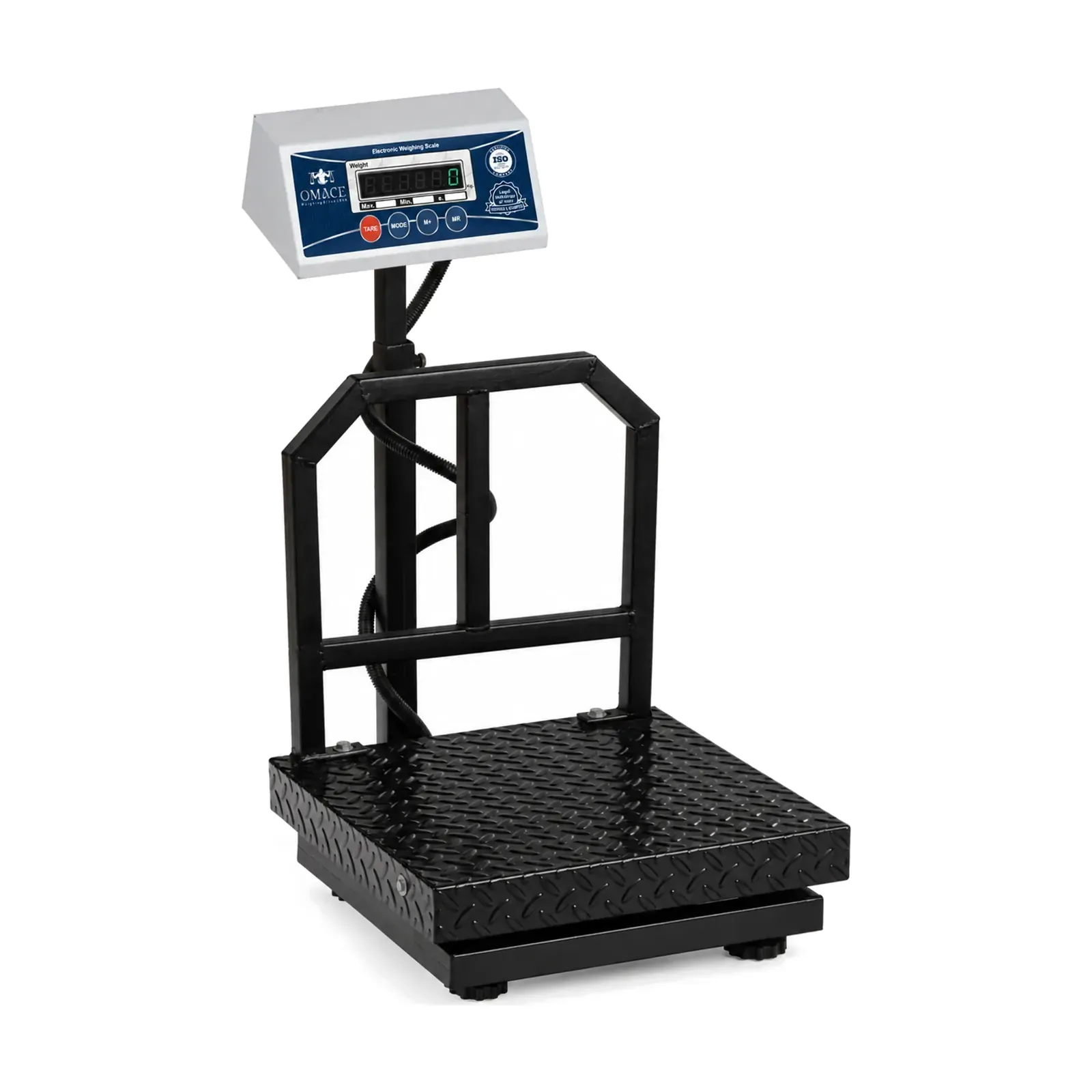
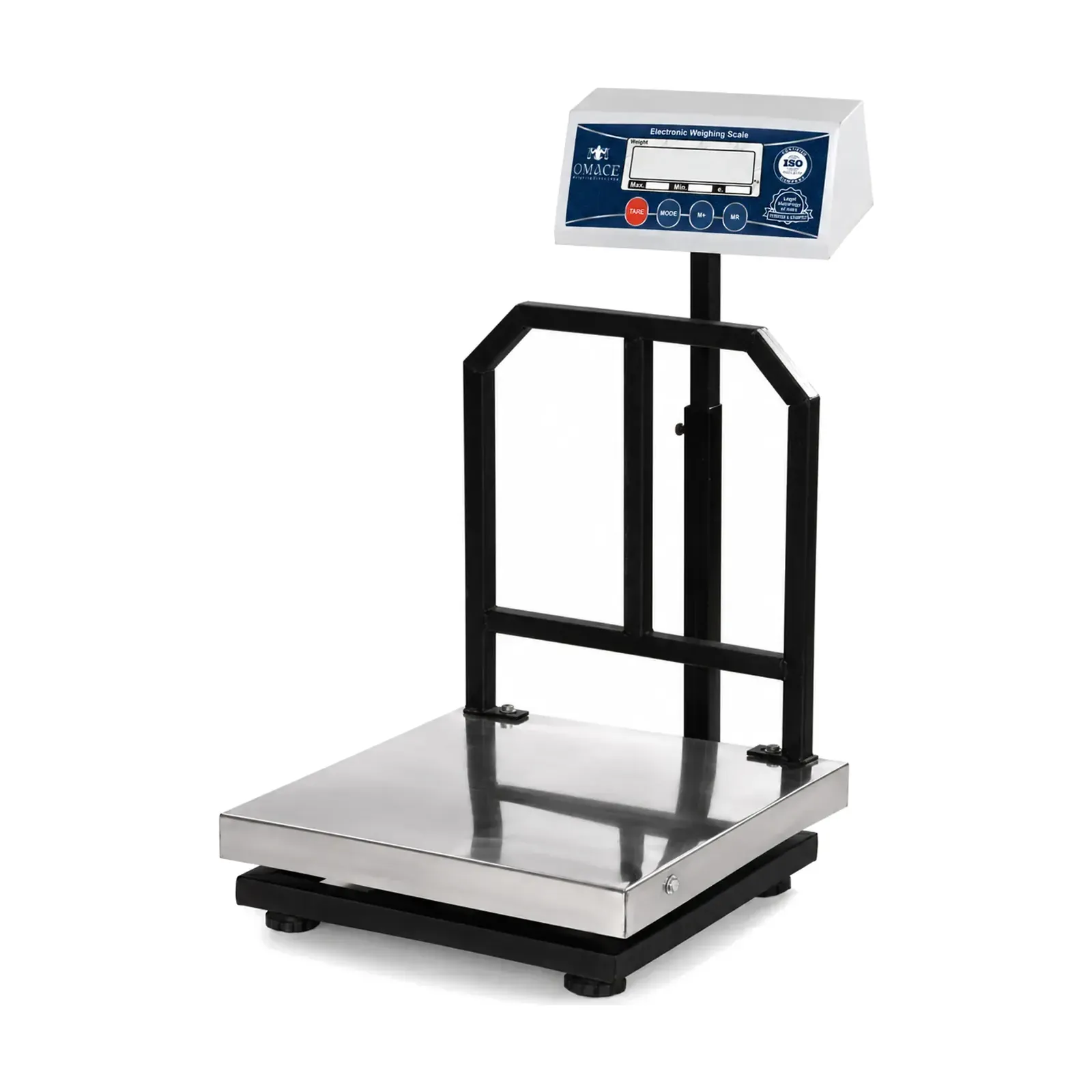
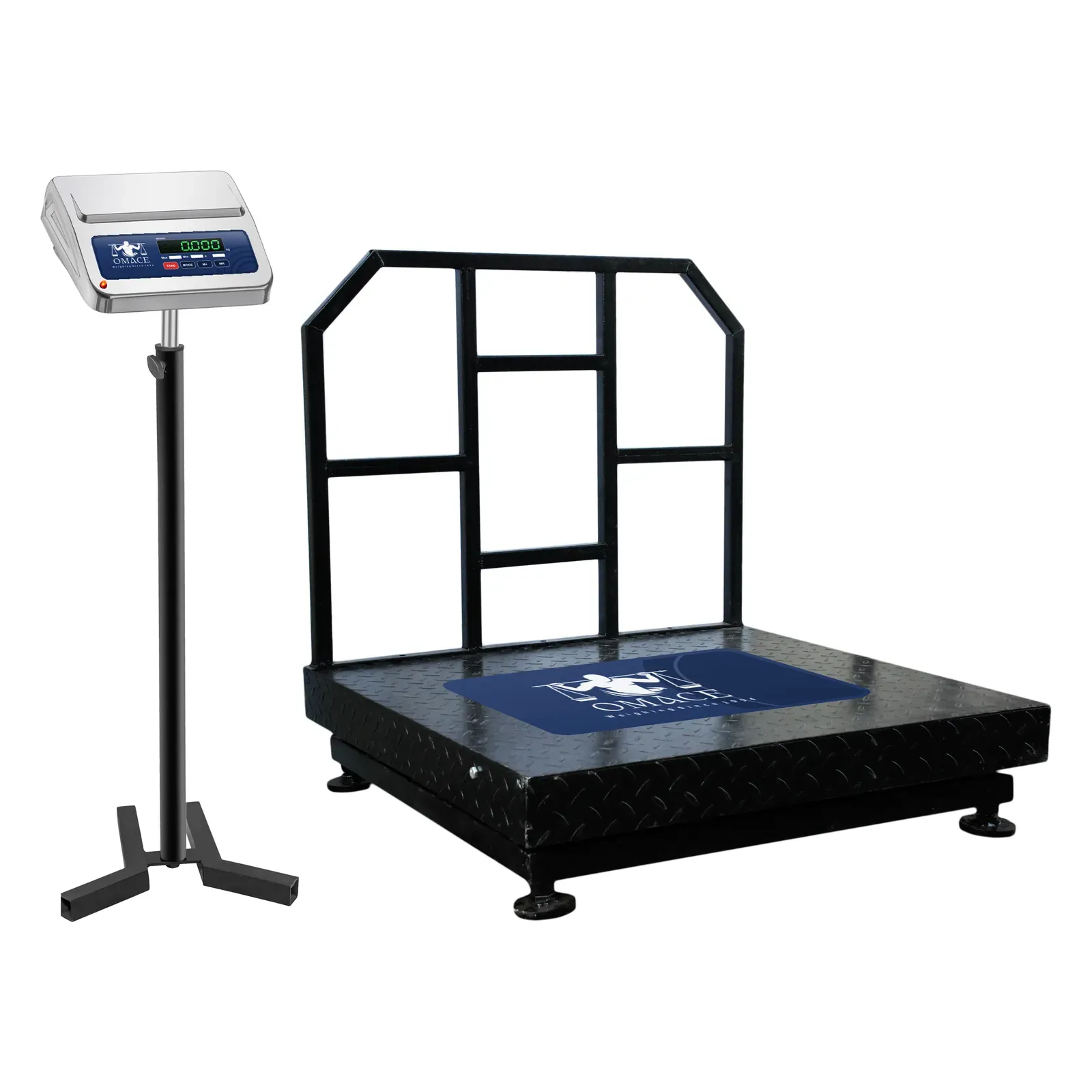
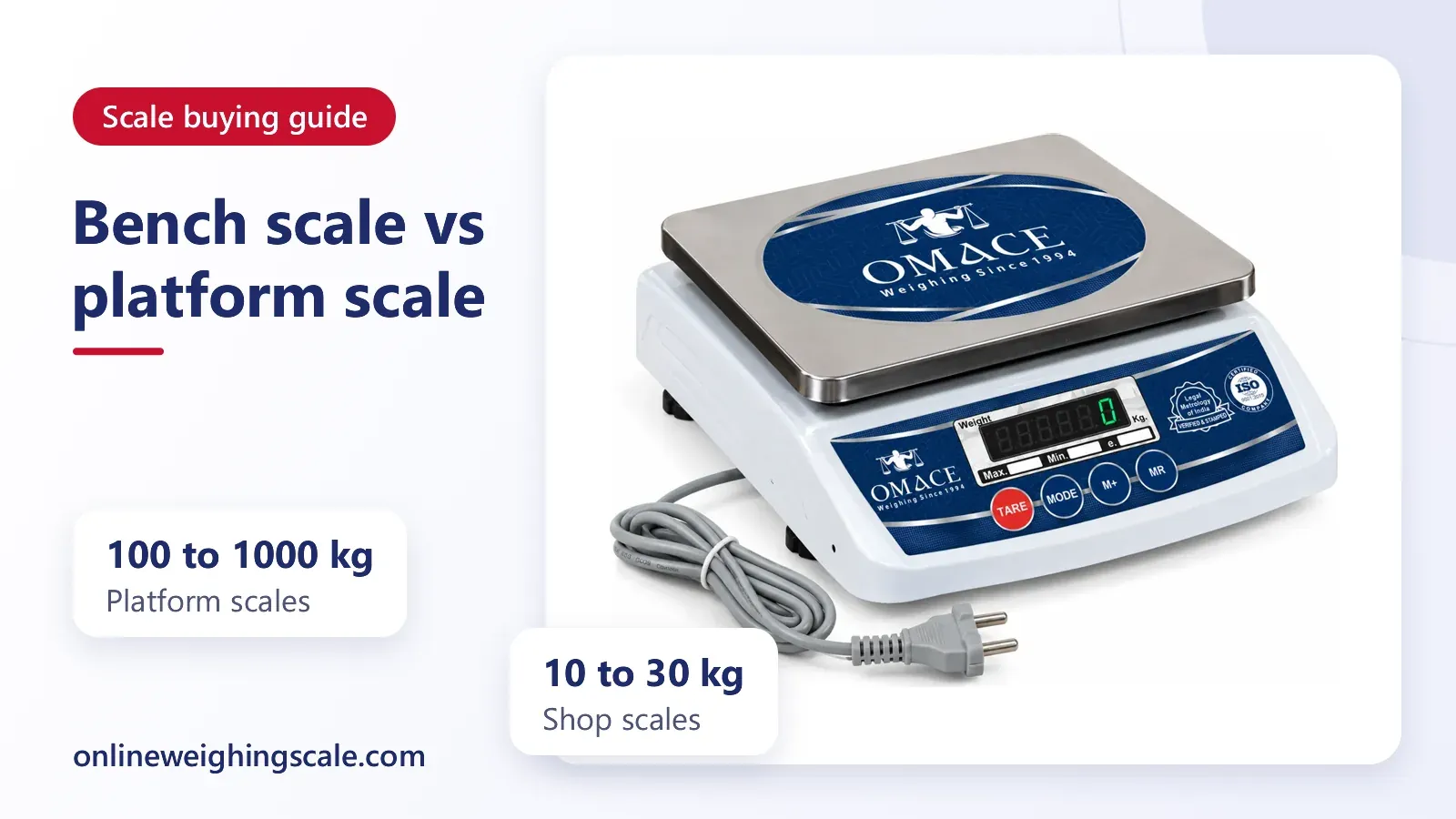
Omace makes mild steel and stainless steel platform scales. The Omace Om-PS-MS platform kanta covers 100 kg to 500 kg with a digital indicator at ₹6,300 at the time of writing. The Om-PS-SS stainless steel platform scale covers 100 kg to 300 kg, and the Om-PS-MS 1000 kg platform scale handles loads of one tonne. See the platform weighing scale category for the range. If you are deciding between a bench scale and a platform, see bench scale vs platform scale.
| Omace model | Capacity | Platform |
|---|---|---|
| Om-PS-MS platform kanta | 100 kg to 500 kg | Mild steel |
| Om-PS-SS platform scale | 100 kg to 300 kg | Stainless steel |
| Om-PS-MS 1000 kg | 1 ton | Mild steel |