To use a hanging scale, hang it from a fixed point, check that it reads zero, hook the load so it hangs freely, and read the number once it stops moving. A spring scale needs the pointer level with your eye, and a digital one needs a still display. Each step takes about ten seconds and removes most of the errors people blame on the scale.
This guide covers both kinds of kanta: the mechanical spring type with a dial or scale tube, and the digital hanging scale with a display and a hook. It also covers what to weigh with each, and when a hanging scale may be used for selling in India.
Know which hanging scale you hold
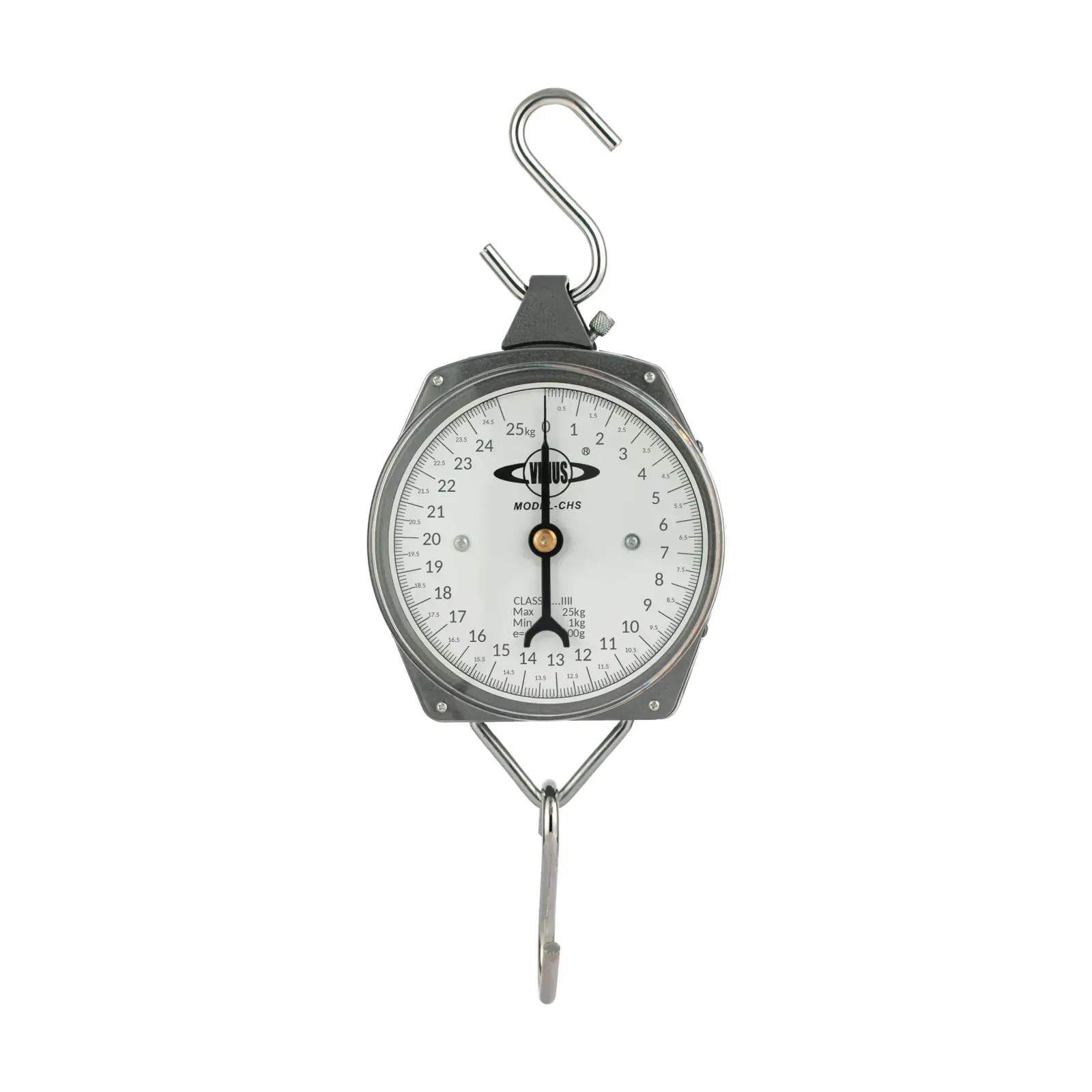
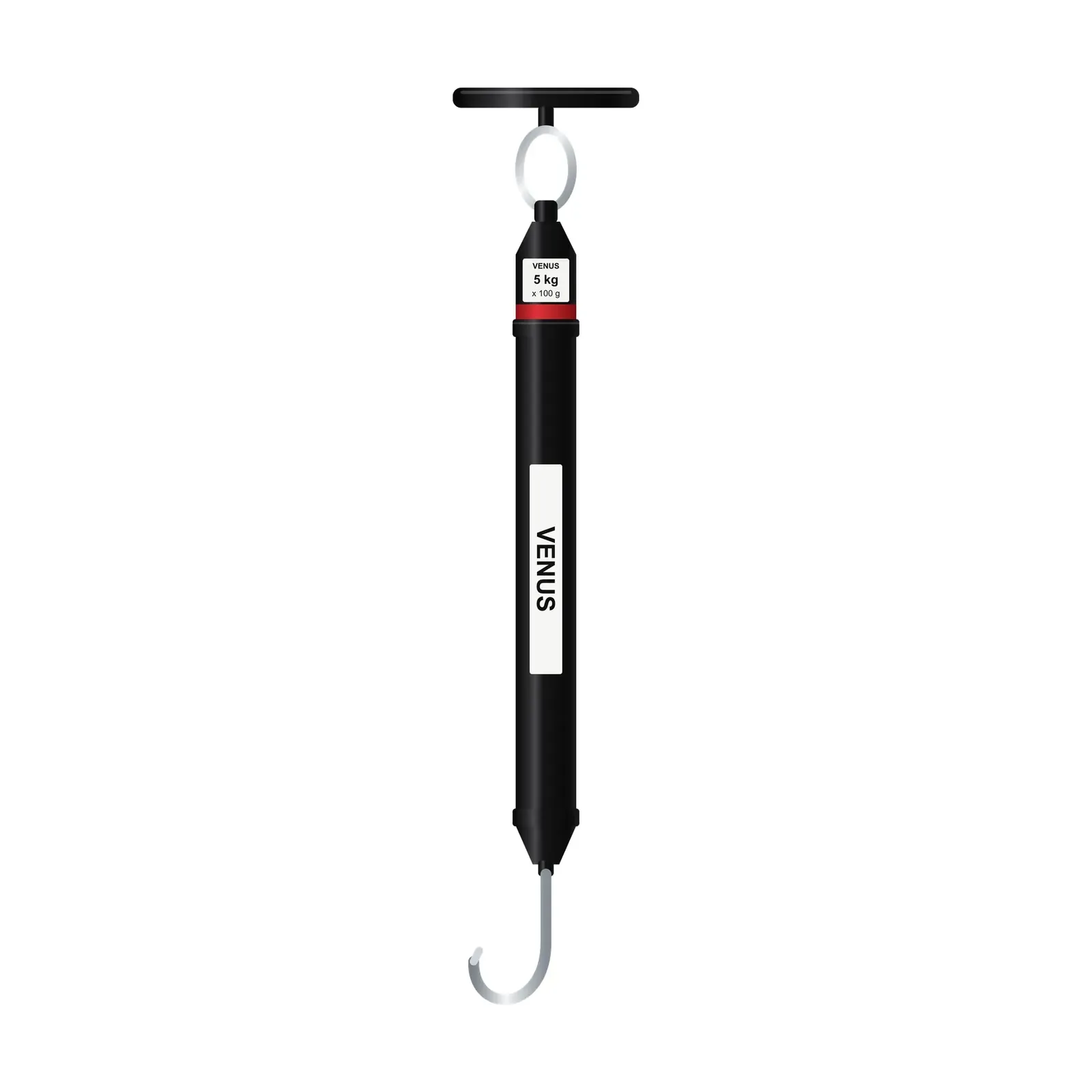
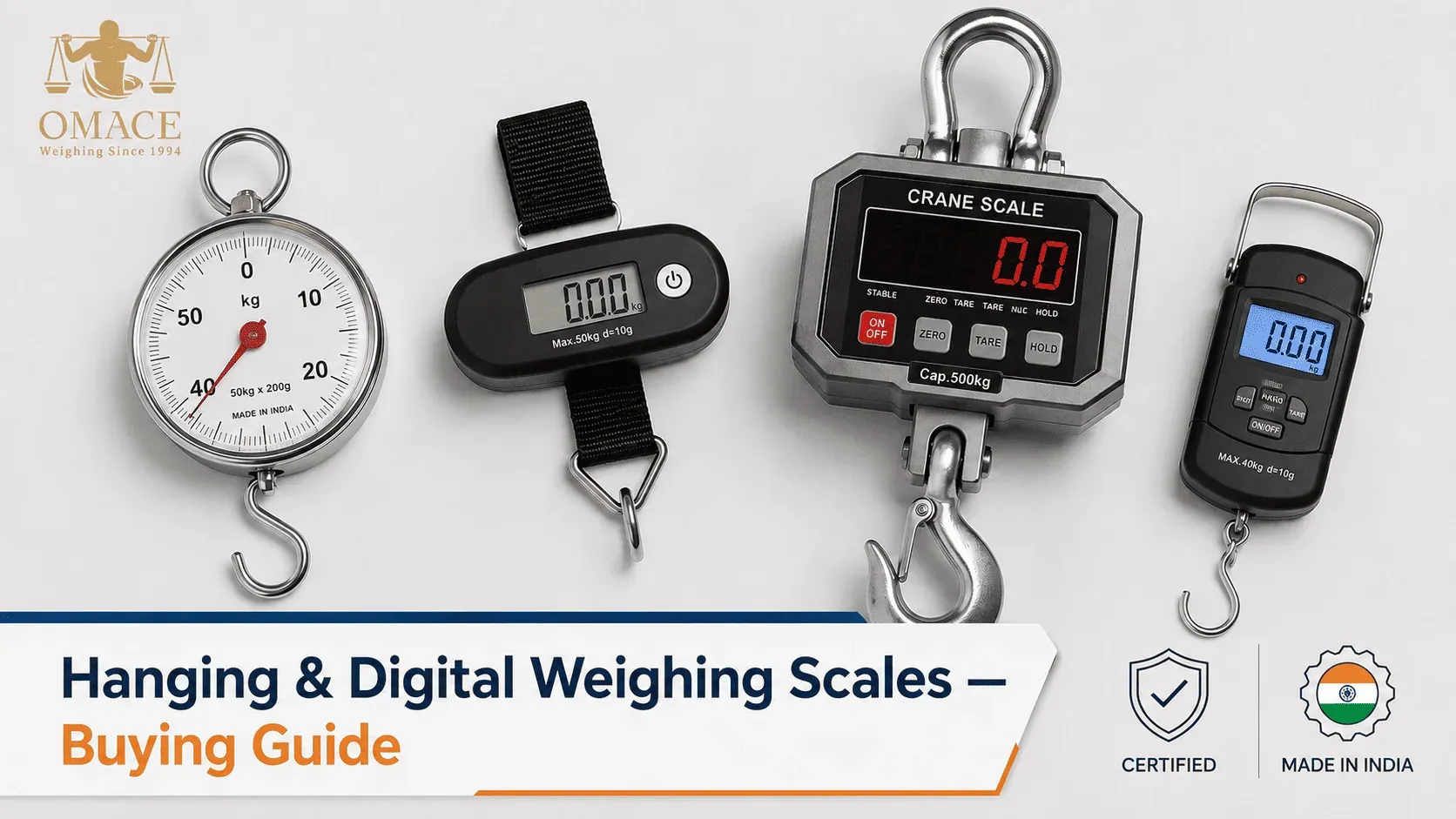
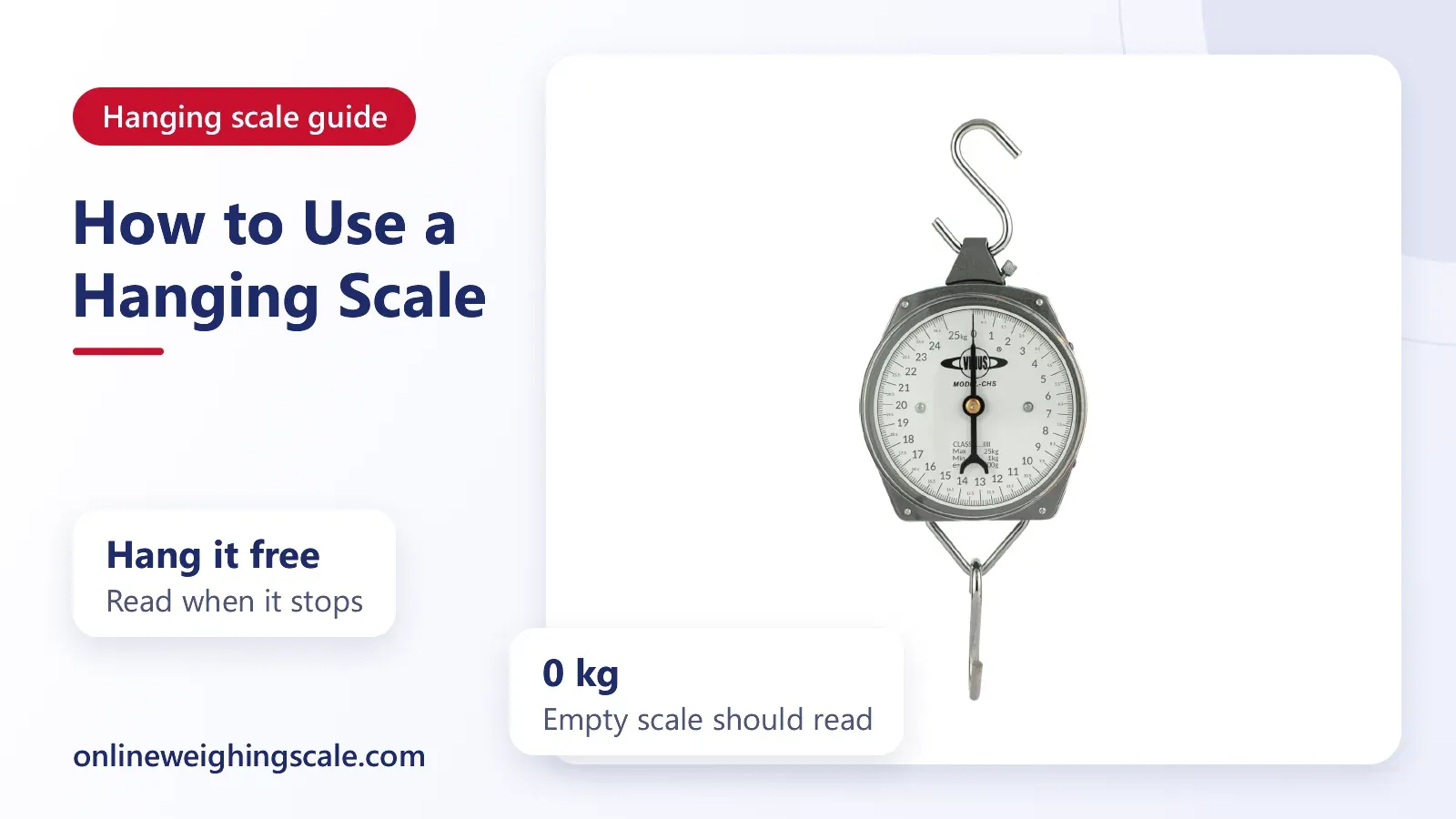
A mechanical hanging scale has a spring inside. The spring stretches when you add weight, and a pointer shows the result on a printed scale. A tubular spring balance in 5 kg and 25 kg sizes, a pocket spring balance in 100 kg and 150 kg sizes and a dial hanging scale from 25 to 200 kg are all of this type. They need no battery.
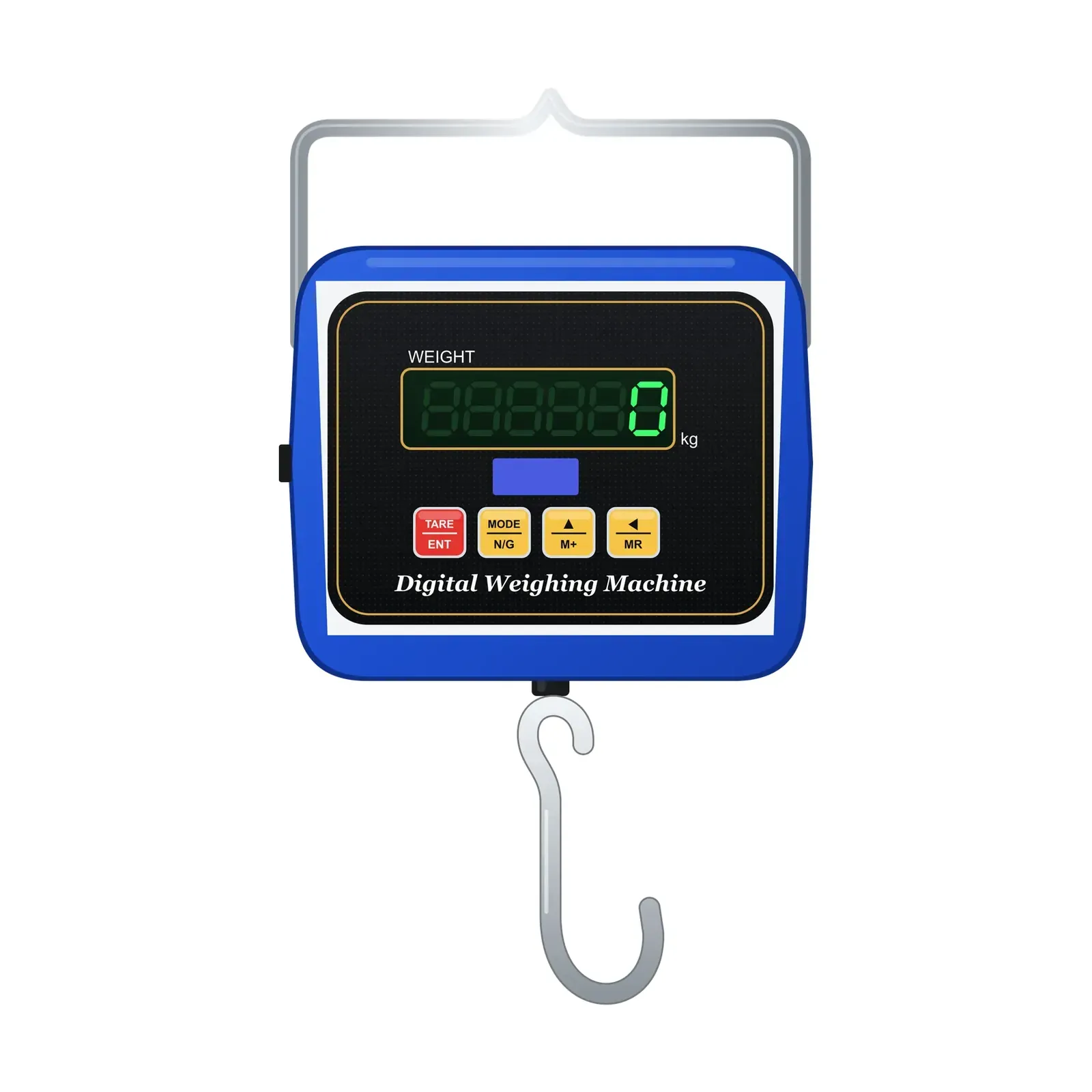
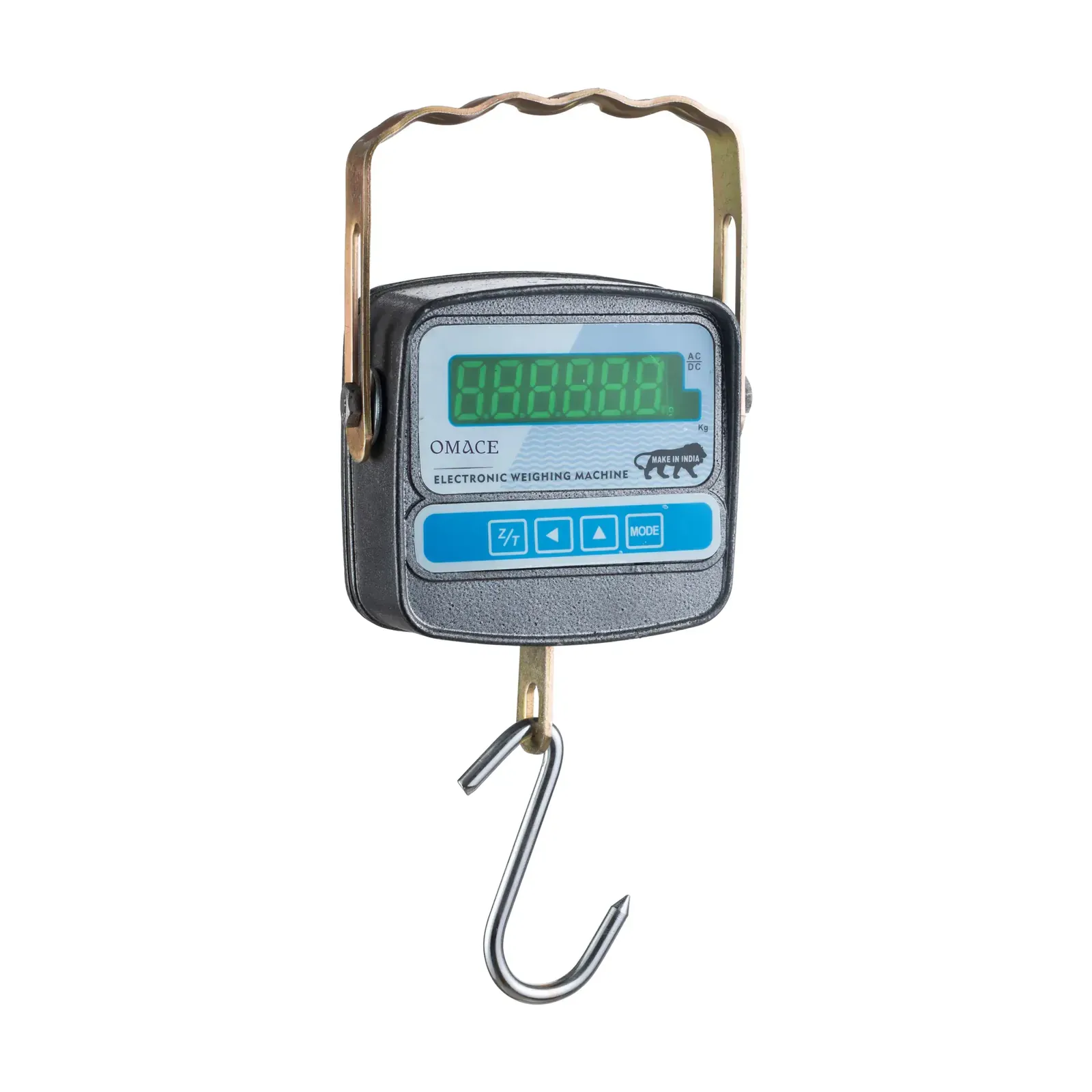
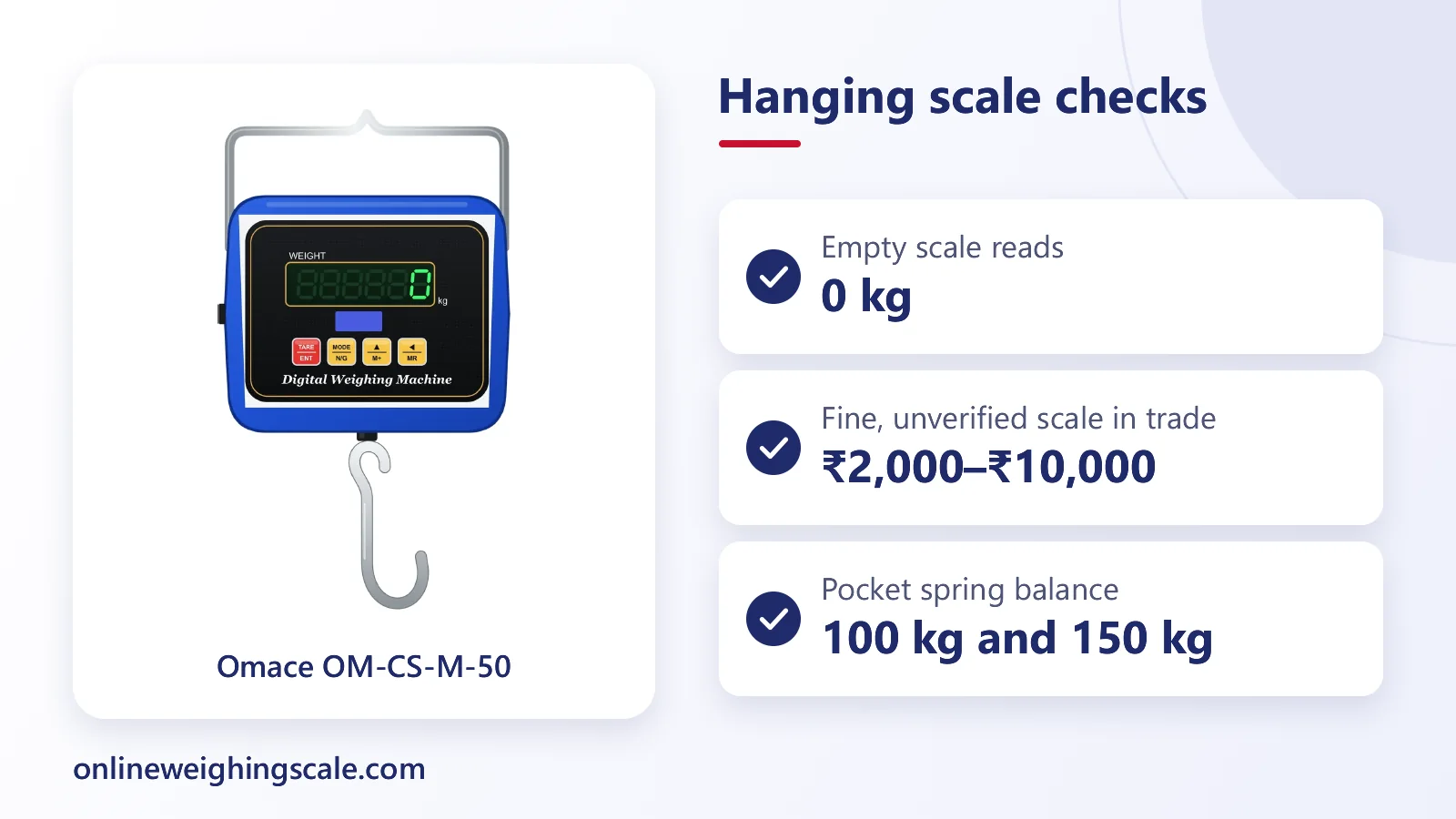
A digital hanging scale replaces the printed scale with a display, and a battery or rechargeable cell powers it. Examples in the Omace range are the 50 kg digital hanging scale and the 50 kg cylinder weight machine. The steps below are the same for both kinds, and the differences are marked. If you are still choosing between them, the guide to choosing a hanging scale compares them. Both kinds are listed in the hanging weighing scale range.
Step 1: Choose a safe hanging point
The scale only tells the truth when the load hangs straight down from it, so the top ring needs a firm point to hang from. A strong hook in a beam, a tripod, a steel bar held between two supports or a hand holding the ring all work. A rope tied to a branch or a loose nail does not.
Check the point before the first lift. Keep feet and the floor under the load clear, because a hook or strap that slips drops everything at once. For heavy loads, a fixed point is safer than a hand, and nobody should stand under the load.
Step 2: Check the zero with nothing on the hook
An empty scale must read zero. A university physics lab manual from Lehman College (City University of New York) tells students to check each spring balance with nothing attached and to turn the adjustment screw until it reads zero, and it warns that an instrument that does not read zero puts every later reading in error unless the empty reading is subtracted (Lehman College PHY 166 lab manual).
Many mechanical scales have a small adjuster that moves the pointer back to zero. On a digital scale, press the zero or tare key while it hangs empty and the display returns to 0. If the scale always hangs from a strap, hook or bag, hang those too and then zero it, so the display shows only the load.
Step 3: Hook the load so it hangs freely
Put the hook through the handle of the bag or through the sling, so the load sits directly under the scale. A load pressed against a wall, resting on a table edge or held up by your other hand reads lower than it truly weighs, because something else carries part of the weight.
Lift slowly and stop when the load clears the ground. A jerk adds a short spike to the reading, and the number swings before it settles. Keep the load away from your body and from moving air, because a swinging load keeps the display changing.
Step 4: Wait, then read
Let the pointer or the digits settle. A digital scale usually shows a steady figure within a couple of seconds, and many models also have a hold key that freezes the number so you can lower the load and read it in comfort. A mechanical scale may need a little longer, and a gentle tap on the casing helps the pointer find its place.
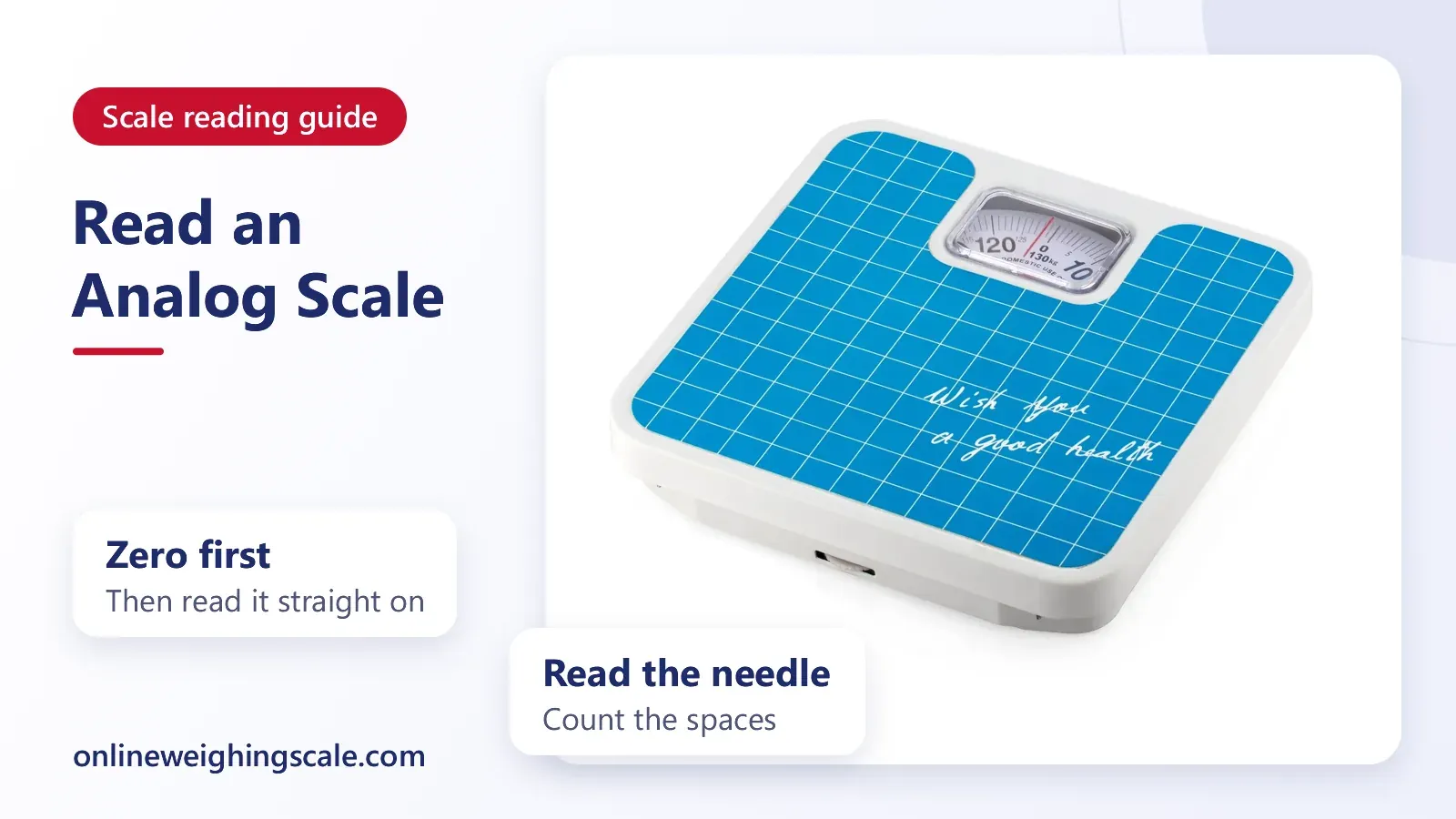
On a mechanical scale, read at eye level. Reading from an angle makes the pointer seem to sit against a different line, so bring your eye level with the pointer, then read the line it points to. Count the small divisions first: on a 25 kg tube, each small line may be 100 g or 250 g, and a wrong guess of the division size gives a wrong answer.
A spring scale works because the spring stretches in proportion to the force, which is Hooke's law (the Lehman College lab manual states that the elongation is directly proportional to the force), and that is why the marks sit at equal distances. A pointer sitting between two lines can therefore be read halfway between them. Write down the value you read, and do not round upwards because it looks neater.
Using the tare key on a digital scale
Tare removes the weight of whatever already hangs from the hook. Hang the empty sack, crate or bag, press tare so the display reads zero, then fill it and read only the contents. This is how you weigh a sack of grain without the weight of the sack, or vegetables without the basket.
Tare does not make the scale handle more. A scale rated for 50 kg still has a limit of 50 kg in total, and the container counts against it. Keep the container and the load together below the rated capacity.
Stay inside the capacity
Every hanging scale has a maximum weight printed on it. Stay below that figure, and do not use a 200 kg scale for a 2 kg parcel. A few kilos is only a few graduations on a coarse scale, and the reading wanders.
An overloaded spring can stay stretched and never return to zero. If an empty scale does not return to zero after a heavy lift, treat the scale as damaged and have it checked before you weigh anything else.
| What you are weighing | Suitable hanging scale | Why it fits |
|---|---|---|
| Suitcase or travel bag, up to 50 kg | Hoffen HO-L-8 portable scale with hook, ₹369 | Small, has a hook, 50 kg capacity |
| Fish, vegetables or a parcel, a few kg | Venus HSTB-5 tubular spring balance, ₹259 | No battery, 5 kg and 25 kg sizes |
| Sack of grain or a drum, 25 to 200 kg | Venus CHS-100 dial scale, ₹939 | Wide capacity and no battery |
| Gas cylinder, up to 50 kg | Omace OM-CS-A-09 cylinder weight machine, ₹2099 | Digital display, 50 kg |
| Goods up to 50 kg with a digital figure | Omace OM-CS-M-50 digital hanging scale, ₹3459 | 10 g steps, so small changes show |
Common uses at home and in the shop
Luggage is the best known use. Weigh the bag at home so the airline counter holds no surprise, and read the luggage scale calibration guide to confirm that yours agrees with a known weight. A hanging scale also suits whole fish, a bag of onions from the mandi, parcels before they go to a courier, and cartons in a godown.
A gas cylinder is a special case, because the weight you want is the gas, not the steel. The LPG cylinder weight guide explains how to work out the gas left from the weight you read. Hang the cylinder from a strong point, and let nobody stand beneath it.
For loads in tonnes, a crane scale is used instead, and the crane scale calibration guide covers how those are checked. Never hang a small scale from a crane or hoist, because its hook and ring are rated for far less.
Can you sell goods by a hanging scale?
A hanging scale used only to check your own luggage or household goods needs no stamp. A hanging scale used to decide what a customer pays is a trade weighing instrument, and the law applies. Section 24 of the Legal Metrology Act, 2009 says that anyone who holds a weight or measure that is, or is likely to be, used in a transaction must have it verified before using it (Legal Metrology Act, 2009 text).
Section 33 of the same Act sets the penalty for using an unverified weight or measure: a fine of ₹2,000 to ₹10,000, and for a second or later offence imprisonment of up to one year as well as a fine. The Jan Vishwas Acts of 2023 and 2026 changed the penalties of neighbouring sections but do not list section 33, so these figures stand; the Department of Consumer Affairs keeps the texts on its Legal Metrology Act page. From 1 May 2026, a first offence under some other sections, such as using a non-standard weight, begins with an improvement notice instead of a fine. So a hook scale on a mandi stall, a poultry shop or a godown, where it fixes the price, needs a Legal Metrology stamp. The legal metrology guide and the stamping charges guide explain the process and the fees.
Omace Brands Private Limited, in the weighing trade since 1994, makes scales at G-29 RIICO Industrial Area, Bagru, Jaipur. See the about page and the certificates page for the company and its certificates.
Mistakes that spoil a reading
- Skipping the zero check, which carries an error into every reading.
- Reading a mechanical scale from above or below the pointer instead of level with it.
- Reading while the load still swings.
- Using the scale at its limit or beyond it.
- Holding the load against a wall or leaning it on something.
If a digital scale shows a different value for the same bag on two tries, check the battery first and then the hook. The weighing scale not working guide goes through the other causes, and the calibration guide explains how to check a scale against a known weight.
Looking after the scale
Wipe the hook and the casing after use, keep the scale dry, and store it hanging or lying flat, not under other loads. Remove the battery of a digital scale when it will not be used for months. Omace Brands Private Limited repairs its commercial scales when the buyer asks. The buyer pays the shipping both ways and the repair cost, and spare parts depend on availability, so ask Omace first.
Treat the zero check as part of the weighing, and the scale stays honest for years.